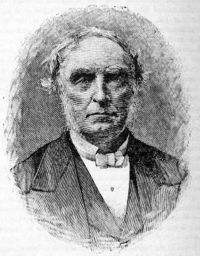
James Legge

James Legge

Summary

Portrait of James Legge James Legge Sacred Books of the East (1879)

We learn from it that dynasty of Kâu succeeded to that of Shang (another name for which was Yin) , and the dynasty of Shang to that of Hsiâ, and that prior to Yü, the founder of the Hsiâ, there were the reigns of Shun and Yâo. As P. Gaubil has observed, 'If we had only the Shû King, we should have but confused ideas of the time comprised in the different parts of the book.' There is nothing in this to awaken our surprise. The chronology of a nation comes to be cultivated as a science only when a necessity is felt to arrange the events of its history in regular series on the course of time.
Source: Wikisource

Portrait of James Legge James Legge Sacred Books of the East (1879)

A reader, confronted everywhere by the word God, might be led to think more highly of the primitive religion of China than he ought to think. Should I leave the names Tî and Shang Tî untranslated? Or should I give for them, instead of God, the terms Ruler and Supreme Ruler? I could not see my way to adopt either of these courses.
The term Heaven (天, pronounced Thien) is used everywhere in the Chinese Classics for the Supreme Power, ruling and governing all the affairs of men with an omnipotent and omniscient righteousness and goodness
Source: Wikisource

Portrait of James Legge James Legge Sacred Books of the East (1879)

Under the Sung dynasty, indeed, there began the sceptical criticism, which, setting comparatively little store on external evidence, decides on the genuineness of documents principally from their style. The results of such criticism always vary according to the knowledge and the subjective character of the mind of its author. Many maintain that the commentary said to be that of An-kwo was not really from him, but was made by Mei Zeh, and palmed on the world under the name of the great Han scholar.
Source: Wikisource

Get perspective with Kwize: daily news enlightened by great literature