Hexagram

Definition and stakes

| editor,  Sacred Books of the East (1882)

“ The third line is divided, not central, and the number of its place is appropriate to the occupancy of a strong line. All these things should affect the symbolism of the line. But the outcome of the whole hexagram being good, the superior man sees the immediate danger and avoids it.
The subject of the fourth line, the first of the upper trigram, has recourse to the strong suitor of line 1, the first of the lower trigram; and with his help is able to cope with the difficulties of the position, and go forward.
”
Source: Wikisource

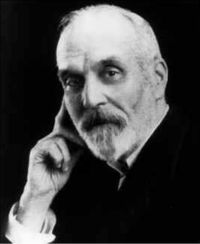
Portrait of James Legge James Legge,  Sacred Books of the East (1882)

“ The superior man, in accordance with this, nerves himself to ceaseless activity.'
The second hexagram ䷁ is formed by a repetition of the trigram Khwăn ☷, representing the earth, and it is said on it:—'The capacious receptivity of the earth is what is denoted by Khwăn. The superior man, in accordance with this, with his large virtue, supports men and things.'
The forty-fourth hexagram, called Kâu ䷫, is formed by the trigrams Sun ☴, representing wind, and Khien ☰, representing heaven or the sky, and it is said on it:—' (The symbol of) wind, beneath that of the sky, forms Kâu.
”
Source: Wikisource

Get perspective with Kwize: daily news enlightened by great literature