Rectangle

Definition and stakes

F. A. Griffiths,  The artillerist's manual and british soldier's compendium (1856)

“ The length of a rectangle equals the area divided by the breadth; or the breadth equals the area divided by the length.
8. The side, or end of a rectangle, equals the square root of the sum of the diagonal, and opposite side to that required, multiplied by their difference.
9. The diagonal in a rectangle equals the square root of the sum of the squares of the base, and perpendicular.
10. The solidity of a cube equals the area of one of its sides multiplied by the length of one of its edges.
11. The edge of a cube equals the cube root of its solidity.
”
Source: Gutenberg

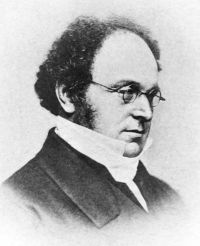
Portrait of Augustus De Morgan Augustus De Morgan,  Elements of arithmetic (1858)

“ From this and the last article it appears, that, whether the sides of a rectangle be a whole or a fractional number of inches, the number of square inches in its surface is the product of the numbers of inches in its sides. The square itself is a rectangle whose sides are all equal, and therefore the number of square inches which a square contains is found by multiplying the number of inches in its side by itself. For example, a square whose side is 13 inches in length contains 13 × 13 or 169 square inches. ”
Source: Gutenberg

1911 Encyclopædia Britannica, Volume 14… (1911)

“ Then we multiply the value of ƒ at any point within a rectangle by the measure of the area of the rectangle, sum for all the rectangles, and pass to a limit by increasing the number of rectangles indefinitely and diminishing all their sides indefinitely. ”
Source: Wikisource

Get perspective with Kwize: daily news enlightened by great literature