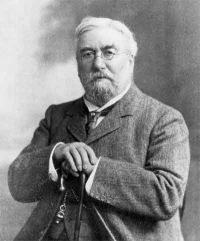
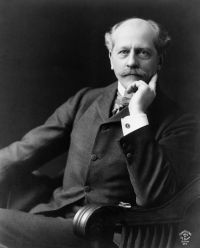
An arc, in mathematics and geometry, refers to a continuous portion of a curve defined by two endpoints, ranging from simple circular segments to intricate fractal patterns. This idea, originating in early explorations of lines and figures, has developed through analytic geometry and topology, incorporating both algebraic formulations and visual depictions. Writers such as Geoffrey Chaucer associated arcs with celestial motion, while Joseph Norman Lockyer investigated their practical applications in spectral analysis.
Technical works, like those by N. Hawkins, explain arcs' significance in mechanical drawing, highlighting accuracy. At the same time, Percival Lowell used arcs metaphorically to describe shadows influencing landscapes. These diverse perspectives—from poetic imagery to precise mathematical study—highlight the arc's dual role as a geometric element and a flexible symbol across various fields.