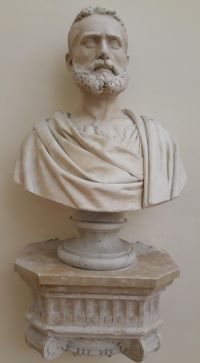
Vitruvius

Vitruvius

Summary

Portrait of Vitruvius Vitruvius,  Ten Books on Architecture (1914)

“ Just as a silver mirror that is formed of a thin plate reflects indistinctly and with a feeble light, while one that is substantially made can take on a very high polish, and reflects a brilliant and distinct image when one looks therein, so it is with stucco. When the stuff of which it is formed is thin, it not only cracks but also soon fades; when, however, it has a solid foundation of sand mortar and of marble, thickly and compactly applied, it is not only brilliant after being subjected to repeated polishings, but also reflects from its surface a clear image of the beholder. ”
Source: Wikisource

Portrait of Vitruvius Vitruvius,  Ten Books on Architecture (1914)

“ Those, therefore, who from tender years receive instruction in the various forms of learning, recognize the same stamp on all the arts, and an intercourse between all studies, and so they more readily comprehend them all. This is what led one of the ancient architects, Pytheos, the celebrated builder of the temple of Minerva at Priene, to say in his Commentaries that an architect ought to be able to accomplish much more in all the arts and sciences than the men who, by their own particular kinds of work and the practice of it, have brought each a single subject to the highest perfection. ”
Source: Wikisource

Portrait of Vitruvius Vitruvius,  Ten Books on Architecture (1914)

“ It appears, then, that one who professes himself an architect should be well versed in both directions. He ought, therefore, to be both naturally gifted and amenable to instruction. Neither natural ability without instruction nor instruction without natural ability can make the perfect artist. Let him be educated, skilful with the pencil, instructed in geometry, know much history, have followed the philosophers with attention, understand music, have some knowledge of medicine, know the opinions of the jurists, and be acquainted with astronomy and the theory of the heavens. ”
Source: Wikisource

Get perspective with Kwize: daily news enlightened by great literature