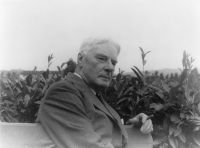
The architrave, a horizontal beam resting on column capitals in classical architecture, serves both structural and ornamental functions, differing across orders such as Doric or Ionic. Authors like Hilaire Belloc captured its rhythmic grandeur in poetic descriptions, while W. H. Leeds described its decorative segmentation into "fasces" and moldings.
Joseph Woods emphasized its role in ancient designs, pointing out its position above doorways and pilasters. In modern contexts, it extends to the embellishment of door and window frames, yet its symbolic meaning remains, representing foundational aspects in reasoning or philosophy, as found in academic works. This dual nature—architectural and abstract—highlights its lasting importance.
 Hilaire Belloc,
On Something
(1910)
Hilaire Belloc,
On Something
(1910)