“ I have heard Englishmen say there are no tree-creepers in Italy. The olive groves are well stocked with them (there are numbers even in the Borghese Gardens in Rome) , but you must remain immovable as a rock in order to see them; for they are yet shyer, more silent, more fond of interposing the tree-trunk between yourself and them, than those at home. Mouse-like in hue, in movement and voice--a strange case of analogous variation.... As to this Scalambra, this mountain whose bleak grey summit overtops everything near Olevano, I could soon bear the sight of it no longer. ”
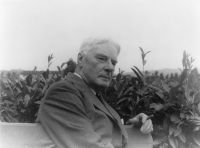
Norman Douglas
Summary
Norman Douglas’s Alone, published in the early 20th century, is a collection of reflective essays that examine the landscapes and cultural subtleties of Italy through the lens of personal observation. Focusing on towns like Olevano, Levanto, and Viareggio, Douglas weaves vivid depictions of nature—olive groves, sun-drenched hills, and the Campagna—with reflections on art, human interaction, and the quiet energy of rural life.
His prose, rich in sensory detail and philosophical contemplation, highlights themes of solitude, the enduring beauty of the Italian countryside, and the conflict between modernity and tradition. By contrasting the stark realities of urban environments with the tranquility of natural vistas, Douglas creates a poignant portrait of a nation’s soul.
Quotes from Alone (Norman Douglas)
“ Drive swiftly thence, if you are in the mood, as you should be, for something at the other pole of feeling, to view that wonder, the kneeling boy at the Museo delle Terme. Headless and armless though he be, he displays as much vitality as the Peruvians; every inch of the body is alive, and one may well marvel at the skill of the artist who, during his interminable task of sculpture, held fast the model's fleeting outline--so fleeting, at that particular age of life, that every month, and every week, brings about new conditions of surface and texture. ”
“ None but a crazy despot, some moonstruck Oriental such as the world has known, striving to impress his dreams upon a recalcitrant nature. No facilities for trade or commerce, no scenic beauty of landscape, no harbour, no defence against enemies, no drinking water, no mineral wealth, no food-supplying hinterland, no navigable river--a dangerous river, indeed, a perpetual menace to the place--every drawback, or nearly so, which a town may conceivably possess, and all of them huddled into a fatally unhealthy environment, compressed in a girdle of fire and poison. ”
