The literary concept of "major" encompasses both a rank and a thematic resonance, reflecting significance, authority, or central importance within narratives and discourse. Authors such as Charles Major and Henry James explored it through historical detail and psychological depth, while John Ruskin and Plato associated it with moral or intellectual leadership.
Edward Bulwer-Lytton framed it as a commitment to idealism, and Leonard Huxley critiqued institutional limitations on genius. These varied perspectives highlight the theme’s adaptability, ranging from military hierarchy to the weight of human aspiration, ultimately revealing "major" as a lens through which duty, legacy, and the interplay of individual and collective purpose are examined.
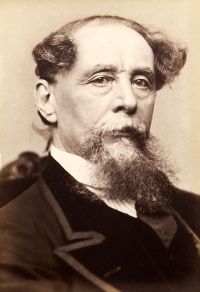 Charles Dickens,
Mrs. Lirriper's Lodgings
Charles Dickens,
Mrs. Lirriper's Lodgings