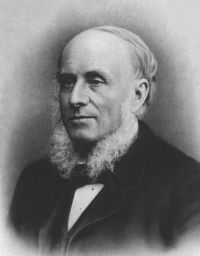
William Edward Hartpole Lecky

Biographical details

Portrait of William Edward Hartpole Lecky William Edward Hartpole Lecky,  History of European Morals From Augustus to Charlemagne…

“ Death, they said, is the only evil that does not afflict us when present. While we are, death is not, when death has come we are not. It is a false belief that it only follows, it also precedes, life. It is to be as we were before we were born. The candle which has been extinguished is in the same condition as before it was lit, and the dead man as the man unborn. Death is the end of all sorrow. It either secures happiness or ends suffering. It frees the slave from his cruel master, opens the prison door, calms the qualms of pain, closes the struggles of poverty. ”
Source: Gutenberg

Portrait of William Edward Hartpole Lecky William Edward Hartpole Lecky,  History of European Morals From Augustus to Charlemagne…

“ There is, perhaps, no phase in the moral history of mankind of a deeper or more painful interest than this ascetic epidemic. A hideous, sordid, and emaciated maniac, without knowledge, without patriotism, without natural affection, passing his life in a long routine of useless and atrocious self-torture, and quailing before the ghastly phantoms of his delirious brain, had become the ideal of the nations which had known the writings of Plato and Cicero and the lives of Socrates and Cato. For about two centuries, the hideous maceration of the body was regarded as the highest proof of excellence. ”
Source: Gutenberg

Portrait of William Edward Hartpole Lecky William Edward Hartpole Lecky,  The Map of Life

“ It is not in the waning days of life, but in the full strength of youth, that men, through ambition or the mere love of excitement, fearlessly and joyously encounter its risk. Encountered in hot blood it is seldom feared, and innumerable accounts of shipwrecks and other accidents, and many episodes in every war, show conclusively how calmly honour, duty, and discipline can enable men of no extraordinary characters, virtues, or attainments, to meet it even when it comes before them suddenly, as an inevitable fact, and without any of that excitement which might blind their eyes. ”
Source: Gutenberg

Get perspective with Kwize: daily news enlightened by great literature