Summary

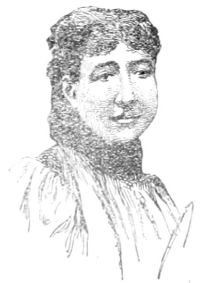
Portrait of Arvède Barine Arvède Barine La Grande Mademoiselle, 1627-1652

And well might he glory! there had, in truth, been one supreme [147] moment in the literary life of France, a moment as rapid, as fleeting as a smile, lost even as it came, never to appear again until long after the pigmy body which enshrined the winged soul that loved to dream of it had turned to dust.
The memory of that first Salon was still so vivid that Saint Simon wrote: "The Hôtel de Rambouillet was the trysting-place of all then existent of knowledge and of wit; it was a redoubtable tribunal, where the world and the Court were brought to judgment."
Source: Gutenberg

Portrait of Arvède Barine Arvède Barine La Grande Mademoiselle, 1627-1652

Whatever difficulty I may have seen in such a project, I can say that it gave me more joy than I had ever had in my life. I was at an age when a man loves to do extraordinary things, and I could not think of anything that would give me more satisfaction than that: to strike the King and the Cardinal with one blow, to take the Queen from her husband and from the jealous Richelieu, and to snatch Mademoiselle de Hautefort from the King who was in love with her!
Source: Gutenberg

Portrait of Arvède Barine Arvède Barine La Grande Mademoiselle, 1627-1652

Its social influence was equal to its influence upon literature. And yet, to-day, not one of all the books that had their time of glory and of popularity is more neglected. No one reads Astrée now, and no one can read it; with the best will in the world, the most indulgent must throw the book down, bored by its dulness. It has become impossible to endure the five thousand pages of the amorous dissertations of the shepherds of Lignon. At the best such a debauch of subtlety would be only tolerable, even had it emanated from a writer of genius. And d'Urfé had no genius; he had nothing but talent.
Source: Gutenberg

Get perspective with Kwize: daily news enlightened by great literature