
“ Between them, around them, swarms Parisian life, with its bustle and noise; on the pavements pass neat grisettes by twos and threes, their smooth hair uncovered, either coming from or going to breakfast, men with dirty grayish-white blouses, servant-girls in white caps, Englishwomen with long teeth, and Parisians of all kinds, recklessly pressing on towards some aim known to themselves only ”
Parisians
Definition and stakes
The Parisians, inhabitants of Paris, France, reflect a distinctive fusion of cultural depth and social hierarchy. From Victor Hugo’s vivid portrayals of their lively streets to Honoré de Balzac’s insights into their societal expectations, writers have long captured their vibrant way of life. Ossip Schubin conveys the turmoil of Parisian existence, while Henry Thew Stephenson highlights their skill in turning enjoyment into an art form.
These viewpoints, stretching across centuries, emphasize a city where contrasts—between classes, districts, and identities—shape a shared identity. The Parisian experience, as both an international center and a deeply established community, continues to serve as a framework through which global and local stories intertwine.
Quotes about “Parisians”
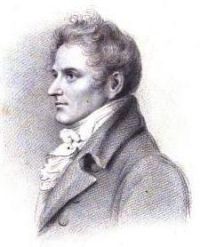 Sir John Carr,
The stranger in France
Sir John Carr,
The stranger in France
“ A short time before my arrival at Paris, this great genius, who displays a perfect knowledge of mankind, and particularly of the people over whom he rules, discovered that the parisians, from a familiarity with his person, and from his lady and his family having occasionally joined in their parties of amusement, began to lose that degree of awe and respect for him, which he so well knows how to appreciate, as well as to inspire. ”
George Catlin, Adventures of the Ojibbeway and Ioway Indians in England…
“ The circumscribed limits of the city, and the density of its population, enable the Parisians to make a glittering display in the streets, in the brilliancy and taste of which they no doubt outdo any other people in the world. ”
 Eleanor Hoyt Brainerd,
In Vanity Fair: A Tale of Frocks and Femininity
Eleanor Hoyt Brainerd,
In Vanity Fair: A Tale of Frocks and Femininity
“ Swarms of visitors from the Colonies, from Southern Europe, from America, fill the gaps left by departing Parisians. Restaurant tables are crowded. Les Ambassadeurs, l'Horloge and their rivals do a flourishing business. Only the onlooker who knows the real Paris misses the gayest element of the Parisian world from its accustomed haunts, and finds the Parisian summer a dreary interregnum twixt season and season. ”
Henry Thew Stephenson, The Elizabethan People (1910)
“ THE American in Paris often asks himself the question: What do they all do for a living? At first sight, every one, whether high or low, seems to be wholly bent on pleasure, a bent the Parisians have developed into a fine art. ”
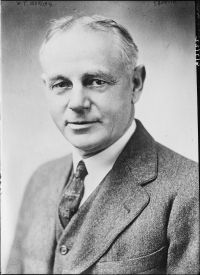 W. Y. Morgan,
A Journey of a Jayhawker
W. Y. Morgan,
A Journey of a Jayhawker
“ The philosophy in the above is that it gives you an idea of Paris with its brilliantly lighted streets, the men eating and drinking, sitting at the little tables along the walks, the well-dressed people, the brilliant colors, the laughter, the bright and polite conduct of men and women, the holiday appearance, the pleasure that everyone is having, and the general gait at which Parisians travel. ”
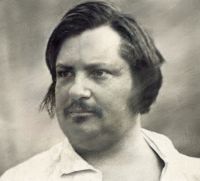 Honoré de Balzac,
Letters of Two Brides
(1842)
Honoré de Balzac,
Letters of Two Brides
(1842)
“ Didn't I tell you once that in Paris one must be as the Parisians? Society there drives out all sentiment; it lays en embargo on your time; and unless you are very careful, soon eats away your heart altogether. ”
Frederick Niecks, Frederick Chopin, as a Man and Musician…
“ Everybody goes his own way....The Parisians are a peculiar people. When evening sets in one hears nothing but the crying of titles of little new books, which consist of from three to four sheets of nonsense. ”
Moritz Busch, Bismarck (1898)
“ The Parisians, with their political superstitions, are quite a distinct people in France,—they are caught and bound up in a circle of ideas which are a sacred tradition to them, although when closely examined they turn out to be mere empty phrases. ”
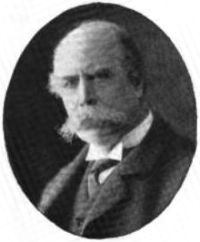 H. Sutherland Edwards,
Old and New Paris: Its History…
H. Sutherland Edwards,
Old and New Paris: Its History…
“ A provincial or a foreigner might ask with curiosity what part these persons, so strangely armed, play in the social system; but Parisians, to whom they have long been familiar, and to whom they are indeed historical, know them as the chiffonniers or rag-pickers. An observer, if he follows one of these wretched adventurers, will see him stop at every dust-heap lying along the thoroughfares, previously to their being cleared away by the city scavengers. ”
 Victor Hugo,
The Hunchback of Notre-Dame
(1831)
Victor Hugo,
The Hunchback of Notre-Dame
(1831)
“ The Paris of three hundred and fifty years ago—the Paris of the fifteenth century—was already a gigantic city. We Parisians generally make a mistake as to the ground which we think that we have gained, since Paris has not increased much over one-third since the time of Louis XI. It has certainly lost more in beauty than it has gained in size. ”
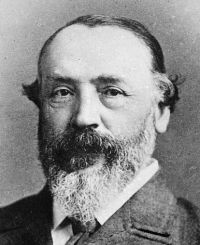 Henry Du Pré Labouchere,
Diary of the Besieged Resident in Paris
Henry Du Pré Labouchere,
Diary of the Besieged Resident in Paris
“ If the Parisians were not so thoroughly conceited, one might hope that the presence of these villagers would have a beneficial effect upon them, and show them that the Frenchmen out of Paris are worth more than those within it. ”
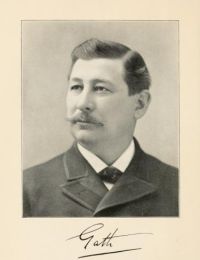 George Alfred Townsend,
Campaigns of a Non-Combatant, and His Romaunt Abroad During the War
George Alfred Townsend,
Campaigns of a Non-Combatant, and His Romaunt Abroad During the War
“ All classes of Parisians were there,—the blouses, or workingmen, standing first in number; the students from the Latin Quartier being well represented, and idlers, and well-dressed nondescripts without enumeration,—distributing themselves among women, dogs, and babies. ”
Baron Edward Bulwer Lytton Lytton, The Parisians — Volume 01
“ O Paris, 'foyer des idees, et oeil du monde!'— animated contrast to the serene tranquillity of the Vril-ya, which, nevertheless, thy noisiest philosophers ever pretend to make the goal of their desires: of all communities on which shines the sun and descend the rains of heaven, fertilizing alike wisdom and folly, virtue and vice; in every city men have yet built on this earth,—mayest thou, O Paris, be the last to brave the wands of the Coming Race and be reduced into cinders for the sake of the common good! ”
 Alexandre Dumas,
The Count of Monte Cristo
(1845)
Alexandre Dumas,
The Count of Monte Cristo
(1845)
“ Sinbad the Sailor is your baptismal appellation, and yet the first day you set foot in Paris you instinctively display the greatest virtue, or rather the chief defect, of us eccentric Parisians,—that is, you assume the vices you have not, and conceal the virtues you possess.” ”
Baron Edward Bulwer Lytton Lytton, The Parisians — Complete
“ His ministers will be but weathercocks, turned hither and thither according as the wind chops at Paris; and Paris is the temple of the winds. The new revolution is almost at hand. [Murmurs of applause.] It would move the laughter of the Tuileries and its ministers, of the Bourse and of its gamblers, of every dainty salon of this silken city of would-be philosophers and wits, if they were told that here within this mouldering baraque, eight men, so little blessed by fortune, so little known to fame as ourselves, met to concert the fall of an empire. ”
 Frances Milton Trollope,
Paris and the Parisians in 1835…
Frances Milton Trollope,
Paris and the Parisians in 1835…
“ Parisian Women.—Rousseau's failure in attempting to describe them.—Their great influence in Society.—Their grace in Conversation.—Difficulty of growing old.—Do the ladies of France or those of England manage it best? There is perhaps no subject connected with Paris which might give occasion to such curious and inexhaustible observation as the character, position, and influence of its women. ”
Victor Hugo,
Les Misérables — Volume 5, Book Second…
“ Paris is a spendthrift. Paris, that model city, that patron of well-arranged capitals, of which every nation strives to possess a copy, that metropolis of the ideal, that august country of the initiative, of impulse and of effort, that centre and that dwelling of minds, that nation-city, that hive of the future, that marvellous combination of Babylon and Corinth, would make a peasant of the Fo-Kian shrug his shoulders, from the point of view which we have just indicated. ”
Various, The Mirror of Literature, Amusement…
“ What a multitude of associations flitted across the memory, by a single glance at PARIS—the capital of that gay, light-hearted, and mercurial people—the French nation—the focus of European luxury, and the grand political arena of modern history, the very calendar of whose events, within the last half century, will form one of the most interesting episodes that ever glowed among the records of human character. ”
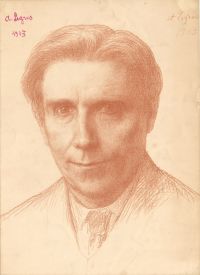 Thomas Okey,
Paris and Its Story
Thomas Okey,
Paris and Its Story
“ Paris, unlike London, has never expatiated to the effacement of her distinctive features and the loss of civic consciousness. The city has still a definite outline and circumference, and over her gates to-day one may read, Entrée de Paris. The Parisian is, and always has been, conscious of his citizenship, proud of his city, careful of her beauty, jealous of her reputation. ”
 Emerson Hough,
The Mississippi Bubble
Emerson Hough,
The Mississippi Bubble
“ Paris, city of delights, Paris drunk with gold, mad with the delirium of excesses, Paris with no aim except joy, no method but extravagance, held within her gilded gates one citadel of sensuality which remained ever an object of mystery, a source of curiosity even in that dissipated and pleasure-sated city. In the Palais Royal, back of the regally beautiful gardens, back of the noble rows of trees, beyond the gates of iron and the guards in uniform, lived France's regent, in a city of libertines the prince of libertines. ”
“ It is not France, but Paris, the great centre of population, the seat of all that is luxurious and refined, of science and of art, of everything in short which can serve to adorn and embellish social life; it is this Paris alone that makes and unmakes kings and emperors, that overthrows one dynasty during the night and sets up another the next morning, and then gives the law to the nation which stands looking on. ”
Sir Archibald Alison, Travels in France during the years 1814-15
“ Another peculiarity is, that the Frenchmen of the present day are not only always abroad, in the midst of the public, but that they invariably flock from the interior of the kingdom into Paris, and there engage in those public exhibitions, and bustle about in that endless routine of business or pleasure, which is passing in the capital. The French nobility, and the men of property who still remain in the kingdom, invariably spend their lives in Paris. ”
Orlo Williams, Vie de Bohème: A Patch of Romantic Paris
“ By 1830 Paris was a boiling cauldron of passionate enthusiasm. Revolution was aflame once more. Barricades—the mere word is a trumpet-call to Frenchmen—had been erected once more in the streets, and once more blood had flowed in their defence. Paris for years had smouldered with indignation, and now her young men glowed with triumph. The people should come to its own again, and they should be its champions. ”
Henry James, Portraits of places (1883)
“ These people, in Paris, strike me afresh as the cleverest, the most perceptive, and, intellectually speaking, the most human of their kind. The Paris ouvrier, with his democratic blouse, his expressive, demonstrative, agreeable eye, his meagre limbs, his irregular, pointed features, his sallow complexion, his face at once fatigued and animated, his light, nervous organisation, is a figure that I always encounter again with pleasure. In some cases he looks depraved and perverted, but at his worst he looks refined; he is full of vivacity of perception, of something that one can appeal to. ”
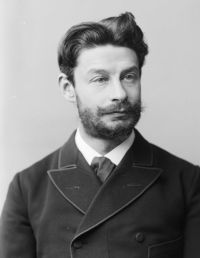 Georg Brandes,
Recollections of My Childhood and Youth
Georg Brandes,
Recollections of My Childhood and Youth
“ My Wish to See Paris--Dualism in our Modern Philosophy--A Journey--Impressions of Paris--Lessons in French--Mademoiselle Mathilde --Taine. I. I had wished for years to see Paris, the city that roused my most devout feelings. As a youth I had felt a kind of reverent awe for the French Revolution, which represented to me the beginning of human conditions for all those who were not of the favoured among men,--and Paris was the city of the Revolution. ”
Eliot Gregory, Worldly Ways & Byways
“ So far Paris has held her own. The spirit of the city has not been lost, as in the other capitals. The fair metropolis of France, in spite of many transformations, still holds her admirers with a dominating sway. She pours out for them a strong elixir that once tasted takes the flavor out of existence in other cities and makes her adorers, when in exile, thirst for another draught of the subtle nectar. ”
 Philip Gibbs,
Adventures in Journalism
Philip Gibbs,
Adventures in Journalism
“ I came to know and to love Paris, by day and night, on both sides of the Seine, and in all its quarters, rich and poor. To me it is still the most attractive city in the world, and I have an abiding passion for its ghosts, its beauty, and its people. To “feel” Paris one must be steeped in the history and literature of France, so that one walks, not lonely, but as a haunted man along the rue St. ”
Thomas Okey,
The Story of Paris
“ Their patrimony was a small one—the provinces of the Isle de France, La Brie, La Beauce, Beauvais and Valois; but their sway extended over the land of the Langue d'oil, with its strenuous northern life, le doux royaume de la France, the sweet realm of France, whose head was Paris, cradle of the great French Monarchy and home of art, learning and chivalry. The globe of the earth, symbol of universal empire, gives way to the hand of justice as the emblem of kingship. ”
Benjamin Ellis Martin, The Stones of Paris in History and Letters…
“ We are to see a Paris unknown to the every-day dweller there, who is content to tread, in wearied idleness, his swarming yet empty boulevards; a Paris unseen by the hurried visitor, anxious to go his round of dutiful sight-seeing. This Paris is far away from the crowd, bustling in pursuit of pleasure, and hustling in pursuit of leisure ”
“ And so Paris has grown,—beautiful and great,—and the stranger within her gates, whether he come by road or rail, by automobile or railway-coach, is sure to be duly impressed with the fact that Paris is for one and all alike a city founded of and for the people. ”
The Americans in the Great War…
“ PARIS—home of grandeur, elegance, and wit—plays a part in France probably unequalled in any other country, and may be considered, in many respects, as the chief city of Europe, and one of the greatest in the world. ”
“ If a person walks about Paris and inquires much as to the history of the city and its improvements, as we Americans say, he will soon find that Paris has been chiefly indebted for her grandeur to Henry IV., Louis XIV., Napoleon, and Louis Philippe. Bridges, places, arches, and fountains show how much Paris owes to these rulers. ”
Richard Boyle Bernard, A tour through some parts of France…
“ And after spending a considerable time in Paris, I saw no reason to change the opinion which I had first formed; that opinion however cannot, I should apprehend, be questioned by a Frenchman, as it admits fully the magnificence of many parts of his favourite city, and this is sufficient for his vanity. With us cleanliness and comfort are preferred to shew, we find them in most of our own cities, but those who know most of Paris will not deny that they are rarely to be met with there. ”
 Nathaniel Parker Willis,
Pencillings by the Way
Nathaniel Parker Willis,
Pencillings by the Way
“ It has the stamp of Napoleon—simple grandeur. The broad avenue from the Tuileries swells slowly up to it for two miles, and the view of Paris at its foot, even, is superb. We ascended to 99 the unfinished roof, a hundred and thirty-five feet from the ground, and saw the whole of the mighty capital of France at a coup d'œil—churches, palaces, gardens; buildings heaped upon buildings clear over the edge of the horizon, where the spires of the city in which you stand are scarcely visible for the distance. ”
“ The site of Paris is in itself nothing more than one among the many little groups of willow-clad alluvial islets which are frequent along the upper reaches of the river. The modern city owes its special development as a town, first to its Roman conquerors, then to its bridges, next to its mediæval counts, last of all to the series of special accidents by which those counts developed at last into kings of the nascent kingdom of France, and inheritors of the traditions of the Frankish sovereigns. ”
Various, Blackwood's Edinburgh Magazine…
“ The former is viewed with wonder and admiration; for size it is a province, for population a kingdom. But Paris, the modern Babel, with its boulevards and palaces, its five-and-twenty theatres, its gaudy restaurants and glittering coffee-houses, its light and cheerful aspect, so different from the soot-grimed walls of the English capital, is the land of promise to truant gentlemen and erratic ladies, whether from the Don or the Danube, the Rhine or the Wolga, from the frozen steppes of the chilly north, or the orange groves of the sunny south. ”
 Jules Claretie,
Prince Zilah — Volume 2
Jules Claretie,
Prince Zilah — Volume 2
“ Paris, whose everyday gossip has usually the keenness and eagerness of the tattle of small villages, preserves at times, upon certain serious subjects, a silence which might be believed to be generous. ”
Henry M. Field, From the Lakes of Killarney to the Golden Horn
“ I have lived in Paris, first and last, a good deal. I was here six months in 1847-8, and saw the Revolution which overthrew Louis Philippe, and have been here often since. I confess I am fond of it, and always return with pleasure. That which strikes the stranger at once is its bright, sunny aspect; there is something inspiring in the very look of the people; one feels a change in the very air. ”
Evelyn Beatrice Hall, The life of Voltaire
“ EPIGRAMS AND THE BASTILLE At the death of Louis XIV. Paris was still the typical Paris of the old régime. Magnificence and squalor, dirt and splendour, a few men living like gods and most men living like beasts; narrow and filthy streets, and the sumptuous glory of the Court of the Sun King; a hungry canaille, and a noblesse whose exquisite finish of manner concealed the most profound corruption of morals the world has seen. ”
