
“ Between them, around them, swarms Parisian life, with its bustle and noise; on the pavements pass neat grisettes by twos and threes, their smooth hair uncovered, either coming from or going to breakfast, men with dirty grayish-white blouses, servant-girls in white caps, Englishwomen with long teeth, and Parisians of all kinds, recklessly pressing on towards some aim known to themselves only ”
Parisian
Definition and stakes
The concept of the "Parisian" encompasses both the city’s vibrant identity and the unique character of its residents, as portrayed by many 19th- and early 20th-century writers. Authors such as Thomas Okey underscored the Parisian’s civic pride and connection to the city’s beauty, while William Cullen Bryant emphasized its relaxed pace and cultural richness.
Frances Milton Trollope examined the social impact of Parisian women, and Alexandre Dumas illustrated the public’s interest in ceremony and pageantry. These diverse viewpoints together depict the Parisian as a combination of cosmopolitanism, cleverness, and emotional depth, reflecting the city’s lasting charm as a living, dynamic force.
Quotes about “Parisian”
 Theodore Dreiser,
A Traveler at Forty
Theodore Dreiser,
A Traveler at Forty
“ The Parisian—from the keeper of a market-stall to the prince of the money world, or of art—wants to live gaily, briskly, laughingly, and he will not let the necessity of earning his living deny him. I felt it in the churches, the depots,231 the department stores, the theaters, the restaurants, the streets—a wild, keen desire for life with the blood and the body to back it up. It must be in the soil and the air, for Paris sings. It is like poison in the veins, and I felt myself growing positively giddy with enthusiasm. ”
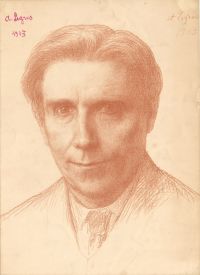 Thomas Okey,
Paris and Its Story
Thomas Okey,
Paris and Its Story
“ Paris, unlike London, has never expatiated to the effacement of her distinctive features and the loss of civic consciousness. The city has still a definite outline and circumference, and over her gates to-day one may read, Entrée de Paris. The Parisian is, and always has been, conscious of his citizenship, proud of his city, careful of her beauty, jealous of her reputation. ”
 Leslie Stephen,
Hours in a Library, Volume 1
Leslie Stephen,
Hours in a Library, Volume 1
“ There are, he tells us, a few connoisseurs who enjoy the Parisian flavour like the bouquet of some delicate wine. To all Paris is a marvel; to them it is a living creature; every man, every fragment of a house, is 'part of the cellular tissue of this great courtesan, whose head, heart, and fantastic manners are thoroughly known to them.' They are lovers of Paris; to them it is a costly luxury to travel in Paris. ”
Eliot Gregory, The Ways of Men
“ Americans who were in Paris two years ago had an excellent opportunity of judging the sincerity of Parisian affection, and of sounding the depth and unselfishness of the love that this fickle city gives us in return for our homage. ”
Richard Boyle Bernard, A tour through some parts of France…
“ The Parisian is in general tolerably indifferent as to his political situation; he is never wholly enslaved, never free. He repels cannon by puns, and links together power and despotism by witty epigrams. ”
 William Cullen Bryant,
Letters of a Traveller; Or, Notes of Things Seen in Europe and America
William Cullen Bryant,
Letters of a Traveller; Or, Notes of Things Seen in Europe and America
“ The Parisian has his amusements as regularly as his meals, the theatre, music, the dance, a walk in the Tuilleries, a refection in the café, to which ladies resort as commonly as the other sex. Perpetual business, perpetual labor, is a thing of which he seems to have no idea. ”
 Frances Milton Trollope,
Paris and the Parisians in 1835…
Frances Milton Trollope,
Paris and the Parisians in 1835…
“ Parisian Women.—Rousseau's failure in attempting to describe them.—Their great influence in Society.—Their grace in Conversation.—Difficulty of growing old.—Do the ladies of France or those of England manage it best? There is perhaps no subject connected with Paris which might give occasion to such curious and inexhaustible observation as the character, position, and influence of its women. ”
D. W. Bartlett, Paris: With Pen and Pencil
“ The genuine Parisian is so fond of appearance, that he cares little for the substance. The churches of Paris, therefore, abound with all that can impress the eye, how [Pg 86] ever repugnant to a refined taste. For I dare to hold, that the French love not the true refinement in matters of religion. ”
 Alexandre Dumas,
The Count of Monte Cristo
(1888)
Alexandre Dumas,
The Count of Monte Cristo
(1888)
“ The Parisians, always curious, always affected by funereal display, looked on with religious silence, while the splendid procession accompanied to their last abode two of the number of the old aristocracy, celebrated for traditional esprit, for fidelity to engagements and sincere devotion to principle. ”
Princess Catherine Radziwill, France from Behind the Veil: Fifty Years of Social and Political Life
“ He is a curious figure in the kaleidoscopic picture that Parisian society represents to-day, and though he has no aristocratic ancestry behind him, he is ever a welcome and much-desired guest in the select salons of the city. ”
 Victor Hugo,
Les Misérables
(1862)
Victor Hugo,
Les Misérables
(1862)
“ and when one says student, one says Parisian: to study in Paris is to be born in Paris. ”
Countess of Marguerite Blessington, The Idler in France
“ Parisian society is very exclusive, and is divided into small coteries, into which a stranger finds it difficult to become initiated. Large routes are rare, and not at all suited to the tastes of the French people ”
 H. Sutherland Edwards,
Old and New Paris: Its History…
H. Sutherland Edwards,
Old and New Paris: Its History…
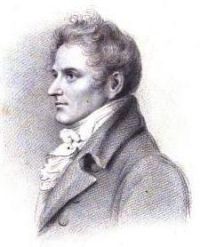
“ A provincial or a foreigner might ask with curiosity what part these persons, so strangely armed, play in the social system; but Parisians, to whom they have long been familiar, and to whom they are indeed historical, know them as the chiffonniers or rag-pickers. An observer, if he follows one of these wretched adventurers, will see him stop at every dust-heap lying along the thoroughfares, previously to their being cleared away by the city scavengers. ”
 Sir John Carr,
The stranger in France
Sir John Carr,
The stranger in France
“ A short time before my arrival at Paris, this great genius, who displays a perfect knowledge of mankind, and particularly of the people over whom he rules, discovered that the parisians, from a familiarity with his person, and from his lady and his family having occasionally joined in their parties of amusement, began to lose that degree of awe and respect for him, which he so well knows how to appreciate, as well as to inspire. ”
Henry Thew Stephenson, The Elizabethan People (1910)
“ THE American in Paris often asks himself the question: What do they all do for a living? At first sight, every one, whether high or low, seems to be wholly bent on pleasure, a bent the Parisians have developed into a fine art. ”
Frances Milton Trollope,
Paris and the Parisians in 1835…
“ To look into the hearts of all who form either 133 a Parisian or a London lady's visiting list, in order to discover of what stuff each individual be made, would not perhaps be very wise, and is luckily quite impossible. ”
 W. Y. Morgan,
A Journey of a Jayhawker
W. Y. Morgan,
A Journey of a Jayhawker
“ The philosophy in the above is that it gives you an idea of Paris with its brilliantly lighted streets, the men eating and drinking, sitting at the little tables along the walks, the well-dressed people, the brilliant colors, the laughter, the bright and polite conduct of men and women, the holiday appearance, the pleasure that everyone is having, and the general gait at which Parisians travel. ”
Frederick Niecks, Frederick Chopin, as a Man and Musician…
“ Everybody goes his own way....The Parisians are a peculiar people. When evening sets in one hears nothing but the crying of titles of little new books, which consist of from three to four sheets of nonsense. ”
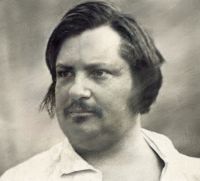 Honoré de Balzac,
Letters of Two Brides
(1842)
Honoré de Balzac,
Letters of Two Brides
(1842)
“ Didn't I tell you once that in Paris one must be as the Parisians? Society there drives out all sentiment; it lays en embargo on your time; and unless you are very careful, soon eats away your heart altogether. ”
H. Sutherland Edwards,
Old and New Paris: Its History…
“ Mere nonsense. In a society so profoundly democratic as ours, in which waiters have become kings, the sons of innkeepers prime ministers, and foundlings illustrious men of science, there is a place for everyone.{324}”CHAPTER XLV. PARISIAN MENDICANCY: THE PARIS POOR. Parisian Mendicancy in the Sixteenth Century—The General Hospital—Louis XV. and the Beggars—The Revolution—Mendicancy as a Regular Profession—The Organ-grinders and the Trade in Italian Children—The French Treatment of the Poor—Asylums, Alms-houses, and Retreats—The Droit des Pauvres—The Cost of the Poor. ”
Moritz Busch, Bismarck (1898)
“ The Parisians, with their political superstitions, are quite a distinct people in France,—they are caught and bound up in a circle of ideas which are a sacred tradition to them, although when closely examined they turn out to be mere empty phrases. ”
Henry James, The Letters of Henry James (Vol…
“ It is a very comfortable and profitable place, on the whole—I mean, especially, on its general and cosmopolitan side. Of pure Parisianism I see absolutely nothing. The great merit of the place is that one can arrange one's life here exactly as one pleases—that there are facilities for every kind of habit and taste, and that everything is accepted and understood. Paris itself meanwhile is a sort of painted background which keeps shifting and changing, and which is always there, to be looked at when you please, and to be most easily and comfortably ignored when you don't. ”
Mary Wollstonecraft Shelley, Lives of the most eminent literary and scientific men of France…
“ The Parisians, and especially the nobility, desired to be amused, and no man was ever born so fitted to afford excitement to the circles of the rich and gay, as the vain, witty, restless, eager poet, who made a jest of everything, yet rendered all instinct with the interest imparted by his good heart and versatile talents. ”
 Maria Edgeworth,
The Life and Letters of Maria Edgeworth…
Maria Edgeworth,
The Life and Letters of Maria Edgeworth…
“ It was excessively entertaining to hear half a dozen Parisians all speaking at once, giving their opinions of the English dandies who have appeared at Paris, describing their manners and imitating their gestures, and sometimes by a single gesture giving an idea of the whole man ”
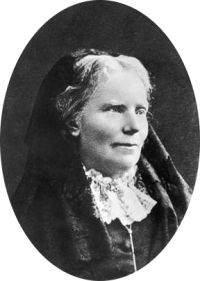 Elizabeth Blackwell,
Pioneer Work in Opening the Medical Profession to Women
Elizabeth Blackwell,
Pioneer Work in Opening the Medical Profession to Women
“ There is a constant effervescence of life in this great city, which concentrates all its energy in itself, and makes the Parisians at the same time the most brilliant and the most conceited people in the world. The greatest pleasure which we have yet enjoyed was our trip last Sunday to Versailles ”
 Scott Nearing,
The Super Race: An American Problem
Scott Nearing,
The Super Race: An American Problem
“ Can one conceive of a paper strewn campus in a college where the spirit is strong? Parisians believe in beauty, hence Paris is beautiful. Social institutions combine the achievements of the past with the ethics of the present. ”
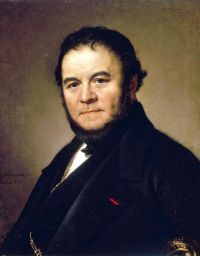 Stendhal,
The Red and the Black
(1830)
Stendhal,
The Red and the Black
(1830)
“ Could anything possibly be more humorous than believing in the depth or in the depravity of the Parisian character? ”
Honoré de Balzac,
Modeste Mignon
“ Evidently most provincials never form an exact idea in their own minds of how illustrious Parisians put on their cravats, walk on the boulevards, stand gaping at nothing, or eat a cutlet; because, no sooner do they perceive a man clothed in the sunbeams of fashion or resplendent with some dignity that is more or less fugitive (though always envied) , than they cry out, "Look at that!" ”
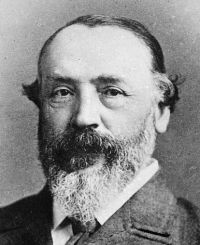 Henry Du Pré Labouchere,
Diary of the Besieged Resident in Paris
Henry Du Pré Labouchere,
Diary of the Besieged Resident in Paris
“ If the Parisians were not so thoroughly conceited, one might hope that the presence of these villagers would have a beneficial effect upon them, and show them that the Frenchmen out of Paris are worth more than those within it. ”
Alexandre Dumas,
The Count of Monte Cristo
(1845)
“ Sinbad the Sailor is your baptismal appellation, and yet the first day you set foot in Paris you instinctively display the greatest virtue, or rather the chief defect, of us eccentric Parisians,—that is, you assume the vices you have not, and conceal the virtues you possess.” ”
Baron Edward Bulwer Lytton Lytton, The Parisians — Complete
“ His ministers will be but weathercocks, turned hither and thither according as the wind chops at Paris; and Paris is the temple of the winds. The new revolution is almost at hand. [Murmurs of applause.] It would move the laughter of the Tuileries and its ministers, of the Bourse and of its gamblers, of every dainty salon of this silken city of would-be philosophers and wits, if they were told that here within this mouldering baraque, eight men, so little blessed by fortune, so little known to fame as ourselves, met to concert the fall of an empire. ”
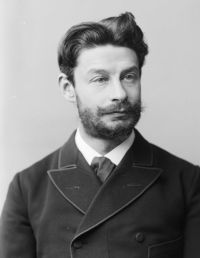 Georg Brandes,
Recollections of My Childhood and Youth
Georg Brandes,
Recollections of My Childhood and Youth
“ My Wish to See Paris--Dualism in our Modern Philosophy--A Journey--Impressions of Paris--Lessons in French--Mademoiselle Mathilde --Taine. I. I had wished for years to see Paris, the city that roused my most devout feelings. As a youth I had felt a kind of reverent awe for the French Revolution, which represented to me the beginning of human conditions for all those who were not of the favoured among men,--and Paris was the city of the Revolution. ”
Orlo Williams, Vie de Bohème: A Patch of Romantic Paris
“ By 1830 Paris was a boiling cauldron of passionate enthusiasm. Revolution was aflame once more. Barricades—the mere word is a trumpet-call to Frenchmen—had been erected once more in the streets, and once more blood had flowed in their defence. Paris for years had smouldered with indignation, and now her young men glowed with triumph. The people should come to its own again, and they should be its champions. ”
The Americans in the Great War…
“ PARIS—home of grandeur, elegance, and wit—plays a part in France probably unequalled in any other country, and may be considered, in many respects, as the chief city of Europe, and one of the greatest in the world. ”
Baron Edward Bulwer Lytton Lytton, The Parisians — Volume 01
“ O Paris, 'foyer des idees, et oeil du monde!'— animated contrast to the serene tranquillity of the Vril-ya, which, nevertheless, thy noisiest philosophers ever pretend to make the goal of their desires: of all communities on which shines the sun and descend the rains of heaven, fertilizing alike wisdom and folly, virtue and vice; in every city men have yet built on this earth,—mayest thou, O Paris, be the last to brave the wands of the Coming Race and be reduced into cinders for the sake of the common good! ”
Victor Hugo,
Les Misérables
(1862)
“ Paris is a spendthrift. Paris, that model city, that patron of well-arranged capitals, of which every nation strives to possess a copy, that metropolis of the ideal, that august country of the initiative, of impulse and of effort, that centre and that dwelling of minds, that nation-city, that hive of the future, that marvellous combination of Babylon and Corinth, would make a peasant of the Fo-Kian shrug his shoulders, from the point of view which we have just indicated. ”
Charles Morris, Historic Tales: The Romance of Reality…
“ Paris was ready to worship him. The king himself would not have dared to interfere with the popular idol in that interval of enthusiastic ebullition. [Pg 265] All Paris was prepared to cast itself at his feet; all France was eager to do him honor; all calumny, jealousy, hatred were forgotten; a nation had risen to welcome and honor its greatest genius, and the splendors of the court paled before the glory which seemed to emanate from that feeble, tottering veteran of the empire of thought, who had come back to occupy, for a brief period, the throne of his old dominion. ”
Earl of Philip Dormer Stanhope Chesterfield, Letters to His Son, 1750
“ What pleases you in others, will in general please them in you. Paris is indisputably the seat of the GRACES; they will even court you, if you are not too coy. Frequent and observe the best companies there, and you will soon be naturalized among them; you will soon find how particularly attentive they are to the correctness and elegance of their language, and to the graces of their enunciation: they would even call the understanding of a man in question, who should neglect or not know the infinite advantages arising from them. ”
Henry James, Portraits of places (1883)
“ These people, in Paris, strike me afresh as the cleverest, the most perceptive, and, intellectually speaking, the most human of their kind. The Paris ouvrier, with his democratic blouse, his expressive, demonstrative, agreeable eye, his meagre limbs, his irregular, pointed features, his sallow complexion, his face at once fatigued and animated, his light, nervous organisation, is a figure that I always encounter again with pleasure. In some cases he looks depraved and perverted, but at his worst he looks refined; he is full of vivacity of perception, of something that one can appeal to. ”
Thomas Okey,
The Story of Paris
“ Their patrimony was a small one—the provinces of the Isle de France, La Brie, La Beauce, Beauvais and Valois; but their sway extended over the land of the Langue d'oil, with its strenuous northern life, le doux royaume de la France, the sweet realm of France, whose head was Paris, cradle of the great French Monarchy and home of art, learning and chivalry. The globe of the earth, symbol of universal empire, gives way to the hand of justice as the emblem of kingship. ”
 Émile Zola,
The Three Cities Trilogy: Paris…
Émile Zola,
The Three Cities Trilogy: Paris…
“ Among the households to which the reader is introduced are those of a banker, an aged Countess of the old noblesse, a cosmopolitan Princess, of a kind that Paris knows only too well, a scientist, a manufacturer, a working mechanician, a priest, an Anarchist, a petty clerk and an actress of a class that so often dishonours the French stage. Science and art and learning and religion, all have their representatives. ”
Various, The Mirror of Literature, Amusement…
“ What a multitude of associations flitted across the memory, by a single glance at PARIS—the capital of that gay, light-hearted, and mercurial people—the French nation—the focus of European luxury, and the grand political arena of modern history, the very calendar of whose events, within the last half century, will form one of the most interesting episodes that ever glowed among the records of human character. ”
