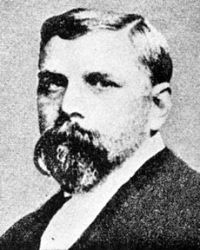
“ But in the smaller Kaiser cellar, along each side of the single long table, sat young men numbering a score, who ate black bread and drank Rhine wine, to the roaring of song and the telling of story. They formed a close coterie, admitting no stranger to their circle if one dissenting voice was raised against his acceptance, yet in spite of this exclusiveness there was not a drop of noble blood in the company. They belonged, however, to the aristocracy of craftsmen; metal-workers for the most part, ingenious artificers in iron, beaters of copper, fashioners of gold and silver. ”
Coterie
Definition and stakes
The theme of “coterie” has been addressed by authors such as Robert Barr, John Timbs, Earl Lind, Earl of Beaconsfield Benjamin Disraeli and Marie Corelli. It is often associated with terms like cotton, coat, tailor, clothing and wool.
Quotes about “coterie”
 John Timbs,
Club Life of London, Vol. 2 (of 2…
John Timbs,
Club Life of London, Vol. 2 (of 2…
“ Here, likewise, we find this redeeming picture:—"The members of the little coterie, who take the dark corner under the clock, have for years visited this house; they number two or three old, steady merchants, a solicitor, and a gentleman who almost devotes the whole of his time and talents to philanthropic objects,—for instance, the getting up of a Ball for Shipwrecked Mariners and their families; or the organization of a Dinner for the benefit of the Distressed Needlewomen of the Metropolis; they are a very quiet party, and enjoy the privilege of their séance, uninterrupted by visitors." ”
 Earl Lind,
Autobiography of an Androgyne
(1918)
Earl Lind,
Autobiography of an Androgyne
(1918)
“ A bright and facile fairie is capable of furnishing them a great deal of entertainment, aside from the opportunity of exercising their fundamental impulse. With myself also, coitus was a comparatively small element in our mutual relations. Innocent coquetry, including " taking off " the baby and the woman, occupied a far larger place. My relations with a coterie of beaux, and particularly with soldiers around the camps and forts, reminded me sometimes of a play. ”
Earl of Beaconsfield Benjamin Disraeli, The Young Duke
“ Coterie succeeds coterie, equally smiling—the explosions take place in his absence. Even a grand passion, which teaches a man more, perhaps, than anything else, is not very easily excited by the traveller. The women know that, sooner or later, he must disappear; and though this is the case with all lovers, they do not like to miss the possibility of delusion. Thus the heroines keep in the background, and the visitor, who is always in a hurry, falls into the net of the first flirtation that offers. The Duke of St. James had, however, acquired a great knowledge ”
 Marie Corelli,
Free Opinions, Freely Expressed on Certain Phases of Modern Social Life and Conduct
Marie Corelli,
Free Opinions, Freely Expressed on Certain Phases of Modern Social Life and Conduct
“ Ladies who dress with a becoming simplicity, and who are not liable to the accusation of walking about with clothes unpaid for, will be eligible for membership,—and young men who are not ashamed to emphatically decline playing cards on Sunday will be equally welcome in the select coterie. ”
Various, The Wide World Magazine, Vol. 22…
“ I felt confident that I could win a lot of money, and up to this point had not the faintest suspicion that I was in the midst of a gang of card-sharpers of whose modus operandi of working the business I was now being given a practical demonstration. Therefore, when the leader of the coterie, the man, who had “hooked” me outside, suggested that the stakes should be thirty-two shillings I made no demur, but blindly accepted, fondly imagining that by exercising a little care in watching where the cards were placed I should be able to spot the “lady.” ”
The Cavalier Songs and Ballads of England from 1642 to 1684
“ The bar-boys shall be pages all, A tavern well-prepared, And nothing shall be spared; In jovial sort shall be the court, Wine-porters that are soldiers tall Be yeomen of the guard.But if a cooper we with a red nose see In any part of the town; The cooper shall, with his aids-royal, Bear the sceptre of the crown; Young wits that wash away their cash In wine and recreation, Who hates ale and beer, shall be welcome here To give their approbation ”
Robert Smith Surtees, "Ask Mamma"; or, The Richest Commoner In England
“ A loosely hanging garment, and not a strait-waistcoat, in fact, a fashion very much in favour of bunglers, seeing that anybody can make a sack, while it takes a tailor to make a coat. The Major’s cost him about two pounds five, the cloth having been purchased at a clothier’s and made up at home, by a three shilling a day man and his meat. We laugh at the ladies for liking to be cheated by their milliners; but young gentlemen are quite as accommodating to their tailors. Let any man of forty look at his tailor’s bill when he was twenty, and see what a liberality of innocence it displays. ”
James Colville, Studies in Lowland Scots (1909)
“ In those old days work and pleasure were blended in kindly fashion. No one contributed to this more than the peripatetic tailor, ever a welcome visitor to the upland dales: "Travelling artisans—tailors, shoemakers, and saddlers—went to the houses of the country people to work, taking with them their own material. They were paid so much a day and their 'meat.' This custom was formerly very common hereabouts, but it is not so much followed now." It was called "ť whip t' cat." All over Old Scotland the "customer" tailor, working for customers, was known as Whip-the-Cat. ”
 Stewart Edward White,
The Land of Footprints
Stewart Edward White,
The Land of Footprints
“ Shooting coats that had seen better days, a dozen shabby overcoats-worn proudly through the hottest noons-raggety breeches and trousers made by some London tailor, queer baggy homemades of the same persuasion, or quite simply the square of cotton cloth arranged somewhat like a short tight skirt, or nothing at all as the man's taste ran. ”
 Paul de Kock,
The Milkmaid of Montfermeil (Novels of Paul de Kock Volume XX)
Paul de Kock,
The Milkmaid of Montfermeil (Novels of Paul de Kock Volume XX)
“ The calèche, drawn by two spirited horses, bore away Athalie and the four young men of fashion, among whom was Dalville. Each of the four paid court to the petite-maîtresse, who had the art of distributing a word, a smile, a glance, to each in turn, and revelled deliciously in the homage that was laid at her feet. Is there a greater joy for a true coquette than to be surrounded by men who wear her chains? ”
S. A. Reilly, Our Legal Heritage: The First Thousand Years…
“ No man may enter a craft of cloth-making until he has been an apprentice for seven years or has married a clothiers' wife and practicing the trade for years with her and her servants sorting the wool.No country person shall sell wares such as linen drapery, wool drapery, hats, or groceries by retail in any incorporated town, but only in open fairs.For every 60 sheep there shall be kept one milk cow because of the scarcity of cattle.No clothier may keep more than one wool loom in his house, because many weavers do not have enough work to support their families. ”
Pierce Butler, Women of Mediæval France
“ The sleeves of the cotte-hardie were, among sober-minded dames, rather close fitting and plain; fashion had them made absurdly large, flaring at the wrist to many times the dimensions of the upper part, and sometimes so long as not only to cover the whole hand, but to trail upon the ground. ”
Anonymous, Cotton, Its Progress from the Field to the Needle
“ Among the utilitarian gifts of nature and art we know of none in more general use, or of greater practical value, than sewing-cotton. The taste which turns into graceful shapes the products of the loom, the executive skill which converts them into convenient and elegant apparel, would be powerless without this simple accessory. It is the food of the needle, and might almost be called the thread of life to thousands of the gentler sex. ”
Madeline Leslie, Up the ladder; (1863)
“ They then proceeded to the store of a merchant tailor, where Ella gravely gave her opinion as to the fit of coats, and also as to the comparative beauty of different patterns of cravats,—the young clerk being delighted to see that, with additional experience and advance in age, her taste had improved, so that no longer as formerly did she choose the most showy colors. ”
Richard Wilson, The Russian Story Book
“ I have another thirty young men in my hire, each one a master tailor. With never a pause the thirty continue making coats, and I wear a coat for one day and only by a chance wear it for a second day. After I have cast off one of these coats it is taken to the market and sold to some prince or nobleman for its full value. But I am no boaster.”“Moreover,” he went on, after a short pause for breath, “I have a mare with a golden coat which cost at a market price five hundred roubles. ”
 Adam Smith,
The Wealth of Nations
(1902)
Adam Smith,
The Wealth of Nations
(1902)
“ The woollen coat, for example, which covers the day-labourer, as coarse and rough as it may appear, is the produce of the joint labour of a great multitude of workmen. The shepherd, the sorter of the wool, the wool-comber or carder, the dyer, the scribbler, the spinner, the weaver, the fuller, the dresser, with many others, must all join their different arts in order to complete even this homely production. How many merchants and carriers, besides, must have been employed in transporting the materials from some of those workmen to others who often live in a very distant part of the country! ”
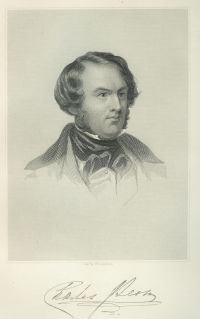 Charles James Lever,
Luttrell Of Arran
Charles James Lever,
Luttrell Of Arran
“ I used to come down to dinner at Dalradern at times powdered, or with my hair in short curls, à la Sévigné, and my costume all to suit; and you should have seen the worshipful homage of old Sir Within, as he presented me with my bouquet, and kissed the extreme tips of my fingers. Oh dear, what a delightful dream it was, all of it!” “What a coquette you must be! What a coquette you are!” muttered he, savagely. “Of course I am, Harry. Do you think I would deny it? Coquetry is the desire to please, as a means of self-gratification. I accept the imputation.” ”
Charles de Coster, Flemish Legends
“ But no one paid him any heed, for by this time the women were seated all about the table, and you might hear this: “Drink this, pretty sweet, ’tis a draught from heaven.” “Pour, neighbour, pour, pour out some more of this sweet drink.” “Who is a better man than I? I am the Duke; I have good wine and good wife!” “Ho, there! broach a fresh cask of wine; we must have the best there is to-day to pleasure these good dames.” “Courage! I have drunk too much; I am going to conquer the moon. ”
 Joseph Jacobs,
More English Fairy Tales
(1922)
Joseph Jacobs,
More English Fairy Tales
(1922)
“ Now the very next Sunday was Yuletide, and all the folk were going to church in their best clothes, so Rushen Coatie said: "Oh! I should like to go to church too," but the three ugly sisters said: "What would you do at the church, you nasty thing? You must bide at home and make the dinner." And the king's wife said: "And this is what you must make the soup of, a thimbleful of water, a grain of barley, and a crumb of bread." When they all went to church, Rushen Coatie sat down and wept, but looking up, who should she see coming in limping, lamping, with a shank wanting, but the dear red calf? ”
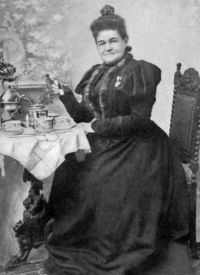 Marion Harland,
Marion Harland's Complete Etiquette
Marion Harland,
Marion Harland's Complete Etiquette
“ The theory is that it should never be worn where there are ladies, but the modern practise has broken the theory down so that at small dinners, the theater, club affairs, etc., the dinner coat is worn by men who give the subject of dress intelligent consideration. ”
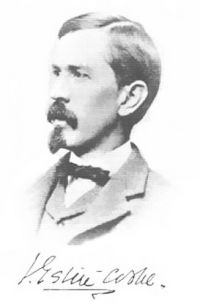 John Esten Cooke,
Mohun; Or, the Last Days of Lee and His Paladins
John Esten Cooke,
Mohun; Or, the Last Days of Lee and His Paladins
“ Vice was strutting in cloth of gold; virtue was at home mending its rags. Every expedient was resorted to, not so much to keep up appearances as to keep the wolf from the door. Servants were sent around by high-born ladies to sell, anonymously, baskets of their clothes. The silk or velvet of old days was now parted with for bread. On the shelves of the bookstores were valuable private libraries, placed there for sale. In the shops of the silversmiths were seen breastpins, watches, bracelets, pearl and diamond necklaces, which their owners were obliged to part with for bread. ”
The German Classics of the Nineteenth and Twentieth Centuries
“ But whoso has no horses, and makes a pair of lean oxen draw his plow, is a cotter and must hold his tongue. In the tavern, in the town meeting, and everywhere. His opinion is worthless, and no regular farmer pays any attention to the poor beggar.The professor of the Cobbler-Sebastian property, house number eight in Eynhofen, George Fottner by name, was a cotter. ”
Dion Clayton Calthrop, English Costume
“ One must remember that, as always, many people dressed out of the fashion; that many men still wore the cotehardie, a well-fitting garment reaching half-way down the thigh, with tight sleeves coming over the hand, decorated with buttons under the sleeve from the elbow to the little finger. ”
Joseph Jacobs,
More English Fairy Tales
(1922)
“ And the red calf said to her: "Do not sit there weeping, but go, put on these clothes, and above all, put on this pair of glass slippers, and go your way to church." "But what will become of the dinner?" said Rushen Coatie. "Oh, do not fash about that," said the red calf, "all you have to do is to say to the fire: "Every peat make t'other burn, Every spit make t'other turn, Every pot make t'other play, Till I come from church this good Yuleday," and be off to church with you. But mind you come home first." ”
John Camden Hotten, A Dictionary of Slang, Cant, and Vulgar Words
“ COSTER, the short and slang term for a costermonger, or costard-monger, who was originally an apple seller. Costering, i.e., costermongering.COTTON, to like, adhere to, or agree with any person; “to cotton on to a man,” to attach yourself to him, or fancy him, literally, to stick to him as cotton would. Vide Bartlett, who claims it as an Americanism; and Halliwell, who terms it an Archaism; also Bacchus and Venus, 1737. ”
 M. E. Francis,
Stepping Westward
M. E. Francis,
Stepping Westward
“ How could I, plain John Cotley, the unpretending country gentleman, with threadbare clothes and light purse, hope to make my way into the circles which you will adorn. You, who will be courted by the highest in the land, admired by all the fashionable world. ”
Günther F. Hertzer, Garment cutting in the twentieth century (1892)
“ In visiting different tailor shops we find that the dressing of the under-collar is accomplished in many different ways, and for aught I know all may be right—if they suit the customer, or if the collar is on, as it is required by the coat. ”
Paul de Kock,
Paul and His Dog, v.1 (Novels of Paul de Kock Volume XIII)
“ I won't dress as a woman; but how shall I dress, then?""You can decide at the costumer's and dress there; it's within a few steps of the Opéra.""All right. But my clothes?""The costumer will send them to your concierge.""Deuce take it! no; I can't have that; I have no desire to go home in a Carnival costume, so that every one may know that I've been to the ball in disguise. A business agent—and sometimes clients call very early in the morning!—A Carnival costume would not inspire confidence.""Well then, as I live very near the costumer's, let him send your clothes to my apartment ”
 Gilbert Abbott À Beckett,
The Comic History of England
Gilbert Abbott À Beckett,
The Comic History of England
“ Before concluding our chapter on the manners and customs of the people at the date to which our history has arrived we may notice some regulations for apparel, by which it was ordered, not only that every man should cut his coat according to his cloth, but should select his cloth according to the means he had of buying it. ”
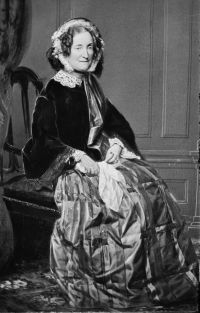 Lydia Sigourney,
Letters of Life
(1866)
Lydia Sigourney,
Letters of Life
(1866)
“ It was the habit of our family, and not a peculiarity at that day, that this article of dress should be of domestic manufacture. With us the yarn of which they were made emanated from our own wheels, and was more durable, because more carefully wrought, than what was for sale in the shops. We produced cotton of various degrees of fineness—linen thread for summer, and wool for the colder seasons. ”
Homer Bezalee Hulbert, The passing of Korea (1906)
“ One of the trusted servants of the house, or some friendly neighbour, not of the upper class, takes in his hands an inner coat of the dead man, mounts to the roof of the house and takes his stand directly over where the body lies; This coat is of native cotton, never of silk or any imported goods, and has probably been kept in the family wardrobe for years for this special purpose. ”
Various, The Catholic World, Vol. 17, April…
“ The servants, whose livery is almost a costume in itself, carry trays of substantial refreshments and foaming tankards of old ale among the farmers and professional sportsmen, while the friends and county neighbors of the host circulate through the house, lighting up our XIXth century dead-level of dress by their scarlet, or, to speak more technically, their pink coats. ”
Dr. Doran, Habits and men, with remnants of record touching the makers of both (1855)
“ I have read somewhere of stockings made out of the human hair, and how the pretty conceit was adopted by lovers who were willing to entangle their legs, as well as heart, in their mistresses’ tresses. To be once more statistical and useful, I have to add for your information, that although we no longer export anything but cotton yarns, instead of the manufactured article, to Saxony, our general export is still large; saving of silk stockings, of which we send abroad annually only some 60,000 pairs. ”
