“ My Lord Count, there is a namesake of mine in the precincts of your strong Castle of Gutenfels; a namesake who does more honor to the title than I do myself.” The Count Palatine threw back his head, and the forest garden echoed with boisterous laughter. “You mean my black charger, Prince Roland!” he shouted. “A noble horse indeed. How knew you of him? If your Highness cares for horses allow me to present him to you.” ”
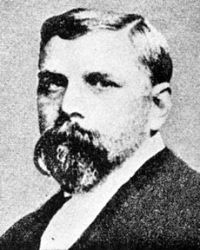
Robert Barr
Summary
Robert Barr’s The Sword Maker, set against the Rhine’s thriving trade and guilds, follows Prince Roland, a rogue noble turned outlaw, as he navigates conflicts between Frankfort’s merchant class and the artisan communities of metalworkers and craftsmen.
Themes of honor, skill, and defiance emerge through vivid portrayals of wine-fueled camaraderie, rivalry driven by coin, and the symbolic significance of swords. Barr’s narrative intertwines historical intrigue with the tension between noble privilege and the resourcefulness of the working class, culminating in a story where loyalty to guild and family challenges the rigid hierarchies of the time.
Quotes from The Sword Maker (Robert Barr)
“ But in the smaller Kaiser cellar, along each side of the single long table, sat young men numbering a score, who ate black bread and drank Rhine wine, to the roaring of song and the telling of story. They formed a close coterie, admitting no stranger to their circle if one dissenting voice was raised against his acceptance, yet in spite of this exclusiveness there was not a drop of noble blood in the company. They belonged, however, to the aristocracy of craftsmen; metal-workers for the most part, ingenious artificers in iron, beaters of copper, fashioners of gold and silver. ”
“ Prince Roland has hoodwinked the three of you! He is a libertine and a brawler, consorting with the lowest in the cellars of Frankfort; a liar and a thief, and not a brave thief at that, but a cutthroat who holds his sword to the breast of an unarmed merchant while he filches from him his gold. Added to that, a drunkard as his father is; and, above all, a hypocrite, as his father is not, yet clever enough, with all his vices, to cozen three men whose vile rule has ruined Frankfort, and left the broad Rhine empty of its life-giving commerce ”
