“ Picking up the black yarn, she stood facing the east and dipped it in the river, and in an instant it grew white as snow, then turning to the west, she held the white yarn in the water, and it became as black as a crow’s wing. She looked back at the sparrows and smiled and nodded to them, and flapping their wings in reply they flew swiftly away.At the sight of the yarn the old woman was struck dumb; but when at length she found her voice she asked the girl what magician had helped her to do what no one had done before. ”
Yarn
Definition and stakes
Yarn, a strand of fibers twisted together, functions as both a practical material and a symbolic thread in literature and industry. From the magical transformation of black yarn into white in The Orange Fairy Book to the technical precision described in Hosiery Manufacture, writers have examined its dual nature—woven into stories of enchantment, craftsmanship, and industrial progress.
Texts like Piece Goods Manual analyze its physical characteristics, while encyclopedic entries outline its creation, emphasizing its significance in textiles. By combining these viewpoints, yarn appears as a link between the mystical and the mechanical, representing human creativity across cultures and time periods.
Quotes about “yarn”
Anonymous, The boy's book of trades and the tools used in them (1866)
“ The single line he calls yarn, two or more single lines, laid parallel and twisted together, he calls thread; and of this there are many varieties, such as bobbin-net-lace-thread, stocking-thread, sewing-thread, &c. Gassing.In fine spinning, the yarn, when doubled, is for some purposes singed or gassed, in order to get rid of the loose fibres, and to make it more level and compact. The process of singeing yarn strikes a stranger as being more remarkable than anything else in the mill. ”
A. E. Blanco, Piece Goods Manual
“ Woollen yarn may be said to be a thread in which all the component fibres are entangled into each other and are in all different directions: this results in a yarn which is rough in appearance, non-lustrous, and more irregular than worsted yarn. It is only in this type of yarn that low-grade materials, such as mungo, shoddy, or extract, can be utilised. The fibres which constitute a woollen yarn are not as readily separated from the body of the yarn or cloth as in the case of worsted. ”
M.A. William Davis, Hosiery Manufacture
“ So important is this matter of uniform yarn feed recognized to be for first-class fabric, that the Americans in particular have given the utmost attention to yarn supply devices, by which the yarn is measured into the needles by an arrangement which deadens all the minor variations of tension before the yarn approaches the sinkers and needles, and the amount fed into the needles is measured absolutely level for each stitch. ”
Aldred Farrer Barker, 1911 Encyclopædia Britannica (1911)
“ To-day there are three distinct methods of producing worsted yarn. Firstly, there is the preparing and spinning of the true worsted thread, this being made from long English and colonial wool. In this class should also be included mohair and alpaca. Secondly, there is the preparing and spinning of what are known as cross-bred and botany yarns, these being made from cross-bred and botany wools. Thirdly, there is the preparing and spinning of short botany wools on the French system. ”
Aldred Farrer Barker, 1911 Encyclopædia Britannica (1911)
“ On the other hand, worsted yarns are generally made from the long lustrous varieties of wool; the fibres are so combed as to bring them as far as possible parallel to each other; the spinning is usually effected on the frame, and the yarn is spun into a compact, smooth and level thread, which, when woven into cloth, is not necessarily milled or felted. ”
J. Ewing Ritchie, Bessbrook and Its Linen Mills: A Short Narrative of a Model Temperance Town
“ Here, men are at work, steeping the yarn in a mixture which is supposed to strengthen it, and the secret of which is generally pretty well kept. Men also are required for other purposes: the yarn is to be scoured or bleached, as the case may be, and then dried, and all this work is done by lads or men. ”
Alice Morse Earle,
In old Narragansett; romances and realities
(1898)
“ These skeins of yarn are prepared for use by spreading them on a reel or swifts, and winding the yarn off on quills in a quilling-wheel, which is somewhat like a simplified spinning-wheel.Besides these weavers who worked in their own homes, making their own wool into cloth to sell, or weaving the thread and yarn brought to them by their neighbors, there was a distinct class of travelling weavers, who went from house to house working for a few shillings a day and their “keep.” They often were quaint and curious characters; frequently what were known as “natural preachers;” ”
Kennedy Holbrook, How? or, Spare Hours Made Profitable for Boys and Girls
“ Ravel out an old yarn stocking, or cut into narrow strips an old cashmere one, and after making a little round ball of any soft woolen material, commence winding it evenly with the raveled yarn, trying occasionally if it is near the size of the kid covering. When nearly large enough wind it in such a way that it shall just fit the cavity, and then carefully sew up the remaining side. ”
Aunt Lydia's rug yarn collection (1979)
“ With Red, attach yarn on wrong side of work at side seam about 11⁄2 inches above cast on edge, * ch 6, skip 3 sts and 3 rows above, sl st through next st, ch 6, skip 3 sts and 3 rows below, sl st in next st, repeat from * all around, join, cut yarn. Work a chain 24 inches long. ”
Kate Heintz Watson, Textiles and Clothing
“ The spinning frame may have a hundred spindles or more, each one of which is drawing out its supply of "roving" to the required size of yarn and giving it the twist necessary to bind the fibers together. The yarn to be used for the warp is given a harder twist so that it may be strong enough to stand the strain in weaving. The yarn for filling is usually left soft. ”
Peter Kilgour, The Jute Industry: From Seed to Finished Cloth
“ The yarn guide is moved rapidly from side to side by means of the grooved cam on the left, the upright lever fulcrumed near the floor, and the horizontal rod which passes in front of the rolls and upon which are fixed the actual yarn guides. ”
Three textile raw materials and their manufacture (1924)
“ Various fabrics require different grades of yarn, just as different finenesses of yarn must be spun from varying grades of cotton. The processes preparatory to spinning vary, not only with the counts to be spun, but with the use to which the yarn is to be put. Ordinary coarse and medium yarns for weaving usually follow one process, while fine counts for weaving, or knitting yarn, or coarse yarn made from long-staple cotton such as that used for tire-duck, go through a different preparation. ”
Harlan F. Stone,
Textile Machine Works v. Louis Hirsch Textile Machines…
“ The object of the patented attachment in providing accurate controls for yarn guides laying a yarn over a distance less than the full width of a fabric being knitted, is either to knit an additional yarn over a particular area of the main body of the fabric so as to strengthen it or form upon it an ornamental design, or to insert in it 'split-seam work,' which is a portion of the main fabric knitted with a separate yarn and forming a distinctive design. ”
H. Ling Roth, Ancient Egyptian and Greek Looms
“ From the fineness of the yarn and of the individual fibres I have no doubt that the wool has been imported from India, or, more likely, that the cloth was made in Cashmere. The texture is a plain weave, has a selvedge edge, the warp yarns are doubled, while the weft is single yarn. It is much to be regretted that the particulars of locality, of burial, and the period of time to which this interesting fabric belongs has been lost. ”
Henry Lawson,
While the Billy Boils
(1913)
“ A CAMP-FIRE YARN 'This girl,' said Mitchell, continuing a yarn to his mate, 'was about the ugliest girl I ever saw, except one, and I'll tell you about her directly. The old man had a carpenter's shop fixed up in a shed at the back of his house, and he used to work there pretty often, and sometimes I'd come over and yarn with him. ”
Edgar Thurston,
Castes and Tribes of Southern India…
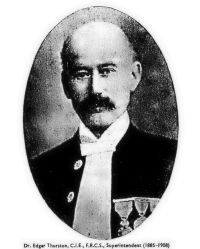
“ Drying the yarn presents considerable difficulty, especially in the wet weather. To secure a fast even colour, the yarn is mordanted about ten times, and dyed twice, or for very superior work three times, and between each operation it is essential that the yarn should be dried. ”
Edward Douglass White, United States v. Eckstein — Opinion of the Court
“ Thus, yarns have four broad, general uses, viz.: knitting, weaving, sowing, and braiding; and manifestly a given cotton yarn could not be used for all the purposes of all cotton yarns. In the group of hard twisted yarns is found cotton yarn, used in the production of hat braids, and in the same commercial group appears the merchandise in suit. One of the many varieties of cotton yarn used in making hat braids is what is known as glazed or polished cotton yarn. ”
William H. Dooley, Textiles, for Commercial, Industrial…
“ In manufacturing worsted yarn every necessary operation is performed to arrange the wool fibers so that they will lie smoothly and parallel to each other. In the case of woolen yarn every operation is performed so as to have the fibers lie in every direction and to cross and overlap each other. ”
Christopher Parkinson Brooks, Cotton Manufacturing
“ The selection of suitable yarn is obviously important. Warp yarn is generally stronger than weft, and the hardness is obtained by extra twisting of the thread: owing to this peculiarity, warp yarn is generally called “twist.” For heavy sizing purposes, a soft spun twist is advisable, and one made out of the harder and wiry stapled cottons. ”
M.A. William Davis, Hosiery Manufacture
“ Speaking generally, the knitting yarn should be open in texture, full in handle, and the material should be soft and comfortable to the touch. Except for some classes of outer wear the thread should have a plentiful proportion of surface-projecting fibres which are of value in covering raw loop formation. ”
M.A. William Davis, Hosiery Manufacture
“ During knitting the yarn usually forms itself into curved loops, but various conditions have to be met if this curving has to be perfect. Should the knitting yarn be lacking in yielding property curves will not eventuate, but will be replaced by various distorted formations. Very often the mechanical structure of the yarn makes it impossible for the thread to fall out in nicely-shaped curves, this taking place when the constituent fibres are tightly arranged in the yarn or when they are composed of long fibres drawn with meticulous precision in parallel order side by side. ”
William H. Dooley, Textiles, for Commercial, Industrial…
“ To produce yarn of the woolen type a set of machinery entirely different from that used in worsted manufacture is necessary. The wool is carded, but no attempt is made to get the fibers parallel. The reduction in thickness of the sliver is not brought about upon the so-called drawing frame, but by a mule frame where the drawing and twisting are done at the same operation. As neither combs nor gills are employed, there is not the same smooth, level yarn, but one which possesses a fringe-like covering or fuzzy appearance that makes the woolen yarn so valuable. ”
H. D. Buck, Flat Machine Knitting and Fabrics
“ It will be noticed in Fig. 2 that in forming the loops the curvature or bend of the thread is gradual and uniform. When this yarn is knitted into fabric and both top or needle loop, and bottom or sinker loop are attached to or drawn through other and like loops, and we pull or stretch the fabric, we draw sharp curves or corners in the yarn where it passes around the preceding and succeeding loops. When we let go or take the strain off the fabric, the natural tendency of the fibre to straighten out or take an easier curve brings the fabric back into its original position. ”
M.A. William Davis, Hosiery Manufacture
“ The dense member of the twist is clearly seen to be the silk thread of the organzine variety, because the constituent fibres are continuous and run parallel with each other. Contrasted with this the woollen yarn is free and open in structure, the most suitable type of wool being medium to long staple. In this yarn the lustre and neatness of the silk imparts an elegant appearance to the fabric, whilst the open structure of the woollen thread removes the baldness of the yarn and adds the essential fullness to the handle as well as softness and warmth. ”
Mahatma Gandhi,
The Wheel of Fortune
“ But most of our students spin yarn of 12 to 15 counts, and even finer. And this is quite good and fit for weaving. The wage for a thousand yards of finer yarn must be proportionately higher; as the [pg 131] finer the yarn, the greater the number of twists to be given to it. ”
George Byron Merrick, Old Times on the Upper Mississippi
“ If some one else had told it to me, I might have set it down as a 'yarn'. If they have never had any experiences on the river, some men would make yarns to order; it is a mighty sight easier to make them than it is to live them—and safer. ”
Aunt Lydia's rug yarn collection (1979)
“ Work back by drawing yarn through 1st loop, then work off all loops 2 at a time, do not turn. 2nd ROW: Skip the 1st vertical bar of st, then pull a loop through each remaining vertical bar, insert hook under last vertical bar and edge of work, do not turn, yo and pull through 1st loop, then work off all remaining loops 2 at a time. Repeat 2nd row until mat measures 151⁄2 inches, do not cut yarn. Work 1 sl st in each st across, working down, work 1 sl st on each row on each side, working sl sts across starting ch, join, cut yarn. Work 3 more mats in colors of your choice. ”
Three textile raw materials and their manufacture (1924)
“ According to the French system, which is employed in this country only for very soft fine yarns, no twist is given to the sliver until the actual spinning begins; and the spinning is then usually done on mules, which in this country are rarely used in the manufacture of worsted yarn. We shall discuss these machines when we come to woolens. According to the most common procedure in this country, the roving box not only draws, but imparts a certain amount of twist to the yarn. This is done by winding the yarn from horizontal spools on to vertical spindles. ”
A. E. Blanco, Piece Goods Manual
“ Yarn-dyed.—Yarn-dyed goods are made of yarns that are dyed before being woven or yarns spun from wool that has previously been dyed. Yarn-dyed may be distinguished from piece-dyed fabrics by unravelling the threads of each kind. Yarn-dyed fabrics show that the dye-stuff has penetrated through the yarn, while in the case of piece-dyed fabrics the dye-stuff has not the same chance of penetrating the yarn as completely. ”
Various, Popular Science Monthly (1891)
“ The illustration shows how the hand-comb differed from the card used in the preparation of the wool for the woolen yarn. Fig. 13.—A Pair of Hand-combs. The material when thus combed differed from the same material carded, in that the combed wool contained only the long fibers, which lay parallel, the short fibers or noil having been altogether rejected or combed out. The carding eliminates no noil. Long and short fibers go together to the spindle. Thus it happens that a woolen yarn is soft and fluffy, while a worsted yarn is hard and firm, possessing a much greater tensile strength. ”
In Fashions: for Him, for Her, in Knits…
“ Attach yarn at lower corner of right front, working up side, * ch 3, s c on side of next row, repeat from * to shoulder seam, ch 3, s c in next large loop, ch 3, s c in same loop, ch 3, s c in base of next shell, ch 3, s c in next large loop, ch 3, s c in same loop, ch 3, s c in next shoulder seam, work down side to correspond to opposite side; work along lower edge skipping the space of 2 sts, join, cut yarn. Work edge around armholes in same manner. ”
William H. Dooley, Textiles, for Commercial, Industrial…
“ The size may be applied to the yarn either hot or cold. When applied hot it penetrates into the interior, filling up every space between the fibers, binding all together, and forming a hard coating on the surface of the thread. A thorough washing or steaming serves to remove all the size from the woven fabric. ”
Anonymous, Handbook of Wool Knitting and Crochet
“ Take a length of yarn six times as long as the cord is wanted; make a slip or half knot at one end and pass the other end down through it to form a loop, then tie the ends of yarn together. Hold this knot between thumb and forefinger of one hand, say the right, with the yarn which pulls through the knot under the same hand, and the loop which was formed held on the forefinger ”
Mohandas Karamchand Gandhi, The Wheel of Fortune (1922)
“ A bigger hank causes trouble while we open it, and the yarn is spoilt. The yarn spun by each student is kept separate with his name upon a wooden tag attached to it. Every student is asked to stick to one particular count all along till he has spun out enough for a length of warp; and then the yarn is sent to the weaving department. Every one is anxious to see when his yarn is sent out for weaving. ”
M.A. William Davis, Hosiery Manufacture
“ Types of Knitting Yarns The qualities necessary for knitted goods have already been outlined as applied to the fabric, but if ideal results are to be secured, the yarns require to possess certain specific features of their own, for the most efficient textures can only be got by combining the qualities of yarn and fabric. ”