“ I am in a plain as before, with the unbroken horizon circling around me. What do I behold? Flowers? No; there is not a flower in sight, but one vast expanse of living verdure. From north to south, from east to west, stretches the prairie meadow, green as an emerald, and smooth as the surface of a sleeping lake.The wind is upon its bosom, sweeping the silken blades. They are in motion; and the verdure is dappled into lighter and darker shades, as the shadows of summer clouds flitting across the sun.The eye wanders without resistance. ”
Plain
Definition and stakes
The literary concept of "plain" denotes an expansive, unbroken stretch of level land, often evoking themes of vastness, isolation, or simplicity. Authors have employed this motif in varied ways: Mayne Reid immerses readers in the verdant, almost sentient prairie, while an anonymous narrator contrasts the plain’s desolation with existential despair.
Arthur Conan Doyle transforms it into a stage for chivalric spectacle, and Charlotte Brontë associates it with honest, unadorned communication. Whether as a physical space or a metaphor for clarity, the plain serves as a multifaceted lens through which writers frame human experience.
Quotes about “plain”
“ We had shaved our time closely; for, on reaching the hill-top, we could hear the exclamations of Indians, the “thump, thump” of hoofs on the hard plain, and an occasional neigh, as their horses scented the water. The foremost were advancing to the spring; and we could see the long line of mounted men stretching in their deploying to the far horizon.Closer they came, and we could distinguish the pennons and glittering points of their spears. We could see their half-naked bodies gleaming in the clear moonlight. ”
Anonymous, Thrilling Narratives of Mutiny…
“ They awoke and looked at each other, the very gaze of despair was appalling; far as the eye could reach, no object could be discerned; the bright haze of the morning added to the strong refraction of light; one smooth, interminable plain, one endless ocean, one cloudless sky and one burning sun, were all they had to gaze upon. The boat lay like the ark, in a world alone! They had no oar, no mast and no sail, nothing but the bare planks and themselves, without provisions or water, food or raiment. They lay upon the calm ocean, hopeless, friendless and miserable. ”
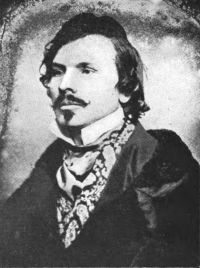 Mayne Reid,
The War Trail: The Hunt of the Wild Horse
Mayne Reid,
The War Trail: The Hunt of the Wild Horse
“ A prairie, when green, does not always glad the eye,—not even when enamelled with fairest flowers. I have crossed such plains, verdant or blooming to the utmost verge of vision, and longed for something to appear in sight—a rock, tree, a living creature—anything to relieve the universal sameness; just as the voyager on the ample ocean longs for ships, for cetaceae, or the sight of land, and is delighted with a nautilus, polypi, phosphorescence, or a floating weed.Colour alone does not satisfy the sense. What hue more charming than the fresh verdure of the grassy plain? ”
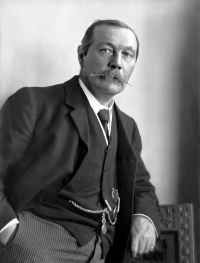 Arthur Conan Doyle,
The White Company
Arthur Conan Doyle,
The White Company
“ Over all this vast meadow there lay a great city of tents—thousands upon thousands of them, laid out in streets and in squares like a well-ordered town. High silken pavilions or colored marquees, shooting up from among the crowd of meaner dwellings, marked where the great lords and barons of Leon and Castile displayed their standards, while over the white roofs, as far as eye could reach, the waving of ancients, pavons, pensils, and banderoles, with flash of gold and glow of colors, proclaimed that all the chivalry of Iberia were mustered in the plain beneath them. ”
H. J. Clayton, Clayton's Quaker Cook-Book
“ While carefully catering to the varied tastes of the mass, everything of an unhealthful, deleterious, or even doubtful character, has been carefully excluded; and all directions are given in the plainest style, so as to be readily understood, and fully comprehended by all classes of citizens. ”
 Charlotte Brontë,
Jane Eyre
(16 October 1847)
Charlotte Brontë,
Jane Eyre
(16 October 1847)
“ It is my way—it always was my way, by instinct—ever to meet the brief with brevity, the direct with plainness. ”
A Plain and Literal Translation of the Arabian Nights Entertainments…
“ They mean, “Thou knowest the truth of me and what is in me, and I know not what is in Thee; and the proof of this are His words, [380] ‘Thou art He who wottest the hidden things’”; and it is said, also, “Thou knowest my essence, but I know not Thine essence.” ”
Anonymous, Hildebrand; or, The Days of Queen Elizabeth…
“ The gloomy light, the black shore, the two stranded ships, which the eye could now plainly distinguish, and the boom of the guns of distress, with the furious bellowing of the wind, and the raging waves, made one feel like a mite in the creation, and perfectly at the mercy of the elements. ”
 Joseph Conrad,
Notes on My Books — A Familiar Preface
Joseph Conrad,
Notes on My Books — A Familiar Preface
“ The manner in laughter, in tears, in irony, in indignations and enthusiasms, in judgments—and even in love. The manner in which, as in the features and character of a human face, the inner truth is foreshadowed for those who know how to look at their kind. ”
 William Wordsworth,
Poems
(1815)
William Wordsworth,
Poems
(1815)
“ Perhaps no where does a more beautiful treatise of the kind exist. The good sense and wisdom of the thoughts, the delicacy of the feelings, and the charm of the style, are, throughout, equally conspicuous. ”
 Walter Pater,
Appreciations, with an Essay on Style
Walter Pater,
Appreciations, with an Essay on Style
“ Even the humorous concluding scenes have traits of special grace, retaining in less emphatic passages a stray lire or word of power, as it seems, so that we watch to the end for the traces where the nobler hand has glanced along, leaving its vestiges, as if accidentally or wastefully, in the rising of the style. ”
Edward Forbes, The Palace and Park
“ All beauties of language, all flights of poetry, all particular scenes and speeches, powerful and impressive as they may be, are merely subordinate. No character, how exquisitely or elaborately soever conceived and finished, is drawn for itself ”
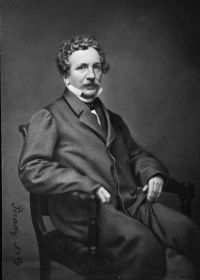 G. P. R. James,
Forest Days: A Romance of Old Times
G. P. R. James,
Forest Days: A Romance of Old Times
“ Graces free and uncultivated were there likewise, and the honest outpourings of the heart, subjected to no dull sneer from the lips of false refinement, burst forth with the touching force of simplicity and truth. The universal weaknesses of our nature mingled with all the rest, and varied the drama through a thousand parts. ”
 I. A. Richards,
Principles of literary criticism
(1928)
I. A. Richards,
Principles of literary criticism
(1928)
“ With the identification of the provinces of Truth and Thought no quarrel arises, and the Will and the Good are, as we shall see, intimately connected, but the attempts to fit Beauty into a neat pigeon-hole with Feeling have led to calamitous distortions. ”
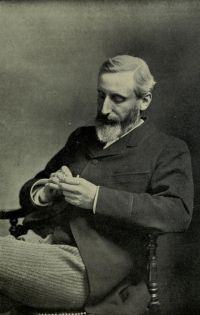 Grant Allen,
Hilda Wade — Chapter I: The Episode of the Patient Who Disappointed Her Doctor
(1900)
Grant Allen,
Hilda Wade — Chapter I: The Episode of the Patient Who Disappointed Her Doctor
(1900)
“ They can judge with astounding correctness from a shadow on one's face, a catch in one's breath, a movement of one's hands, how their words or deeds are affecting us. We cannot conceal our feelings from them. ”
 William Shakespeare,
Shakespeare's Sonnets — The Text …
(1923)
William Shakespeare,
Shakespeare's Sonnets — The Text …
(1923)
“ Both truth and beauty on my love depends; So dost thou too, and therein dignified. 4 Make answer, Muse: wilt thou not haply say, 'Truth needs no colour, with his colour fix'd; Beauty no pencil, beauty's truth to lay ”
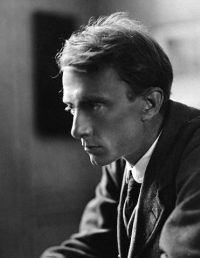
“ The tender motives that often moulded his lips, the purity and grace that found expression in his eyes, and that fluctuation of the lines of the face in thought which is almost light and shade, wrought an immortal beauty out of Nature’s poor endowment. ”
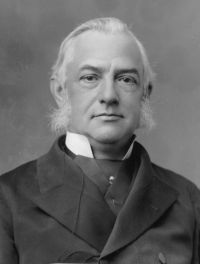 F. Max Müller,
Chips from a German Workshop, Volume 4
F. Max Müller,
Chips from a German Workshop, Volume 4
“ The further our literary inquiries are extended here, the more vast and stupendous is the scene which opens to us; at the same time, that the true and false, the sublime and the puerile, wisdom and absurdity, are so intermixed, that, at every step, we have to smile at folly, while we admire and acknowledge the philosophical truth, though couched in obscure allegory and puerile fable. ”
Robert Chambers, Spirit of Chambers's Journal (1834)
“ Beneath all this gloss of the world—this cold conventional aspect, which all more or less present, and which the business of life renders necessary—there resides for certain a fountain of goodness, pure in its inner depths as the lymph rock-distilled, and ready on every proper occasion to well out in the exercise of the noblest duties. ”
Edwin Gordon Lawrence, How to Master the Spoken Word
“ He employs [p. 2] the series, the contrasts (single, double, and triple) , the conditional, the negative, the positive, and, in fact, all the known forms of arranging words so as to make them best express the orator’s meaning. Here is an effective concluding series he uses: “A city is adorned by good citizenship, the body by beauty, the soul by wisdom, acts by virtue, and speech by truthfulness,” and he follows this sentence with the following one: “But the opposites of these virtues are a disgrace.” ”
 Margaret Fuller,
At Home and Abroad; Or, Things and Thoughts in America and Europe
Margaret Fuller,
At Home and Abroad; Or, Things and Thoughts in America and Europe
“ Full, sustained, ardent, yet exact, the stream, of his thought bears with it the attention of hearers of all characters, as his character, full of bonhommie, open, friendly, animated, and sagacious, would seem to have something to present for the affection and esteem of all kinds of men. ”
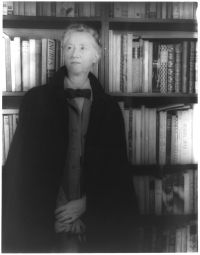
“ In the meantime, if you demand on one hand, in defiance of their opinion— the raw material of poetry in all its rawness and that which is, on the other hand, genuine then you are interested in poetry. ”
 Samuel Johnson,
Lives of the English Poets : Prior…
Samuel Johnson,
Lives of the English Poets : Prior…
“ Hence beautiful allusions, surprising metaphors, and admirable sentiments, are always ready at hand; and while the fancy is full of images, collected from innumerable objects, and their different qualities, relations, and habitudes, it can at pleasure dress a common notion in a strange but becoming garb, by which, as before observed, the same thought will appear a new one, to the great delight and wonder of the hearer. ”
Lyons McLeod, Travels in Eastern Africa, volume 2…
“ A high, pure tone of morality pervades each set of verses, and each strikes the reader as inspired by some real event, or condition of mind, and not by some idle fancy or fleeting sentiment.”—Spectator. ”
 Johann Wolfgang von Goethe,
The Autobiography of Goethe
Johann Wolfgang von Goethe,
The Autobiography of Goethe
“ One single simple incident, a pleasantly naïve or even silly word, a blunder, a paradox, a clever remark, personal singularities or habits, nay, a peculiar expression, and whatever else would occur in a gay and bustling life—took the form of a dialogue, a catechism, a passing scene, or a drama,—often in prose, but oftener in verse. ”
F. V. N. Painter, Elementary Guide to Literary Criticism
“ Our sight seems designed to supply all these defects, and may be considered as a more delicate and diffusive kind of touch, that spreads itself over an infinite multitude of bodies, comprehends the largest figures, and brings into our reach some of the most remote parts of the universe."Every passing mood and every peculiarity of mind or character are reflected in the style. It may be gay, humorous, serious, sad, melancholy, according to the state of the writer's feelings. ”
Clara Erskine Clement Waters, Venice (1893)
“ What a miserable instrumentality is language! A tone of satiny flesh, a luminous shadow on a bare shoulder, a flickering light on floating silk, attract, recall, and retain the eye for a long time, and yet there is but a vague phrase with which to express the charm.... ”
Max Farrand, The Records of the Federal Convention of 1787 (1911)
“ To a mind naturally strong and capacious, enriched by much reading and the experience of many years, he added a manner of communicating his thoughts peculiarly his own—in which simplicity, beauty, and strength were equally conspicuous. ”
 Grenville Kleiser,
The Training of a Public Speaker
Grenville Kleiser,
The Training of a Public Speaker
“ The expressions that show care, and would also appear as newly formed, fine, and eloquent, lose the graces at which they aim, and are far from being striking and well received, because they obscure the sense by spreading a sort of shadow about it, or by being too crowded they choke it up, like thick-sown grain that must run up too spindling. ”
 Andrew Lang,
Letters to Dead Authors
Andrew Lang,
Letters to Dead Authors
“ Surely that style, so fresh, so rich, so full of surprises—that style which stamps as classical your fragments of slang, and perpetually astonishes and delights—would alone give immortality to an author, even had he little to say. ”
Joseph Conrad,
Victory: An Island Tale
(1915)
“ Often in the course of years an expressed sentiment, the particular sense of a phrase heard casually, would recall him to my mind so that I have fastened on to him many words heard on other men's lips and belonging to other men's less perfect, less pathetic moods. ”
Johann Wolfgang von Goethe,
Autobiography: Truth and Fiction Relating to My Life
“ Only by the minutest detail, by endless particularities which bear vividly all the character of the whole, and, as they spring up from a wonderful depth, give some feeling of that depth,—only in such a manner would it have been in some degree possible to give a representation of this remarkable personality; for the spring can be apprehended only while it is flowing. ”
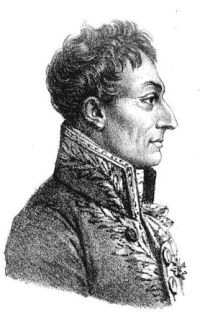 C.-F. Volney,
The Ruins; Or, Meditation on the Revolutions of Empires and the Law of Nature
C.-F. Volney,
The Ruins; Or, Meditation on the Revolutions of Empires and the Law of Nature
“ The energy and dignity of the author's manner, the unaffected elevation of his style, the conciseness, perspicuity and simplicity of his diction, are everywhere suited to his subject, which is solemn, novel, luminous, affecting,—a subject perhaps the most universally interesting to the human race that has ever been presented to their contemplation. ”
Samuel Johnson,
Notes to Shakespeare, Volume III: The Tragedies
“ This is the reading of all the modern editions, and is copied from the quarto. The folio reads, your honesty should admit no discourse to your beauty. The true reading seems to be this, If you be honest and fair, you should admit your honesty to no discourse with your beauty. ”
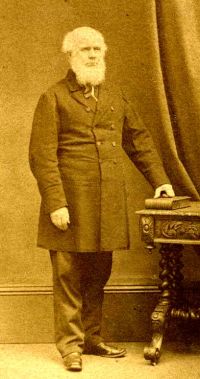 William Howitt,
The Rural Life of England
William Howitt,
The Rural Life of England
“ They are the gorgeous outpourings of a wild, erratic eloquence, that, in its magnificent rush, throws out the most startling, and apparently conflicting dogmas, yet all bound together by a strong bond of sound sense and incorruptible feeling. ”
Frank Frankfort Moore, A Gray Eye or So. In Three Volumes…
“ For bad taste, for indelicacy, for vulgarity, for disregard of sound argument—that is, argument that sounds well—and for general obstinacy, there is nothing to compare with a conscience that remains in moderately good working order. ”
 Hannah More,
Essays on Various Subjects, Principally Designed for Young Ladies
Hannah More,
Essays on Various Subjects, Principally Designed for Young Ladies
“ Yet the term good sense, is used indiscriminately to express either a finished taste for letters, or an invariable prudence in the affairs of life. It is sometimes applied to the most moderate abilities, in which case, the expression is certainly too strong; and at others to the most shining, when it is as much too weak and inadequate. ”
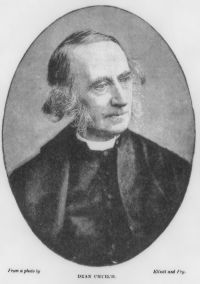 R. W. Church,
The Oxford Movement; Twelve Years…
R. W. Church,
The Oxford Movement; Twelve Years…
“ We speak not from our own fixed impression, however deeply felt, but from what we have heard and observed everywhere, from the natural, incidental, unconscious remarks dropped from persons' mouths, and evidently showing what they thought and felt. ”
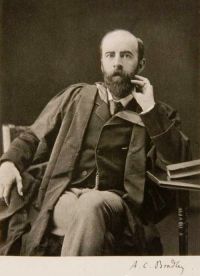 A. C. Bradley,
Oxford Lectures on Poetry
A. C. Bradley,
Oxford Lectures on Poetry
“ Now, obviously, all the particular kinds or modes of beauty must have, up to a certain point, the same nature. They must all possess that character in virtue of which they are called beautiful rather than good or true. ”
The Hawthorne: A Christmas and New Years Present
“ Where the mind is pure, the thoughts elevated, and the sentiments liberal and kind, a pleasing expression will be found to pervade the most rugged set of features that were ever bestowed upon a human being. ”
Samuel Johnson,
The Lives of the Most Eminent English Poets
(1794)
“ In his original poems, now and then, a happy line may perhaps be found, and now and then a short composition may give pleasure. But there is, in the whole, little either of the grace of wit, or the vigour of nature. ”
 Julian of Norwich,
Revelations of Divine Love
(1907)
Julian of Norwich,
Revelations of Divine Love
(1907)
“ Again and again she stirs in the reader a kind of surprised gladness of the simple perfection wherewith she utters, by few and adequate words, a thought that in its quietness convinces of truth, or an emotion deep in life. ”
Edwin E. Slosson, Major Prophets of To-Day
“ Above, below, and all round the literal and literary sense of the primitive phrase floats a secret life which is all but impossible to catch, and which is, nevertheless, more important than the external life of the words and of the images. ”
 Nathaniel Parker Willis,
Canadian Scenery, Volume 2 (of 2…
Nathaniel Parker Willis,
Canadian Scenery, Volume 2 (of 2…
“ I cannot convey to you any idea of the poverty of language that is felt when one attempts to describe such a combination of grand and uncommon objects, among which is found every thing essential to constitute the romantic, the terrific, the picturesque, and the sublime. ”
William James, The Varieties of Religious Experience (1902)
“ A day stripped so staringly bare would be for them appalling. So with ease, elegance, tributes of affection, social recognitions—some of us require amounts of these things which to others would appear a mass of lying and sophistication. ”
