Thomas Okey

Thomas Okey

Summary

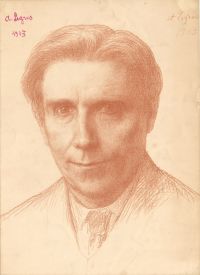
Portrait of Thomas Okey Thomas Okey The Story of Paris

Far to the west and on the opposite side of the Seine is the immense area of the Champ de Mars, where, on the anniversary of the fall of the Bastille, was enacted the fairest scene of the Revolution. The whole population of Paris, with their marvellous instinct of order and co-operation, spontaneously set to work to dig the vast amphitheatre which was to accommodate the 100,000 representatives of France, and 400,000 spectators, all united in an outburst of fraternal love and hope to swear allegiance to the new Constitution before the altar of the Fatherland.
Source: Gutenberg

Portrait of Thomas Okey Thomas Okey The Story of Paris

Their patrimony was a small one—the provinces of the Isle de France, La Brie, La Beauce, Beauvais and Valois; but their sway extended over the land of the Langue d'oil, with its strenuous northern life, le doux royaume de la France, the sweet realm of France, whose head was Paris, cradle of the great French Monarchy and home of art, learning and chivalry. The globe of the earth, symbol of universal empire, gives way to the hand of justice as the emblem of kingship.
Source: Gutenberg

Portrait of Thomas Okey Thomas Okey The Story of Paris

Further north stood the immense abbey of St. Martin in the Fields, with its cloister and gardens and, a little to the west, the grisly crenelated and turreted fortress of the Knights-Templars, huge in extent and one of the most solid edifices in the whole kingdom. This is the Paris conjured from the past with such magic art by Victor Hugo in "Notre Dame," and gradually to be swept away in the next centuries by the Renaissance, pseudo-classic and Napoleonic builders and destroyers, until to-day scarcely a wrack is left behind.
Source: Gutenberg

Get perspective with Kwize: daily news enlightened by great literature