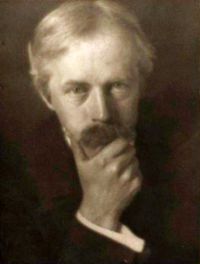
“ Verlaine, the man of letters and poet according to program, is a hateful shadow limping behind his great works. Consciously and with feverish eagerness and a productivity forced by need, he rhymed in what he thought his unique manner. The poor old man whom interviewers sought in the hospital was no longer the poet, Paul Verlaine.It is impossible to tell how long the flame of personal faith still glowed in him. Probably it was as little extinguished as his soft dream of childhood. In the dusk of his last years it often struggled upward with tears, as a symbol of sorrow over his broken life. ”
Paul Verlaine
Definition and stakes
Paul Verlaine (1844–1896) was a French poet central to the Parnassian, Symbolist, and Decadent movements, renowned for his lyrical sensitivity and creative use of language. His work, distinguished by musicality, introspection, and emotional complexity, reflects both personal struggles and a deep connection to art. Stefan Zweig, among others, emphasized Verlaine’s contradictions: a poet whose human vulnerability and stormy relationships—especially with Arthur Rimbaud—shaped his poetry, merging melancholy with striking imagery.
Zweig observed how Verlaine’s verses captured the "fragrance-like sorrows" of life, while his later writings, imbued with Catholic remorse and despondency, revealed a soul wrestling with existential dilemmas. Verlaine’s influence persists not only in literature but also in music, as composers from Fauré to Debussy adapted his words into lasting melodies, solidifying his position as a link between poetic originality and musical expression.
Quotes about “Paul Verlaine”
“ Verlaine was always only a human being, a weak human being, who did not even know how “to count the transgressions of his own heart.” It was this very lack of individuality, however, which produced something much rarer—the purely and entirely human. Verlaine was soft clay without the power of producing impresses and without resistance. Thus every line of life crossing his destiny has left a pure relief, a clear and faithful reproduction, even to the fragrance-like sorrows of lonely seconds which in others fade away or thicken into dull grief. ”
“ He was a poet who in his works became one with the poetry of life, the sounds of the forest, the kiss of the wind, the rustling of the reeds and the voice of the dusk of evening. Humanly he was like us who love him. He was one of those who, no matter how great a chaos they have made of their own life, are yet inappeasable, and drink the stranger's pain and the stranger's bliss in the precious cup of glorious poetry. They manifold their being and their emotions because of a blind and uncreative yearning for the universal and infinity. ”