“ Not keep a journal! How are your absent cousins to understand the tenor of your life in Bath without one? How are the civilities and compliments of every day to be related as they ought to be, unless noted down every evening in a journal? How are your various dresses to be remembered, and the particular state of your complexion, and curl of your hair to be described in all their diversities, without having constant recourse to a journal? ”
Journal
Definition and stakes
A journal, as a written medium, functions as a chronicle of personal reflections, public discourse, or narrative storytelling. From Jane Austen’s satirical insistence on recording daily minutiae to Harriott Ely Fansler’s advice on framing journals as letters to distant readers, the form has been examined as both an intimate record and a literary tool.
Sarah Margaret Fuller critiqued the uniformity of periodicals, promoting intellectual diversity, while Mark Twain emphasized their role in shaping public perception. These varied approaches highlight the journal’s dual function: a private space for thought and a public platform for cultural exchange, connecting individual and collective experience.
Quotes about “journal”
Harriott Ely Fansler, Types of Prose Narratives: A Text-Book for the Story Writer
“ Writing the typeIf you wish to write a journal, you might imagine yourself sending it across the ocean to some relative or acquaintance who cares to know about the doings of you yourself, your family, your friends, your community. You may reflect your own sentiments and those of others; you may give anecdotes, eye-witness accounts, reports, hear-says, incidents, opinions, explanations, and bare facts. You may touch upon your pleasures, your joys, and even your troubles; but your vexations and regrets you would surely reserve for your diary. ”
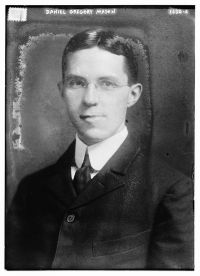 Daniel Gregory Mason,
The Romantic Composers
“ One of the most touching features of the New Journal, to a reader of to-day, is the almost too generous kindliness of its judgments, the eager enthusiasm with which it proclaims the advent of geniuses who have already fallen into oblivion. ”
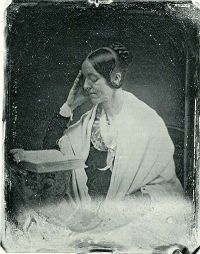 Sarah Margaret Fuller,
Papers on Literature and Art
(1846)
“ And here, it seems to me, has been the greatest mistake in the conduct of these journals. A smooth monotony has been attained, an uniformity of tone, so that from the title of a journal you can infer the tenor of all its chapters. But nature is ever various, ever new, and so should be her daughters, art and literature. We do not want merely a polite response to what we thought before, but by the freshness of thought in other minds to have new thought awakened in our own. ”
 Mark Twain,
The American Claimant — Chapter X
(1892)
“ The chief function of an English journal is that of all other journals the world over: it must keep the public eye fixed admiringly upon certain things, and keep it diligently diverted from certain others. ”
 William Dean Howells,
Imaginary Interviews
“ Why, indeed, should not there be a critical journal embodying in a species of fragrant bouquet the flowers of thought and emotion springing up in the brains and bosoms of readers responsive to the influence of a new book? ”
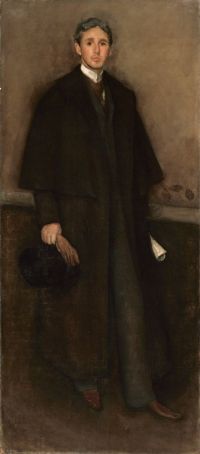 Arthur Jerome Eddy,
Cubists and Post-Impressionism
“ The much-despised “yellow journal” of America has taught a valuable lesson in the art of emphasis, and its effect is seen not only in the make-up of newspapers but of periodicals, and will be felt in the make-up of books. ”
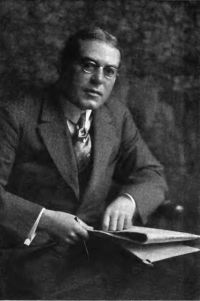 Bert Leston Taylor,
Under Three Flags: A Story of Mystery
“ Our journal, like every other decent paper, prints the news. If it were to investigate every dispatch that comes to it day by day there would be precious little information for the reader who turns to it each morning. ”
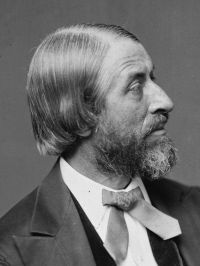 Ainsworth Rand Spofford,
A Book for All Readers
“ It is amazing that a person with any pretensions to discernment should denounce newspapers as unfitted to form a part of a public library. The best newspapers of the time are sometimes the best books of the time. A first-class daily journal is an epitome of the world, recording the life and the deeds of men, their laws and their literature, their politics and religion, their social and criminal statistics, the progress of invention and of art, the revolutions of empires, and the latest results of science. ”
Mark Twain,
The Entire Project Gutenberg Works of Mark Twain
“ First I thought I'd copy France out of the guide-book, like old Badger in the for'rard cabin, who's writing a book, but there's more than three hundred pages of it. Oh, I don't think a journal's any use—do you? They're only a bother, ain't they?""Yes, a journal that is incomplete isn't of much use, but a journal properly kept is worth a thousand dollars—when you've got it done." ”
Harriott Ely Fansler, Types of Prose Narratives: A Text-Book for the Story Writer
“ All these records have [561] their value for late readers in their honesty and minuteness. It is on such revelations that we depend for our correct conception of by-gone affairs.A diary or a journal, then, is first of all a narrative of real events. Fiction in this form, like Defoe's "Journal of the Plague" or the diary parts of Charles Reade's "Cloister and the Hearth," is so for the sake of the verisimilitude. ”
Victoria Queen of Great Britain, The girlhood of Queen Victoria (1912)
“ A journal is supposed to record events, great or small, which are happening at the moment, and to convey impressions about personages with whom the writer comes in contact, or who loom sufficiently large to justify their being mentioned. ”
F. V. N. Painter, Elementary Guide to Literary Criticism
“ A diary is a record of one's daily occupations and experiences. It sustains the same relation to biography that chronicles or annals do to history: it furnishes the materials out of which biography is made. When the diarist is a man of prominence, as in the case of Dean [163] Swift, his journal throws an interesting light not only upon his own life but also upon the times in which he lives. It introduces us to men in the freedom and frankness of private life. When the diary is kept, not with a view to subsequent publication but merely to aid one's memory, it becomes a valuable record of facts. ”
Hugo B. Froehlich, Text books of art education, v…
“ Some of the best journals we know about have been kept by people who lived quiet lives. They wrote about the little things they saw and heard and did. It was the way in which they told these things that made their journals as interesting as storybooks.An Artist's Journal. Artists and people who love to make pictures keep a kind of journal that they call a sketch-book. They are always on the lookout for material for pictures. They see much more than people do who are not trained to observe. ”
 Henry David Thoreau,
Winter: From the Journal of Henry D. Thoreau…
(1888)
“ A journal is a record of experiences and growth, not a preserve of things well done or said. ”
 Wilkie Collins,
My Miscellanies, Vol. 1 (of 2)
“ And now, just as impartially, I dip into one journal after another, on the Correspondents' page, exactly as the five happen to lie on my desk. The result is, that I have the pleasure of presenting to those ladies and gentlemen who may honour me with their attention, the following members of the Unknown Public, who are in a condition to speak quite unreservedly for themselves:—A reader of a penny-novel-journal who wants a receipt for gingerbread. A reader who complains of fulness in his throat. ”
Various, Punch, or the London Charivari…
“ When a journal makes a call upon a good author, and in the pages of which he can gain neither honour nor renown, from which, as a matter of taste, he would shrink, under ordinary circumstances, from contributing to, that journal ought to be subjected to careful scrutiny. ”
C. E. Page, The Natural Cure of Consumption…
“ Young people should read the Journal, that they may make the most of themselves. It has long met with the hearty approval of the press and the people.N. Y. Times says: “The Phrenological Journal proves that the increasing years of a periodical is no reason for its lessening its enterprise or for diminishing its abundance of interesting matter. ”
Benjamin Eli Smith, The New International Encyclopædia (1905)
“ The periodical, as thus defined, originated in France in the seventeenth century, and in the form of the critical literary journal. The first example of it is also one of the most famous and the longest lived, for its publication has continued, though with many interruptions, until the present day—namely the Journal des Savants. The idea which it embodied was conceived about 1663 by the historian Mézeray, who proposed to establish a weekly journal in which should be “made known what was happening in the republic of letters.” His project came to nothing ”
 Ralph Waldo Emerson,
Society and solitude: Twelve chapters
(1870)
“ There has already been a scrutiny and choice from many hundreds of young pens, before the pamphlet or political chapter which you read in a fugitive journal comes to your eye. All these are young adventurers, who produce their performance to the wise ear of Time, who sits and weighs, and, ten years hence, out of a million of pages reprints one. ”
 Mary Wollstonecraft,
Letters Written during a Short Residence in Sweden…
(1796)
“ As in travelling, the keeping of a journal excites to many useful inquiries that would not have been thought of had the traveller only determined to see all he could see, without ever asking himself for what purpose. ”
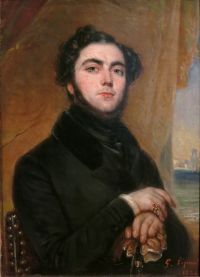 Eugène Sue,
The Wandering Jew — Volume 07
“ Should copies and extracts not be sufficient, we will have it printed, as one cannot too much diffuse such things. Some will weep—others will laugh—what appears superb to one set of people, will seem ridiculous to another, such is life—but your journal will surely make a great sensation. ”
Carl Adolf Feilberg, The Way We Civilise (1880)
“ When a paper presumes to be so well posted up in the subject as to know of all these massacres, and deal them out dressed up in a sentimental suit of catch terms for the edification of sensation-loving readers, and yet has through all its previous existence as a journal remained comparatively silent on the subject, I beg leave to doubt the honesty of its purpose and the sincerity of it own belief in the deeds it is now chronicling. ”
Various, St. Nicholas Magazine for Boys and Girls…
“ Keeping a journal cultivates habits of observation, correct and concise expression, and gives capital practice in composition, spelling, punctuation, and all the little things which go to make up a good letter-writer. So, one who keeps a journal is all the while learning to be a better penman, and a better composer, with the advantage of writing original, historical, and descriptive articles, instead of copying the printed letters and sentences of a writing-book. ”
 P. G. Wodehouse,
Tales of St. Austin's — Chapter 14
(1903)
“ Experience, which, as we all know, teaches, will in time lead you into adopting some method by which you may evade this taking of notes. A good plan is to occupy yourself with the composition of a journal, an unofficial magazine not intended for the eyes of the profane, but confined rigidly to your own circle of acquaintances. The chief advantage of such a work is that you will continue to write while the notes are being dictated. To throw your pen down with an air of finality and begin reading some congenial work of fiction would be a gallant action, but impolitic. ”
 Samuel Johnson,
The Works of Samuel Johnson, LL.D. in Nine Volumes…
“ That part of our work, by which it is distinguished from all others, is the literary journal, or account of the labours and productions of the learned. This was for a long time among the deficiencies of English literature; but, as the caprice of man is always starting from too little to too much, we have now, amongst other disturbers of human quiet, a numerous body of reviewers and remarkers. ”
James Melvin Lee, History of American Journalism (1917)
“ Taking as her motto a Scriptural phrase about lifting up a standard which should be a light unto the people, she resolved that her newspaper, instead of being a mirror for reflecting destructive agencies, should be a journal to record achievements in every useful field of human endeavor. ”
Robert Butler, Narrative of the Life and Travels of Serjeant B—…
“ Many passages of the Journal excited a very pleasing and deep interest in those to whom they were communicated, and the desire of perusing it gradually extended itself to persons in a higher condition of life. ”
 Wendell Phillips,
The Scholar in a Republic
(1881)
“ You shall go down to your children not in your fair lineaments and proportions, but with the smirks, elbows, and angles he sees you with. Journals are excellent to record the depth of the last snow and the date when the Mayflower opens; but when you come to men's motives and characters, journals are the magnets that get near the chronometer of history and make all its records worthless. You can count on the fingers of your two hands all the robust minds that ever kept journals. ”
 Paul Alexander Bartlett,
Sappho's Journal
“ The journal form has been used only rarely in works of fiction. Bartlett believed that as a form of literature the journal offers the most effective way to bring back to life the life-worlds of significant, unique, highly individual, and important creators. In each of the novels that make up Voices from the Past, his interest is to portray the inner experience of exceptional and special people, about whom there is scant knowledge on this level. ”
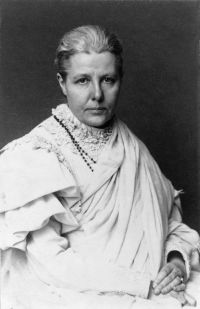 Annie Wood Besant,
Autobiographical Sketches
(1885)
“ From time to time after that, I earned a few pounds for stories in the same journal; and the Family Herald, let me say, has one peculiarity which should render it beloved by poor authors; it pays its contributor when it accepts the paper, whether it prints it immediately or not; thus my first story was not printed for some weeks after I received the cheque, and it was the same with all others accepted by the same journal. Encouraged by these small successes, I began writing a novel! It took a long time to do, but was at last finished, and sent off to the Family Herald. ”
Dorothy Wordsworth, Journals of Dorothy Wordsworth (1897)
“ It is not expedient to print either Journal in full. There are, however, so many passages of interest and beauty in each—presenting a vivid picture of the towns and countries through which the Wordsworths passed, and of the style of continental travelling in those days—that it seems desirable to insert more numerous extracts from them than those which have been already printed. ”
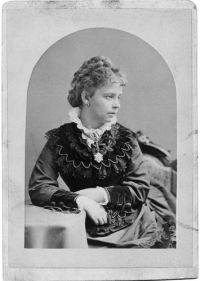 Alice Morse Earle,
Child Life in Colonial Days
“ A journal Book & a letter Book of a Lad of Eleven years old can not be expected to contain much of Science, Litterature, arts, wisdom or wit, yet it may serve to perpetuate many observations that I may make & may hereafter help me to recolect both Persons & things that would other ways escape my memory.... ”
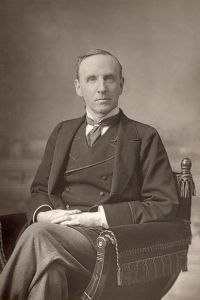
“ It is, however, only too easy to understand how a journal, existing for a day, should limit its view to the possibilities of the day, and how, being most closely affected by the particular, it should coldly turn its back upon all that is general. ”
 Jane Austen,
Northanger Abbey
(1818)
“ it is this delightful habit of journalizing which largely contributes to form the easy style of writing for which ladies are so generally celebrated. Every body allows that the talent of writing agreeable letters is peculiarly female. Nature may have done something, but I am sure it must be essentially assisted by the practice of keeping a journal." ”
 Agnes E. Ryan,
The torch bearer
“ Doing it is bound to mean more education and more organization. For the Journal fills its readers with zeal for the cause; it makes them want to work for it; and it makes them well informed, efficient workers. ”
 Charles Dickens,
The Letters of Charles Dickens…
“ No writer's name will be used, neither my own nor any other; every paper will be published without any signature, and all will seem to express the general mind and purpose of the journal, which is the raising up of those that are down, and the general improvement of our social condition. ”
Various, Popular Science Monthly (1887)
“ But not only is journalism as a whole thus specialized; the process is going on within each newspaper-office. The work is more and more divided, as the journal grows in circulation, size, and variety of contents. ”
 Leo Tolstoy,
A History of Yesterday
(1949)
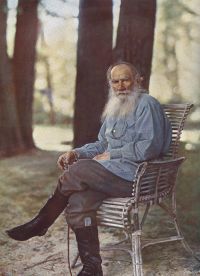
“ One of the principal accepted means for its attainment is the diary and Franklin journal. Every day I confess in my diary everything that I have done badly. I have my weaknesses written out in columns in the journal-laziness, mendacity, gluttony, indecision, the desire to show off, sensuality, lack of jiertk, etc.,- all such petty addictions. I post my transgressions from the diary to the journal by placing little crosses in the columns. ”
James P. Boyd, Triumphs and Wonders of the 19th Century…
“ The journalism of the century can boast no more indefatigable and brilliant pen than his, nor did any journal of his day occupy a more commanding place amid the discussions incident to the Civil War and subsequent periods of reconstruction. ”
 Clement King Shorter,
Victorian Literature: Sixty Years of Books and Bookmen
“ The journalism of the reign has been so intimately associated with literature that were my space more ample I should have chosen to devote a chapter to that subject alone. Many of the men I have mentioned, perhaps most of them, have at one time or another contributed to the journals or magazines of the day. ”
Max Farrand, The Records of the Federal Convention of 1787 (1911)
“ It is truly ‘in tenui labor’—the longer I brood upon it the more protracted and unprofitable the toil becomes. The journals and papers were very loosely and imperfectly kept. They were no better than the daily minutes from which the regular journal ought to have been, but never was, made out. I find, on close inspection, a great number of questions, some of them important, entered on the loose sheets of yeas and nays, and not entered at all in the journal. ”
Related terms
Authors who wrote about “journal”
Agnes E. RyanBenjamin Eli SmithVariousJane AustenMark TwainHarriott Ely FanslerSamuel R. WellsSarah Margaret FullerAinsworth Rand SpoffordBert Leston TaylorWilliam Dean HowellsArthur Jerome EddyVictoria Queen of Great BritainF. V. N. PainterHenry David ThoreauHugo B. FroehlichWilkie CollinsDaniel Gregory MasonC. E. PageRalph Waldo Emerson