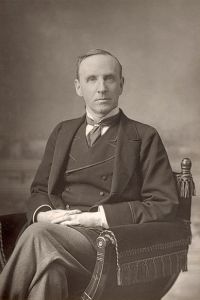
“ Nor for a single moment do we pretend that, when all the points of contact between virtuous belief and virtuous disbelief are made the most of that good faith will allow, there will not still and after all remain a terrible controversy between those who cling passionately to all the consolations, mysteries, personalities, of the orthodox faith, and us who have made up our minds to face the worst, and to shape, as best we can, a life in which the cardinal verities of the common creed shall have no place. The future faith, like the faith of the past, brings not peace but a sword. ”
Summary
John Morley’s On Compromise, a philosophical essay published in the late 19th century, explores the tensions between belief, dissent, and social conformity. Morley critiques unwavering loyalty to doctrine or popular sentiment, asserting that tentative convictions should be guided by intellectual integrity and a dedication to progress.
Through incisive examination of religious, political, and ethical conflicts, he promotes a balanced perspective on compromise that values truth above convenience, highlighting the ethical responsibility to confront falsehood while encouraging collective betterment. The work emphasizes the dangers of both strict traditionalism and hasty surrender, portraying dissent as an essential driver of moral and intellectual growth.
Quotes from On Compromise (John Morley)
“ To narrow or to repudiate such a province, and to insist exclusively on the social bearing of each part of conduct, is to limit the play of motives, and to thwart the doctrine that 'mankind obtain a greater sum of happiness when each pursues his own, under the rules and conditions required by the rest, than when each makes the good of the rest his only object.' To narrow or to repudiate such a province is to tighten the power of the majority over the minority, and to augment the authority of whatever sacerdotal or legislative body may represent the majority. ”
“ It is no reason why those who allow the provisional utility of a belief or an institution or a custom of living, should think solely of the utility and forget the equally important element of its provisionalness. For the fact of its being provisional is the very ground why every one who perceives this element, should set himself to act accordingly. It is the ground why he should set himself, in other words, to draw opinion in every way open to him—by speech, by voting, by manner of life and conduct—in the direction of new truth and the better practice. ”
“ This is the honest, though mischievous, conservatism of the human mind. We have no right to condemn our foregoers; far less to lavish on them the evil names of impostor, charlatan, and brigand, which the zealous unhistoric school of the last century used so profusely. But we have a right to say of them, as we say of those who imitate their policy now, that their conservatism is no additional proof of the utility of error. Least of all is it any justification for those who wish to have impressed upon the people a complete system of religious opinion which men of culture have avowedly put away. ”
“ Can we not imagine the mingled mystification and disdain with which a Spinosa or a Descartes, a Luther or a Pascal, would have listened to an exhortation in our persuasive modern manner on the niceties of the politic and the social obligation of pious fraud? It is not given to many to perform the achievements of such giants as these, but every one may help to keep the standard of intellectual honesty at a lofty pitch, and what better service can a man render than to furnish the world with an example of faithful dealing with his own conscience and with his fellows? ”
“ It was, what every sincere uprising of the better spirit in men and women must always be, an effective protest against the leaden tyranny of the man of the world and the so-called practical person. The man of the world despises catholics for taking their religious opinions on trust and being the slaves of tradition. As if he had himself formed his own most important opinions either in religion or anything else. He laughs at them for their superstitious awe of the Church. As if his own inward awe of the Greater Number were one whit less of a superstition. ”
“ It is no light thing to have secured a livelihood on condition of going through life masked and gagged. To be compelled, week after week, and year after year, to recite the symbols of ancient faith and lift up his voice in the echoes of old hopes, with the blighting thought in his soul that the faith is a lie, and the hope no more than the folly of the crowd ”
“ It is certainly not less possible to disbelieve religiously than to believe religiously. This accord of mind, this emulation in freedom and loftiness of soul, this kindred sense of the awful depth of the enigma which the one believes to be answered, and the other suspects to be for ever unanswerable—here, and not in a degrading and hypocritical conformity, is the true gratification of those spiritual sensibilities which are alleged to be so much higher in women than in men. ”
“ If unbelievers and doubters were more courageous, believers would be less timorous. It is because they live in an enervating fool's paradise of seeming assent and conformity, that the breath of an honest and outspoken word strikes so eager and nipping on their sensibilities. If they were not encouraged to suppose that all the world is of their own mind, if they were forced out of that atmosphere of self-indulgent silences and hypocritical reserves, which is systematically poured round them, they would acquire a robuster mental habit. They would learn to take dissents for what they are worth. ”
“ A principle, if it be sound, represents one of the larger expediencies. To abandon that for the sake of some seeming expediency of the hour, is to sacrifice the greater good for the less, on no more creditable ground than that the less is nearer. It is better to wait, and to defer the realisation of our ideas until we can realise them fully, than to defraud the future by truncating them, if truncate them we must, in order to secure a partial triumph for them in the immediate present. ”
“ To the indifferent person one can say nothing. We can only acquiesce in that deep and terrible scripture, 'He that is filthy, let him be filthy still.' To those who despair of human improvement or the spread of light in the face of the huge mass of brute prejudice, we can only urge that the enormous weight and the firm hold of baseless prejudice and false commonplace are the very reasons which make it so important that those who are not of the night nor of the darkness should the more strenuously insist on living their own lives in the daylight. ”
“ If the majority are bound to tolerate dissent from the ruling opinions and beliefs, under what conditions and within what limitations is the dissentient imperatively bound to avail himself of this toleration? How far, and in what way, ought respect either for immediate practical convenience, or for current prejudices, to weigh against respect for truth? For how much is it well that the individual should allow the feelings and convictions of the many to count, when he comes to shape, to express, and to act upon his own feelings and convictions? ”
“ One would suppose that instead of having her religious feeling gratified by conformity on these terms, nothing could wound it so bitterly nor outrage it so unpardonably. To know that her sensibility is destroying the entireness of the man's nature, its loyalty alike to herself and to truth, its freedom and singleness and courage—surely this can hardly be less distressing to a fine spirit than the suspicion that his heresies may bring him to the pit, or than the void of going through life without even the semblance of religious sympathy between them. ”
“ The woman does not know how much she will need religion, nor what comfort it may bring to her. The man does not know all the objections to it which may disclose themselves to his understanding as the years ripen. There is always at work that most unfortunate maxim, tacitly held and acted upon in ninety-nine marriages out of a hundred, that money is of importance, and social position is of importance, and good connections are of importance, and health and manners and comely looks, and that the only thing which is of no importance whatever is opinion and intellectual quality and temper. ”
“ An American, in the midst of the political corruption which for the moment obscures the great democratic experiment, yet has his imagination kindled by the size and resources of his land, and his enthusiasm fired by the high destinies which he believes to await its people in the centuries to come. A Frenchman, republican or royalist, with all his frenzies and 'fool-fury' of red or white, still has his hope and dream and aspiration, with which to enlarge his life and lift him on an ample pinion out from the circle of a poor egoism. ”
“ The people who selfishly seek to enjoy as much comfort and ease as they can in an existing state of things, with the desperate maxim, 'After us, the deluge,' are not any worse than those who cherish present comfort and case and take the world as it comes, in the fatuous and self-deluding hope, 'After us, the millennium.' Those who make no sacrifice to avert the deluge, and those who make none to hasten their millennium, are on the same moral level. ”
“ Still less are we pleading for the freethinker's right at every hour of day or night to mock, sneer, and gibe at the sincere beliefs and conscientiously performed rites of those, whether men or women, whether strangers or kinsfolk, from whose religion he disagrees. 'It is not ancient impressions only,' said Pascal, 'which are capable of abusing us. The charm of novelty has the same power.' The prate of new-born scepticism may be as tiresome and as odious as the cant of gray orthodoxy. Religious discussion is not to be foisted upon us at every turn either by defenders or assailants. ”
“ This is only the catastrophe, in one of its many shapes, of the fatal doctrine that money, position, power, philanthropy, or any of the thousand seductive masks of the pseudo-expedient, may carry a man away from love of truth and yet leave him internally unharmed. The depravation that follows the trucking for money of intellectual freedom and self-respect, attends in its degree each other departure from disinterested following of truth, and each other substitution of convenience, whether public or private, in its place. And both parties to such a compromise are losers. ”
“ Conceive the additions which your caution has made to the moral integrity of the community in the meantime. Measure the enormous hindrances that will have been placed in the way of truth and improvement, when the day at last arrives on which you and your two-thirds take heart to say that falsehood and abuse have now reached their final term, and must at length be swept away into the outer darkness. Consider how much more terrible the shock of change will be when it does come, and how much less able will men be to meet it, and to emerge successfully from it. ”
“ The evil of which we have been speaking comes of not seeing the great truth, that it is worth while to take pains to find out the best way of doing a given task, even if you have strong grounds for suspecting that it will ultimately be done in a worse way. And so also in spheres of thought away from the political sphere, it is worth while 'to scorn delights and live laborious days' in order to make as sure as we can of having the best opinion, even if we know that this opinion has an infinitely small chance of being speedily or ever accepted by the majority, or by anybody but ourselves. ”
“ The dogmas which criticism attacks are not for these poor people 'the object of an explicit affirmation,' and therefore there is no harm in them; 'it is the privilege of pure sentiment to be invulnerable, and to play with poison without being hurt by it.' In other words, the dogmas are false, but the liturgy, as a performance stirring the senses of awe, reverence, susceptibility to beauty of various kinds, appeals to and satisfies a sentiment that is both true and indispensable in the human mind. ”
“ Progress is not automatic, in the sense that if we were all to be cast into a deep slumber for the space of a generation, we should awake to find ourselves in a greatly improved social state. The world only grows better, even in the moderate degree in which it does grow better, because people wish that it should, and take the right steps to make it better. Evolution is not a force, but a process; not a cause, but a law. It explains the source, and marks the immovable limitations, of social energy. But social energy itself can never be superseded either by evolution or by anything else. ”
“ To do this is to sow tares not in your enemy's field, but in the very ground which is most precious of all others to you and most full of hope for the future. To allow it to be done merely that children may grow up in the stereotyped mould, is simply to perpetuate in new generations the present thick-sighted and dead-heavy state of our spirits. It is to do one's best to keep society for an indefinite time sapped by hollow and void professions, instead of being nourished by sincerity and whole-heartedness. ”
“ Then how pitiful a thing seems the approval or disapproval of these creatures of the conventions of the hour, as one figures the merciless vastness of the universe of matter sweeping us headlong through viewless space; as one hears the wail of misery that is for ever ascending to the deaf gods; as one counts the little tale of the years that separate us from eternal silence. ”
“ In the positive endeavour to realise an opinion, to convert a theory into practice, it may be, and very often is, highly expedient to defer to the prejudices of the majority, to move very slowly, to bow to the conditions of the status quo, to practise the very utmost sobriety, self-restraint, and conciliatoriness. The mere expression of opinion, in the next place, the avowal of dissent from received notions, the refusal to conform to language which implies the acceptance of such notions,—this rests on a different footing. ”
“ And all this hesitancy, this tampering with conviction for fear of its consequences, this want of faithful dealing in the highest matters, is being intensified, aggravated, driven inwards like a fatal disorder toward the vital parts, by the existence of a State Church. While thought stirs and knowledge extends, she remains fast moored by ancient formularies. While the spirit of man expands in search after new light, and feels energetically for new truth, the spirit of the Church is eternally entombed within the four corners of acts of parliament. ”
“ But to be afraid or ashamed of holding such an ideal set of principles in one's mind in their highest and most abstract expression, does more than any one other cause to stunt or petrify those elements in character to which life should owe most of its savour.If a man happens to be a Conservative, for instance, it is pitiful that he should think so much more of what other people on his side or the other think, than of the widest and highest of the ideas on which a conservative philosophy of life and human society reposes. ”
“ Yet it is here more than anywhere else that controversy is needed to clear up what is in just as much need of elucidation, whatever view we may take of the inherent virtue of freedom—whether we look on freedom as a mere negation, or as one of the most powerful positive conditions of attaining the highest kind of human excellence.To some persons the analysis of conduct, on which the whole doctrine of liberty rests, seems metaphysical and arbitrary. They are reluctant to admit there are any self-regarding acts at all. ”
“ In a country of unchecked and abundant discussion, a new idea is not at all likely to make much way against the objection of its novelty, unless it is really commended by some quality of temporary or permanent value. So far therefore as the mere publication of new principles is concerned, and so far also as merely self-regarding action goes, one who has the keenest sense of social responsibility, and is most scrupulously afraid of doing anything to slacken or perturb the process of social growth, may still consistently give to the world whatever ideas he has gravely embraced. ”
“ If the religious spirit leads to a worthy and beautiful life, if it shows itself in cheerfulness, in pity, in charity and tolerance, in forgiveness, in a sense of the largeness and the mystery of things, in a lifting up of the soul in gratitude and awe to some supreme power and sovereign force, then whatever drawback there may be in the way of superstitious dogma, still such a spirit is on the whole a good thing. ”
“ Well has the illustrious Pascal said with reference to one of the two great issues of the modern controversy:—'The immortality of the soul is a thing that concerns us so closely and touches us so profoundly, that one must have lost all feeling to be indifferent as to knowing how the matter is. All our actions and all our thoughts must follow such different paths, according as there are eternal goods to hope for or are not, that it is impossible to take a step with sense and judgment, without regulating it in view of this point, which ought to be our first object.... ”
“ After high aspirations, after renewed endeavours, after bootless toil, after long wanderings, after hope, effort, weariness, failure, painfully alternating and recurring, it is an immense relief to the exhausted mind to be able to say, "At length I know that I can know nothing about anything." ... Ignorance remains the evil which it ever was, but something of the peace of certitude is gained in knowing the worst, and in having reconciled the mind to the endurance of it.' [16] Precisely, and what one would say of our own age is that it will not deliberately face this knowledge of the worst. ”
“ We wonder whether duty to truth can possibly require us to inflict keen distress on those to whom we are bound by the tenderest and most consecrated ties. This is so wholly honourable a sentiment, that no one who has not made himself drunk with the thin sour wine of a crude and absolute logic will refuse to consider it. Before, however, attempting to illustrate cases of conscience in this order, we venture to make a short digression into the region of the matter, as distinct from the manner of free speech. ”
“ Success in politics, as in every other art, obviously before all else implies both knowledge of the material with which we have to deal, and also such concession as is necessary to the qualities of the material. Above all, in politics we have an art in which development depends upon small modifications. That is the true side of the conservative theory. To hurry on after logical perfection is to show one's self ignorant of the material of that social structure with which the politician has to deal. To disdain anything short of an organic change in thought or institution in infatuation. ”
“ And what is this smile of the world, to win which we are bidden to sacrifice our moral manhood; this frown of the world, whose terrors are more awful than the withering up of truth and the slow going out of light within the souls of us? ”
“ As a plain matter of fact and observation, we may all perceive that dissent from religious opinion less and less implies reproach in any serious sense. We all of us know in the flesh liberal catholics and latitudinarian protestants, who hold the very considerable number of beliefs that remain to them, quite as firmly and undoubtingly as believers who are neither liberal nor latitudinarian. The compatibility of error in faith with virtue in conduct is to them only a mystery the more, a branch of the insoluble problem of Evil, permitted by a Being at once all-powerful and all-benevolent. ”
“ When the change in way of living or in institution is one which requires the assent and co-operation of numbers of people, it may clearly be a matter for question whether men enough are ready to yield assent and co-operation. But the expression of the necessity of the change and the grounds of it, though it may not always be appropriate, can never be premature, and for these reasons. The fact of a new idea having come to one man is a sign that it is in the air. The innovator is as much the son of his generation as the conservative. ”
“ Of course in each of these cases everybody who does not happen to share the given peculiarity of belief, will agree that however severely a husband's dissent might pain the wife, whatever distress and discomfort it might inflict upon her, yet he would be bound to let her suffer, rather than sacrifice his veracity and self-respect. Why then is it any less discreditable to practise an insincere conformity in more ordinary circumstances? If the principle of such conformity is good for anything at all, it ought to cover these less usual cases as completely as the others which are more usual. ”
“ Ours, as has been truly said, is 'a time of loud disputes and weak convictions,' In a generation deeply impressed by a sense of intellectual responsibility this could not be. As it is, even superior men are better pleased to play about the height of these great arguments, to fly in busy intellectual sport from side to side, from aspect to aspect, than they are intent on resolving what it is, after all, that the discussion comes to and to which solution, when everything has been said and heard, the balance of truth really to incline. ”
“ The substitution of force for persuasion, among its other disadvantages, has this further drawback, from our present point of view, that it lessens the conscience of a society and breeds hypocrisy. You have not converted a man, because you have silenced him. Opinion and force belong to different elements. To think that you are able by social disapproval or other coercive means to crush a man's opinion, is as one who should fire a blunderbuss to put out a star. ”
“ If any one really thinks that the current theology involves depraved notions of the supreme impersonation of good, restricts and narrows the intelligence, misdirects the religious imagination, and has become powerless to guide conduct, then how does the circumstance that it happens not to be wholly and unredeemedly bad in its influence, relieve our dissident from all care or anxiety as to the points in which, as we have seen, he does count it inadequate and mischievous? ”
“ Conscience has lost its strong and on-pressing energy, and the sense of personal responsibility lacks sharpness of edge. The native hue of spiritual resolution is sicklied o'er with the pale cast of distracted, wavering, confused thought. The souls of men have become void. ”
Common terms
Similar works
On Liberty (John Stuart Mill)Autobiography (Mill) — Chapter VII. 1840-1870…A History of Freedom of Thought…Autobiography (John Stuart Mill…The English Utilitarians, Volume 1…Prose Masterpieces from Modern Essayists…Physics and Politics, or, Thoughts on the application of the principles of "natural selection" and "inheritance" to political society…Social Rights And Duties: Addresses to Ethical Societies…An Essay on the Evils of Popular Ignorance…Considerations on Representative Government…
