Summary

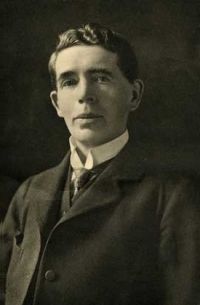
Portrait of J. B. Bury J. B. Bury A History of Freedom of Thought

Although the liberty to publish one’s opinions on any subject without regard to authority or the prejudices of one’s neighbours is now a well-established principle, I imagine that only the minority of those who would be ready to fight to the death rather than surrender it could defend it on rational grounds. We are apt to take for granted that freedom of speech is a natural and inalienable birthright of man, and perhaps to think that this is a sufficient answer to all that can be said on the other side.
Source: Gutenberg

Portrait of J. B. Bury J. B. Bury A History of Freedom of Thought

Would more men be saved if all blindly resigned themselves to the will of their rulers and accepted the religion of their country? For as the princes of the world are divided in religion, one country alone would be in the right, and all the rest of the world would have to follow their princes to destruction; “and that which heightens the absurdity, and very ill suits the notion of a deity, men would owe their eternal happiness or their eternal misery to the places of their nativity.” This is a principle on which Locke repeatedly insists.
Source: Gutenberg

Portrait of J. B. Bury J. B. Bury A History of Freedom of Thought (1913)

He said: "The most unlimited liberty of religion is in my eyes a right so sacred that to express it by the word 'toleration' seems to me itself a sort of tyranny, since the authority which tolerates might also not tolerate." The same protest was made in Thomas Paine's Rights of Man which appeared two years later: "Toleration is not the opposite of Intolerance, but is the counterfeit of it. Both are despotisms. The one assumes itself the right of withholding liberty of conscience, and the other of granting it."
Source: Wikisource

Get perspective with Kwize: daily news enlightened by great literature