Summary

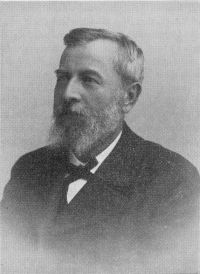
Portrait of Auguste Sabatier Auguste Sabatier Outlines of a Philosophy of Religion based on Psychology and History

I remain floating between a science which is not moral and a morality that I feel to be unscientific. My intellect destroys my will. As the one develops the other dies. The better I know the laws of the world the less reason I have for living and acting. My morality, at each act, gives the lie to my science, and my science, at each affirmation, refutes my morality. Such is the deep malady, the spiritual misery, of the best of our contemporaries. They feel that, with them, vital energy is in inverse proportion to the extent and penetration of thought.
Source: Gutenberg

Portrait of Auguste Sabatier Auguste Sabatier Outlines of a Philosophy of Religion based on Psychology and History

That is why Protestantism has taken the form of this return to the past, for in it Christianity does not surpass itself; it simply tries to know itself better and to become more faithful to its principle. In the consciousness of Christ, what did we find was the essence of the perfect and eternal piety? Nothing more than moral repentance, confidence in the love of the Father and the filial sense of His immediate, active presence in the heart: the indestructible foundation of our liberty, of our moral dignity, of our security, in face of the enigmas of the universe and the mysteries of death.
Source: Gutenberg

Portrait of Auguste Sabatier Auguste Sabatier Outlines of a Philosophy of Religion based on Psychology and History

Thus thrown back upon itself, the activity of the ego returns upon the centre and heats it like the axle of a wheel in motion. Sparks soon fly, and the inner life of the ego is lit up. This is consciousness. Brought back by painful sensations and by repeated failure of its efforts from the outside, the ego begins to reflect upon itself; it doubles itself and knows itself; soon it judges itself; it separates itself from the organism with which at first it confounded itself; it opposes itself to itself, as if there were really in itself two beings, an ideal ego and an empirical ego.
Source: Gutenberg

Get perspective with Kwize: daily news enlightened by great literature