A page, defined as one side of a leaf in a book or document, functions as both a physical medium for text and a metaphor for the progression of a narrative. From Jack London’s poetic comparison of life to an endless book of pages to Arnold Bennett’s claim that a page reflects an author’s style and content, the concept has been examined through literary, typographic, and structural perspectives.
William Morris stressed the aesthetic balance between type and page design, while Jean Pierre Claris de Florian underscored the page’s role in structuring thematic coherence. These diverse viewpoints highlight the page’s dual nature as a tangible item and a symbolic container for human expression, connecting the material and the abstract in both form and significance.
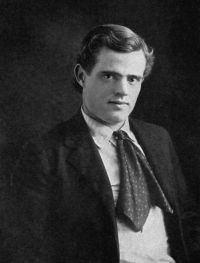 Jack London,
The Road
(1907)
Jack London,
The Road
(1907)