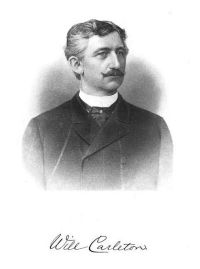
“ To serve that Heart, the Editor must toil;Under Its bidding must his efforts be;It forms part of "the editorial We."Why do the papers gossip, would you know?Because—the public ear would have it so.Our journal's not a favorite breakfast-dish,Unless it gossips to the public wish;And even they who call "the stuff absurd,"Will sit and groan, and—read it every word.Why do we thread men's motives thro' and thro'?Because our king, The Public, tells us to!Why do we quote the wedding chimes and hues?Because our Queen is waiting for the news.Why do we type on useless stories waste? ”
Editorial
Definition and stakes
An editorial is a journalistic form that conveys a publication's position on a subject, usually unsigned and representing the collective voice of the editorial board. Authors such as Edwin L. Miller highlight its function in expressing viewpoints, differentiating it from factual reporting, while Alleyne Ireland emphasizes the importance of accuracy and stylistic discipline.
Chester Sanders Lord points out the challenges of writing swiftly and with focus, and an editor underscores the ethical and commercial significance of a clear editorial stance. These viewpoints illustrate editorials as both a means of influencing public debate and a manifestation of a publication’s ideological direction, balancing advocacy with journalistic integrity.
Quotes about “editorial”
 Alleyne Ireland,
An Adventure with a Genius: Recollections of Joseph Pulitzer
Alleyne Ireland,
An Adventure with a Genius: Recollections of Joseph Pulitzer
“ What a newspaper needs in its news, in its headlines, and on its editorial page is terseness, humor, descriptive power, satire, originality, good literary style, clever condensation, and accuracy, accuracy, accuracy! ”
George Binney Dibblee, The Newspaper
“ There are so many ways of either guiding or forming opinion by editorial comment or exposition and by the publication of signed or unsigned articles of a more or less rhetorical nature that a complete analysis of the subject means little less than the history of the press. ”
 Chester Sanders Lord,
The Young Man and Journalism
Chester Sanders Lord,
The Young Man and Journalism
“ Almost all newspaper editorial articles, critiques of the drama or of music, and all news articles are written at a single sitting and under the constant admonition to “hurry up” both mind and movement. The writer must acquire the art of instant concentration of thought on the one subject, of instantly recalling precedents and of quickly foreseeing results. ”
Edwin L. Miller, Practical English Composition: Book II
“ An editorial is a newspaper article in which the opinions of the editor are set forth. News deals with fact. In news articles the opinion of the writer must be suppressed. The pronouns “I” and “we” have no place in news. The essence of the editorial, on the other hand, is the opinion of the writer. On the editorial page, the man who directs the policy of a paper seeks to interpret the news in accordance with his own views and to persuade the public to adopt those views. ”
 James Oppenheim,
The Nine-Tenths
James Oppenheim,
The Nine-Tenths
“ An editorial, giving some of the plain facts about civilization—simple stuff to teach the people what industry means, what their work means, what they ought to be doing. Then news—news about all movements toward freedom—labor, strikes, reform, new laws, schools—news of all the forces working for betterment—a concrete statement of where the world stands to-day and what it is doing. ”
| editor, Oregon Exchanges (1922)
“ More than that,—and here I come to the crux of the whole business.—in my judgment, the newspaper that meets every important issue that comes up, not militantly necessarily, but squarely, is not only an example of better journalism from a moral standpoint but from a business standpoint. In other words I believe that in the long run, in spite of necessary sacrifices and set-backs, a vigorous and clear-cut editorial policy pays. ”
 Charles Dudley Warner,
The Works of Charles Dudley Warner
Charles Dudley Warner,
The Works of Charles Dudley Warner
“ There is an editorial tradition—it might almost be termed a superstition—which I think will have to be abandoned. It is that a certain space in the journal must be filled with editorial, and that some of the editorials must be long, without any reference to the news or the necessity of comment on it, or the capacity of the editor at the moment to fill the space with original matter that is readable. There is the sacred space, and it must be filled. ”
Chester Sanders Lord,
The Young Man and Journalism
“ If he fancies the writing of editorial articles, let him study the art of editorial writing. If he aspires to executive work, such as is done by managing and city editors, let him prepare accordingly. ”
 Frank Justus Miller,
Studies in the Poetry of Italy…
Frank Justus Miller,
Studies in the Poetry of Italy…
“ The editor's function is still more intimately and constantly to hold the mirror up to society, revealing and reproving its faults. And to-day there is probably no more potent force acting directly upon the opinions and conduct of men than the daily editorial. ”
 Agnes E. Ryan,
The torch bearer
Agnes E. Ryan,
The torch bearer
“ One of our tasks is to make all realize that in editing the organ of the movement a great responsibility must be met and that mean or small things cannot influence us.All daily papers, all periodicals and magazines that live and become powerful relate their editorial policy very closely to their business plans. ”
Chester Sanders Lord,
The Young Man and Journalism
“ But in smaller towns the newspaper goes to the wise and the unwise alike. The task of pleasing everybody requires study, and here editorial writing becomes an art, indeed. The scholar may sneer at the article that pleases the man of toil and both may despise the suggestion that convinces the man of medium intelligence.The editor of scholarly instincts naturally wants to please the highest intelligence among his readers; but the readers who really think in a scholarly way are few. ”
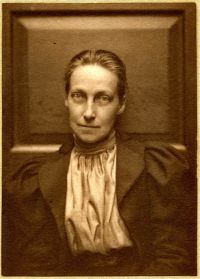 Lucy Maynard Salmon,
The Newspaper and the Historian
(1923)
Lucy Maynard Salmon,
The Newspaper and the Historian
(1923)
“ Modern editorials have been reprinted, as those from the London Times,—"third leaders" that "are meant to turn the reader from affairs and interests of the moment to a consideration 'of man, of nature, and of human life' in their larger, more permanent aspect. In one or another form they represent the daily demand and supply of material for thought. ... They are journalism; but in them journalism is extending itself towards, is even becoming, literature." ”
Charles Dudley Warner,
The American Newspaper
“ For the editorial, if it is to hold its place, must be more and more the product of information, culture, and reflection, as well as of sagacity and alertness. Ignorance of foreign affairs, and of economic science, the American people have in times past winked at ”
 John Greenleaf Whittier,
The Works of John Greenleaf Whittier…
John Greenleaf Whittier,
The Works of John Greenleaf Whittier…
“ It is difficult, in a single extract, to convey an adequate idea of the character of the editorial columns of a paper, where terse and concentrated irony and sarcasm alternate with eloquent appeal and diffuse commentary and labored argument. ”
Edwin L. Miller, Practical English Composition: Book II
“ The object of this chapter is to present a few exercises on destructive editorials. Their object, of course, is not really to create ruin; it is merely to clear away rubbish in order to prepare the ground for the edifice of truth.II. AssignmentWrite an editorial in reply to an editorial in which a false position is assumed by the writer.III. Model I Vice-President Marshall’s declaration, made some time ago at Wabash College, that the old man is being shoved off the stage everywhere, needs revision, as does the opinion of another statesman that men over fifty are atrophied. ”
 William Eleroy Curtis,
The Capitals of Spanish America
William Eleroy Curtis,
The Capitals of Spanish America
“ They give about six columns of editorial to one of intelligence, and publish all sorts of communications on political subjects, furnish a story in each issue, and often run histories and biographies as serials. ”
 William Jennings Bryan,
In His Image
William Jennings Bryan,
In His Image
“ The columns of the paper are filled with matter, written not for the purpose of presenting facts as they exist, but for the purpose of distorting facts and misleading the public. The editorial writers, whose names are generally unknown to the public, are told what to say and what subjects to avoid. ”
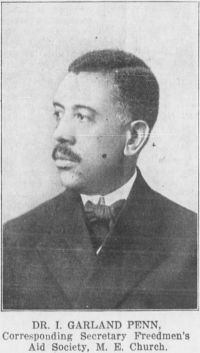 Irvine Garland Penn,
The Afro-American Press and Its Editors
(1891)
Irvine Garland Penn,
The Afro-American Press and Its Editors
(1891)
“ In combating the prejudices of the strong, on the one hand, and in defending the character of the weak, on the other; in advocating an unpopular cause, and coming in contact with such a variety of mind and of taste, and in bearing up under our present duties and responsibilities, in such times as these, such sentiments from an enlightened and judicious corps-editorial are encouraging, and furnish us with additional testimony that we are not ill-timed and out of place but needful, and deserve a place among the mouthpieces of different sects, parties and classes now existing. ”
 Bret Harte,
The Heathen Chinee (1881)
(1871)
Bret Harte,
The Heathen Chinee (1881)
(1871)
“ The editorial staff employed on EVERY SATURDAY embraces many of the ablest writers in the country. In its two editorial departments are dis cussed the leading Political, Social, Literary, and Dramatic topics of the day. ”
Edward Howard Griggs, The Soul of Democracy
“ We have our great blanket sheet newspapers, representing a party, a clique, a financial interest, with writers lending their brains out, for money, to write editorials for causes in which they do not believe. We have the multitude of books, incessantly and hastily produced; we read much, and scarcely think at all. ”
Willard Grosvenor Bleyer, Types of News Writing
“ Editorials have as their purpose the interpretation of news and of current issues and the discussion of matters of general interest, particularly with a view to convincing readers of the truth or the falsity of some proposition and of persuading them to act in accordance with the convictions thus created. ”
Chester Sanders Lord,
The Young Man and Journalism
“ A knowledge of public sentiment and the ability to anticipate public sentiment are brilliants, indeed, in the editor’s jewelbox of sagacity.The absolutely fearless editor who values his opinion more than he values his income, will slam into the public’s most cherished notions if he thinks he is right. ”
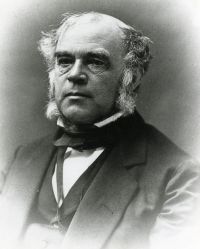 John William Draper,
History of the Conflict Between Religion and Science
John William Draper,
History of the Conflict Between Religion and Science
“ And yet, how imperfect, how inadequate is the catalogue of facts I have furnished in the foregoing pages! I have said nothing of the spread of instruction by the diffusion of the arts of reading and writing, through public schools, and the consequent creation of a reading community; the modes of manufacturing public opinion by newspapers and reviews, the power of journalism, the diffusion of information public and private by the post-office and cheap mails, the individual and social advantages of newspaper advertisements. ”
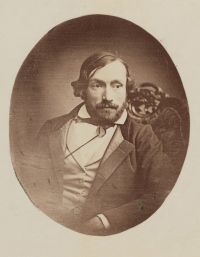 Samuel Gray Ward,
Aesthetic Papers
(1849)
Samuel Gray Ward,
Aesthetic Papers
(1849)
“ A Review is, or is supposed to be, an embodiment of this important element; exercising itself always with reference to the leading interests of the age, holding a middle place between the buzz of the newspapers and the mature judgment of the historian, less subject to the influences of passion or party than the former, and held to less strict account for severe attention to justice than the latter. Our current literary ideas and forms are of English growth. The violence of party spirit, the universal interest in politics, have in England made the great Reviews into political organs. ”
 Hamilton Holt,
Commercialism and Journalism
Hamilton Holt,
Commercialism and Journalism
“ By common consent we editors are called the "moulders of public opinion." Writing in our easy chairs or making suave speeches over the walnuts and wine, we take scrupulous care to expatiate on this phase of our function. ”
Chester Sanders Lord,
The Young Man and Journalism
“ There should be thoughtful study of the great principles that govern human conduct. All history is useful.79 And obviously the editor cannot know too much of the fundamentals of government, of law, diplomacy, politics, and political causes, of finance, taxation, philanthropy, the relations of labor and capital and so on—the list is endless. The schools of journalism give much attention to these essentials. Their courses are prepared with great wisdom for the attainment of practical knowledge. Young men who would be journalists will profit greatly by study in these schools. ”
Various, Notes and Queries, Number 79, May 3…
“ Never was such society more needed than in the present day, when you can scarcely take up a newspaper, or a periodical, a new poem, or any modern literary production, without finding some new-coined word, perplexing to the present reader, and a perfect stumbling-block in the way of any future editor. ”
 Albert Henry Smyth,
The Philadelphia Magazines and their Contributors 1741-1850
Albert Henry Smyth,
The Philadelphia Magazines and their Contributors 1741-1850
“ The gradual accumulation of books about books, of criticisms on both, of reviews of the critics, of newspaper accounts of the reviews, of weekly summaries of the newspapers, seems to be carrying us ever further from the face of reality into a mere commerce of ideas on which no healthy soul can live. ”
Major John Butler, A Sketch of Assam: With some account of the Hill Tribes
“ The Review, which is the organ of no party, and no sect, and supported by men of all shades of opinion, aims at the collection and production in a popular form of all that is important in the history, the politics, the topography, the statistics, the philology, the manners and customs, the political and domestic economy, &c. ”
 Caroline Wells Healey Dall,
The College, the Market, and the Court
Caroline Wells Healey Dall,
The College, the Market, and the Court
“ Police reports, vulgar anecdotes, shocking accidents, and trivial gossip a child might be ashamed to repeat, make up the mass of our daily sheets. Happy is the editor who offers three columns of common sense daily to his readers. When, alas! shall we have a public willing to pay for common sense and pure reading alone? ”
Narrative and Critical History of America…
“ When the Press in such periods is pouring its outflow of ephemeral tracts and books, vigorous, intense, effective, as they may be for a temporary end or for the circle of a sect or party, genius or scholarly culture, or a philosophical and comprehensive spirit, penetrating below the surface and rising above the details of a controversy, will engage itself upon the product of what we call an immortal work. ”
 Hilaire Belloc,
The Free Press
Hilaire Belloc,
The Free Press
“ Opinions, above all, we judge by the personalities of those who deliver them: by voice, tone, expression, and known character. The Press eliminates three-quarters of all by which opinion may be judged. And yet it presents the opinion with the more force. ”
 James Parton,
Famous Americans of Recent Times
James Parton,
Famous Americans of Recent Times
“ The editor who expends fifty guineas a day in the purchase of three short essays can have them written by the men who can do them best. What a power is this, to say three things every morning to a whole nation,—to say them with all the force which genius, knowledge, and practice united can give,—and to say them without audible contradiction! ”
 Herbert Spencer,
Popular Science Monthly
(1872)
Herbert Spencer,
Popular Science Monthly
(1872)
“ What can be a more acceptable doctrine than that while you are satisfying an instinct not very remotely allied to that of the village gossip—while you are receiving through print, instead of orally, remarkable facts concerning notable persons—you are gaining that knowledge which will make clear to you why things have happened thus or thus in the world, and will prepare you for forming a right opinion on each question coming before you as a citizen? ”
 Robert Ingersoll,
What I Want for Christmas
Robert Ingersoll,
What I Want for Christmas
“ I would like to see all the editors of papers and magazines agree to print the truth and nothing but the truth, to avoid all slander and misrepresentation, and to let the private affairs of the people alone. ”
J. N. Larned, History for ready reference, Volume 2…
“ The essayist, the critic, and the novelist appear for the first time in their modern shape; and the journalist is slowly gaining some authority as the wielder of a political force. The whole character of contemporary literature, in short, is moulded by the social conditions of the class for which and by which it was written, still more distinctly than by the ideas current in contemporary speculation. ”
Geoffrey Mortimer, The Blight of Respectability
“ It is the Magazine for such readers as care for progressive thought in all or any of the main fields of discussion—the religious, the political, the sociological, the ethical, the economic, the literary, the scientific, and the æsthetic. ”

“ Who owns the press and why? When you read your daily paper, are you reading facts or propaganda? And whose propaganda?Who furnishes the raw material for your thoughts about life? Is it honest material?No man can ask more important questions than these; and here for the first time the questions are answered in a book. ”
Newton Smart, The Duty of a Christian People under Divine Visitations
“ To effect, however, this great object, the co-operation p. 143of that mighty engine of good or evil—the public press, is essential. When the information, the talent, the eloquence, which are so conspicuous in many of our leading journals are considered, we cease to wonder at the immense influence they possess over the public mind; for partly through indolence, partly through ignorance, a large proportion of men are disposed to adopt, without examination, opinions which come recommended by the authority of a name they have been accustomed to respect and value. ”
 James Russell Lowell,
Lectures on English poets
(1897)
James Russell Lowell,
Lectures on English poets
(1897)
“ Men went to the scaffold or the stake for ideas and principles which we set up in our writings and our talk as thoughtlessly as a printer sticks his type, and the country editor, when he wrote his last diatribe on the freedom of the press, dipped his pen without knowing it in the blood of the martyrs. ”
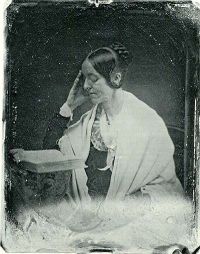 Sarah Margaret Fuller,
Papers on Literature and Art
(1846)
Sarah Margaret Fuller,
Papers on Literature and Art
(1846)
“ Scholars sneer at and would fain dispense with them altogether; and the public, grown lazy and helpless by this constant use of props and stays, can now scarce brace itself even to get through a magazine article, but reads in the daily paper laid beside the breakfast plate a short notice of the last number of the long established and popular review, and thereupon passes its judgment and is content. ”
