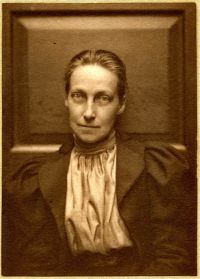
Lucy Maynard Salmon

Lucy Maynard Salmon

Summary

Portrait of Lucy Maynard Salmon Lucy Maynard Salmon The Newspaper and the Historian (1923)

An examination of editorials covering a long series of years leads to the conclusion, that no parts of the best newspapers of to-day are so free from errors of fact as are the editorial columns. Errors of judgment will always be found, yet the historian must regard these as personal and not to be attributed to the newspaper as such.
As the editorial has widened its scope from the early, almost exclusive consideration of political subjects, it has in so doing acquired an independence in treating all subjects. The early editorial was largely the expression of the personal opinions of the editor
Source: Wikisource

Portrait of Lucy Maynard Salmon Lucy Maynard Salmon The Newspaper and the Historian (1923)

The editor feels that he is limited by the temperament of his contributors and the contributor languishes under the heavy hand of the editor. The editor must not offend the public, and the contributor must not offend the editor. With exceptions almost equal in number to those that prove the rule, the student of history must find the editor of the periodical press essentially conservative, a man with his hand on the public pulse, an observer rather than a leader, a critic rather than an initiator.
Source: Wikisource

Portrait of Lucy Maynard Salmon Lucy Maynard Salmon The Newspaper and the Historian (1923)

Modern editorials have been reprinted, as those from the London Times,—"third leaders" that "are meant to turn the reader from affairs and interests of the moment to a consideration 'of man, of nature, and of human life' in their larger, more permanent aspect. In one or another form they represent the daily demand and supply of material for thought. ... They are journalism; but in them journalism is extending itself towards, is even becoming, literature."
Source: Wikisource

Get perspective with Kwize: daily news enlightened by great literature