Summary

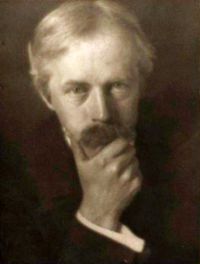
Portrait of Arthur Symons Arthur Symons 1911 Encyclopædia Britannica, Volume 27… (1911)

Solitude, confinement and thought converted a pagan into a Catholic, without, however, rooting out what was most human in the pagan; and after many years' silence he published Sagesse (1881) , a collection of religious poems, which, for humble and passionate conviction, as well as originality of poetic beauty, must be ranked with the finest religious poems ever written. Romances sans paroles, composed during the intervals of wandering, appeared in 1874, and shows us Verlaine at his most perfect moment of artistic self-possession, before he has quite found what is deepest in himself.
Source: Wikisource

Portrait of Arthur Symons Arthur Symons 1911 Encyclopædia Britannica, Volume 27… (1911)

Bonheur, 1891) vary greatly in quality as in substance; they are all the sincere expression, almost the instantaneous notation, of himself, of his varying moods, sensual passion, the passion of the mystic, the delight of the sensitive artist in the fine shades of sensation. He brought into French verse a note of lyrical song, a delicacy in the evocation of sound and colour, which has seemed almost to create poetry over again, as it provides a language out of which rhetoric has been cleansed and a rhythm into which a new music has come with a new simplicity. (A. Sy.)
Source: Wikisource

Get perspective with Kwize: daily news enlightened by great literature