Summary

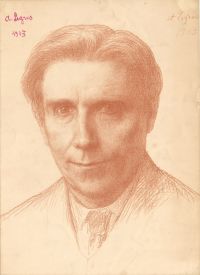
Portrait of Thomas Okey Thomas Okey Paris and Its Story

Soon the “dwarfish, ragged sans-culottes, the small, black-looking Marseillaise dressed in rags of every colour,” whom Goethe saw tramping out of Mayence “as if the goblin king had opened his mountains and sent forth his lively host of dwarfs,” had forced Prussia, the arch-champion of monarchy, to make peace and leave its Rhine provinces in the hands of regicides. Meanwhile terror reigned in Paris. In the frenzy of mortal strife the Revolution struck out blindly and cut down friend as well as foe; the innocent with the guilty. At least the guillotine fell swiftly and mercifully.
Source: Gutenberg

Portrait of Thomas Okey Thomas Okey Paris and Its Story

Far to the west and on the opposite side of the Seine is the immense area of the Champ de Mars, where, on the anniversary of the fall of the Bastille, was enacted the fairest scene of the Revolution. The whole population of Paris, with their marvellous instinct of order and co-operation, spontaneously set to work to dig the vast amphitheatre which was to accommodate the 100,000 representatives of France, and 400,000 spectators, all united in an outburst of fraternal love and hope to swear allegiance to the new Constitution before the altar of the Fatherland.
Source: Gutenberg

Portrait of Thomas Okey Thomas Okey Paris and Its Story

Busy multitudes of alert, eager burgesses crowd her streets; ten thousand students stream from the provinces, from Europe, and even from the uttermost parts of the earth, to eat of the bread of knowledge at her University. The old collegiate life is gone, but the arts and sciences are freely taught as of old to all comers; and a lowly peasant lad may carry in his satchel a prime minister’s portfolio or the insignia of a president of the republic, even as his mediæval prototype bore a bishop’s mitre or a cardinal’s hat.
Source: Gutenberg

Get perspective with Kwize: daily news enlightened by great literature