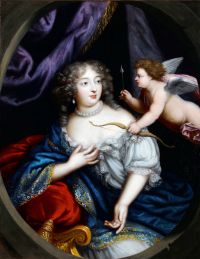
Madame de La Vallière

Definition and stakes

Portrait of Alexandre Dumas Alexandre Dumas Louise de la Valliere

Madame paused for a moment. “I do not disown you for a brother,” she said, “in refusing your majesty an injustice.”
“An injustice!”
“Oh, sire! if I informed others of La Valliere’s conduct; if the queen knew—”
“Come, come, Henrietta, let your heart speak; remember that, for however brief a time, you once loved me; remember, too, that human hearts should be as merciful as the heart of a sovereign Master. Do not be inflexible with others; forgive La Valliere.”
Source: Gutenberg

Portrait of Alexandre Dumas Alexandre Dumas The Vicomte de Bragelonne; Or, Ten Years Later

It is in such moments as these that Heaven almost seems to have taken part against the disdained and rejected lover.
One final pang was reserved for poor Raoul. Madame Henrietta lifted up a silk curtain, and behind the canvas he perceived La Valliere's portrait. Not only the portrait of La Valliere, but of La Valliere eloquent of youth, beauty, and happiness, inhaling life and enjoyment at every pore, because at eighteen years of age love itself is life.
Source: Gutenberg

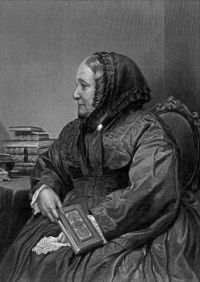
Portrait of Mrs. Jameson Mrs. Jameson Sacred and legendary art, volume 1… (1870)

This picture is said to [Pg 372] be the portrait of Madame de la Vallière, by whose order it was painted for the church of the Carmelites at Paris, where she had taken refuge from the court and from the world. It has that sort of theatrical grace and grandeur, that mannered mediocrity, characteristic of the painter and the time. [309] There is a Magdalene in the Gallery at Munich by Le Brun, which is to me far preferable; and this, and not the Paris one, I presume to be the portrait of the Duchesse de la Vallière.
Source: Gutenberg

Get perspective with Kwize: daily news enlightened by great literature