Summary

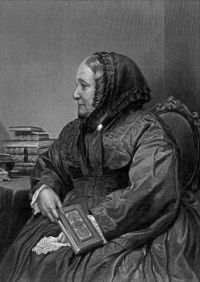
Portrait of Mrs. Jameson Mrs. Jameson Sacred and legendary art, volume 1… (1870)

Thus a painter equally remarkable for the purity of his taste and deep religious feeling, Niccolò Poussin, has represented Christ, in his agony, supported in the arms of an angel, while a crowd of child-angels, very much like Cupids, appear before him with the instruments of the Passion; ten or twelve bear a huge cross; others hold the scourge, the crown of thorns, the nails, the sponge, the spear, and exhibit them before him, as if these were the images, these the terrors, which could overwhelm with fear and anguish even the human nature of such a Being!
Source: Gutenberg

Portrait of Mrs. Jameson Mrs. Jameson Sacred and legendary art, volume 1… (1870)

It would require the tongues of angels themselves to recite all that we owe to these benign and vigilant guardians. They watch by the cradle of the new-born babe, and spread their celestial wings round the tottering steps of infancy. If the path of life be difficult and thorny, and evil spirits work its shame and woe, they sustain us; they bear the voice of our complaining, of our supplication, of our repentance, up to the foot of God’s throne, and bring us back in return a pitying benediction, to strengthen and to cheer.
Source: Gutenberg

Portrait of Mrs. Jameson Mrs. Jameson Sacred and legendary art, volume 1… (1870)

The shape varies with the fancy of the artist; it is a small vase, a casket, a box, a cup with a cover; more or less ornamented, more or less graceful in form; but always there—the symbol at once of her conversion and her love, and so peculiar that it can leave no doubt of her identity.
Her drapery in the ancient pictures is usually red, to express the fervour of her love; in modern representations, and where she figures as penitent, it is either blue or violet; violet, the colour of mourning and penitence—blue, the colour of constancy.
Source: Gutenberg

Get perspective with Kwize: daily news enlightened by great literature