“ La Conciergerie was perhaps one of the greatest show-places of the city for the morbidly inclined, and permission à visiter was at that time granted avec toutes facilités, being something more than is allowed to-day. ”
Conciergerie
Definition and stakes
The Conciergerie, a medieval structure in Paris, France, functioned as a courthouse and prison, particularly during the French Revolution, where individuals such as Marie Antoinette were detained and put on trial. Its history ranges from a royal residence to an emblem of revolutionary justice.
Writers like Honoré de Balzac vividly portrayed its somber atmosphere, highlighting its role as a center of legal and political upheaval, while Emma Orczy alluded to its administrative duties, and Chateaubriand reminisced about its connection to revolutionary trials. These differing viewpoints emphasize its dual legacy as a symbol of power and a silent observer of history’s most harrowing moments, capturing the relationship between law, governance, and human destiny.
Quotes about “Conciergerie”
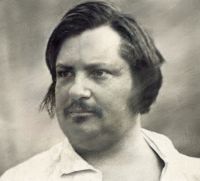 Honoré de Balzac,
Scenes from a Courtesan's Life
Honoré de Balzac,
Scenes from a Courtesan's Life
“ At this moment Asie had come to the dark hall looking out on the yard of the Conciergerie, where the ushers wait. On seeing the gate through the window, she exclaimed: “What are those high walls?” “That is the Conciergerie.” “Oh! so that is the Conciergerie where our poor queen——Oh! I should so like to see her cell!” “Impossible, Madame la Baronne,” replied the young lawyer, on whose arm the dowager was now leaning. “A permit is indispensable, and very difficult to procure.” ”
 Emma Orczy,
I Will Repay
(1906)
Emma Orczy,
I Will Repay
(1906)
“ I, in the meanwhile, have asked for and obtained the post of Governor of the Conciergerie; I go into my new quarters to-morrow. In the meanwhile, I am making arrangements for my mother and—and those dependent upon me to quit France immediately. ”
Honoré de Balzac,
The End of Evil Ways
“ Through this the judges and barristers find their way into the passages, into the guardhouse, down into the prison cells, and to the entrance to the Conciergerie.The private chambers of all the examining judges are on different floors in this part of the building. They are reached by squalid staircases, a maze in which those to whom the place is unfamiliar inevitably lose themselves. The windows of some look out on the quay, others on the yard of the Conciergerie. ”
vicomte de François-René Chateaubriand, The Memoirs of François René Vicomte de Chateaubriand sometime Ambassador to England…
“ The 9 Thermidor saved my mother's days; but she was forgotten at the Conciergerie. The conventional commissary found her:"What are you doing here, citizeness?" he asked. "Who are you? Why do you stay here?" ”
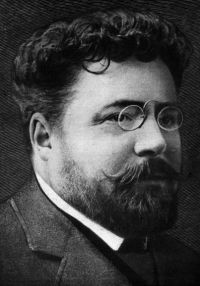 Gaston Leroux,
The Man with the Black Feather
Gaston Leroux,
The Man with the Black Feather
“ And if I didn't know how to write, how could I have written the document I hid in the cellars of the Conciergerie?""That's reasonable enough. But at your trial—""Did I have a trial?" interrupted Theophrastus eagerly."I should think you did—a very famous trial!" said Adolphe. "And at your trial you declared that you did not know how to write. You signed all your depositions with a cross, and you never wrote a line to a single soul.""Because one never should put anything in writing," said Theophrastus firmly. "I was doubtless afraid to compromise myself. None the less the document exists." ”
Honoré de Balzac,
The End of Evil Ways
“ At this instant Asie and her lawyer were exactly in front of the window of the guardroom whence the gendarmes could observe the gate of the Conciergerie. The gendarmes, brought up to respect the defenders of the widow and the orphan, were aware too of the prerogative of the gown, and for a few minutes allowed the Baroness to remain there escorted by a pleader. Asie listened to the terrible tales which a young lawyer is ready to tell about that prison-gate. She would not believe that those who were condemned to death were prepared for the scaffold behind those bars ”
Honoré de Balzac,
The End of Evil Ways
“ When the hour of trial strikes the sheriffs call the roll of the prisoners, the gendarmes go down, one for each prisoner, and each gendarme takes a criminal by the arm; and thus, in couples, they mount the stairs, cross the guardroom, and are led along the passages to a room contiguous to the hall where sits the famous sixth chamber of the law (whose functions are those of an English county court) . The same road is trodden by the prisoners committed for trial on their way to and from the Conciergerie and the Assize Court. ”
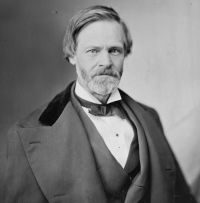 John Sherman,
Recollections of Forty Years in the House…
John Sherman,
Recollections of Forty Years in the House…
“ The concierge, generally a woman, takes charge of your room, orders your breakfast if you require one, and keeps the key of your apartment when you are absent. It is a charming mode of living. You can dine or lunch when you will, and are master of your time and your apartment. I employed a neat, light carriage and one horse, with a driver who knew a smattering of several languages, and found him trusty and faithful—all this at a cost that would disgust the ordinary hotel proprietor in the United States, and especially the hack driver of any of our cities. ”
Helen Davenport Gibbons, Paris Vistas
“ Without his approval and cooperation, your money, your position, your brains will not help you in making living conditions easy. The concierge stands between you and servants, tradespeople, visitors. You are at his mercy. ”
H. E. Noyes, Seventeen Years in Paris: A Chaplain's Story
“ Otherwise letters which are delivered at the lodge may not be brought up as soon as they should be, and other little annoyances will frequently occur. It is customary to give 50 to 100 francs to the concierge on New Year’s day, according to the rent paid, to secure civility and good service through the year. The concierge is the servant of the proprietor and not of the tenant. Every quarter the rent is paid to the concierge, and must be paid in cash. The cheque system as we have it in England is but little used in France. ”
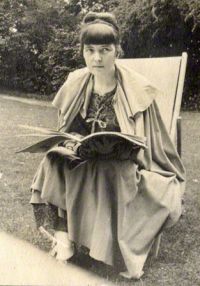 Katherine Mansfield,
Bliss, and Other Stories
Katherine Mansfield,
Bliss, and Other Stories
“ There are two ways of managing your concierge if you haven’t any money. One is—to take the high hand, make her your enemy, bluster, refuse to discuss anything; the other is—to keep in with her, butter her up to the two knots of the black rag tying up her jaws, pretend to confide in her, and rely on her to arrange with the gas man and to put off the landlord. ”
 Ernest Miller Hemingway,
The Sun Also Rises
(1954)
Ernest Miller Hemingway,
The Sun Also Rises
(1954)
“ The concierge, before she became a concierge, had owned a drink-selling concession at the Paris race-courses. Her life-work lay in the pelouse, but she kept an eye on the people of the pesage, and she took great pride in telling me which of my guests were well brought up, which were of good family, who were sportsmen, a French word pronounced with the accent on the men. The only trouble was that people who did not fall into any of those three categories were very liable to be told there was no one home, chez Barnes. ”
 William Le Queux,
Her Royal Highness: A Romance of the Chancelleries of Europe
William Le Queux,
Her Royal Highness: A Romance of the Chancelleries of Europe
“ Then, descending by the lift, he sought the assistant concierge, and from him discovered that the pair were in consultation in room Number 164.“Yes, I believe there is a door between that and the next room, m’sieur,” the man replied.“Good. Then get me the key for an hour or so, and I will make it all right with you.”The profession of concierge is synonymous of bribery. No concierge in Europe lives upon his stipend. ”
 Baroness Orczy,
The Triumph of the Scarlet Pimpernel…
(1922)
Baroness Orczy,
The Triumph of the Scarlet Pimpernel…
(1922)
“ It is up to the belated visitor or lodger to close the wicket after him, and he is bound by law to give his name, together with the number of the apartment to which he is going, in to the concierge as he goes past the lodge. ”
 Eugène Sue,
The Mysteries of Paris, illustrated with etchings…
Eugène Sue,
The Mysteries of Paris, illustrated with etchings…
“ If I lodge people without passports, why, I also have different people. I have now two travelling gents, a postman, the leader of the band at the Café des Aveugles, and a lady of fortune,—all most respectable persons, such as save the reputation of a house, if the commissary is inclined to look a little too closely into things; they are not night-lodgers, but tenants of the broad sunshine. ”
 Harold MacGrath,
The Goose Girl
Harold MacGrath,
The Goose Girl
“ A steamer trunk and a couple of bags were being trundled in by the porter, while the concierge was helping a short, stocky man to the ground. He hurried into the hotel, signed the police slips, and asked for his room. He seemed to be afraid of the dark. He was gone when Carmichael went into the office."Your Excellency," said the concierge, rubbing his hands and smiling after the manner of concierges born in Switzerland, "a compatriot of yours arrived this evening." ”
 Thomas Wallace Knox,
How to Travel
Thomas Wallace Knox,
How to Travel
“ Suppose you are four in number, and have been a week in the house; you pay the concierge from five to eight francs, the chambermaid four to six, the waiter who has brought the coffee in the morning, and otherwise looked after you, five to eight, and the porter who has handled luggage and blacked your boots, five to six francs. These figures are for a fair amount of service, and are liberal enough for most cases. Every traveler must judge for himself whether he has made an undue demand upon the servants, and gauge his gratuities accordingly. ”
 George Saintsbury,
A History of the French Novel, Vol…
George Saintsbury,
A History of the French Novel, Vol…
“ There is no mess-room and apparently no common life at all, except on duty and at the "pension" hotel-meals, to which,—rather, it would seem, at the arbitrary will of the colonel than by "regulation,"—you have to subscribe, though you may, and indeed must, live in lodgings exactly like a particulier. ”
George D. Wolf, The Fair Play Settlers of the West Branch Valley…
“ Dependent upon outside travelers for news, the latest remedies for ailments, and mail, the inhabitants of the frontier opened the doors of their cabins and their hearts to visitors. Taken into a home, the weary traveler often found himself treated to the best in food and comfort which the limitations of the frontier permitted. Generally sharing the one-room cabin, like any member of the family, he soon learned that he was a welcome guest rather than a stranger in their midst. The loneliness of the frontier stimulated the hospitality of the frontiersman. ”
Dick Donovan, The chronicles of Michael Danevitch of the Russian Secret Service (1897)
“ A few minutes later the concierge saw him leave the hall. He was attired in a very handsome and costly fur coat, with a cap to match; and though the weather was bitterly cold and the ground covered with snow, he wore patent-leather shoes. The concierge, who was much surprised at the fact of his master leaving the house in the midst of the [63] revels, asked him if he wanted a carriage. To this question the Count answered curtly, and, according to the porter, angrily, ‘No.’ The night wore itself out. The dancers danced themselves into limpness and prostration, and began to depart. ”
 William Bligh,
A Voyage to the South Sea — Chapter 20
(1792)
William Bligh,
A Voyage to the South Sea — Chapter 20
(1792)
“ I hired a carriage which cost three dollars per day for the benefit of taking an airing. My lodgings at the hotel were so close and hot that I desired the Sabandar to apply to the Governor-General for leave to hire a house in the country; which request his excellency not only immediately complied with but gave directions for my being accommodated at the house of the physician or surgeon-general Mr. Sparling.One of my people, Thomas Hall, being ill with a flux I obtained leave for him to be sent to the country hospital which is a convenient airy building. ”
Various, Graham's Magazine Vol XXXII. No…
“ Several times I had seen him going in or coming out of the court that opened two doors above the abbé's. He was unlike most inhabitants of the neighborhood in both dress and air.I ventured to step up to the brisk little concierge in the court one day, and ask who was the tall gentleman with the tarnished lace who had just entered? [Pg 167] "It is un Monsieur Very," said the concierge."And poor Monsieur Very lives alone?" said I."How should I know, monsieur?""He always walks alone," said I."It is true," said the concierge. ”
R. Vashon Rogers, The Law of Hotel Life; or, the Wrongs and Rights of Host and Guest
“ A lodging-house keeper makes a special contract with every man that comes to him, whereas an innkeeper is bound, without any particular agreement, to provide lodging and entertainment for all who come to him, at a reasonable price. ”
 Friedrich Kapp,
Immigration and the Commissioners of Emigration of the state of New York
(1870)
Friedrich Kapp,
Immigration and the Commissioners of Emigration of the state of New York
(1870)
“ Emigrants desiring board and lodging are advised to communicate with the keepers of boarding-houses having permission in this Depot, and who will be allowed on the floor for this purpose. Every boarding-house keeper, when soliciting an emigrant for his house, must hand such emigrant a card, setting forth his name and residence, the prices, in gold and paper money, of board and lodging, by the day and week, and for single meals and night's lodging. ”
Mary Browne, The Diary of a Girl in France in 1821
“ An officer handed her about, and the concierge went before, knocking on the ground with his stick. (The concierge is generally a very tall man dressed in plum colour; he goes before the priests, [Pg 78] funerals, etc.) The lady held in her hand a little box of crimson velvet and gold which she presented to everybody, and curtsied; a servant followed with a crimson bag, into which she emptied the money when the box was full. The French churches are just like some show. We were told that a French gentleman had stayed at the English chapel one Sunday during the sacrament ”
R. Vashon Rogers, The Law of Hotel Life; or, the Wrongs and Rights of Host and Guest
“ No: he is compensated by having greater privileges than his humbler brother; and such a rule is necessary for the welfare and convenience of the traveling public, who cannot be expected, in the hurry of journeyings, to stop and hunt through a town for a night’s lodging, making a special bargain with the keeper of the house. ”
 Fredrika Bremer,
The Homes of the New World
(1853)
Fredrika Bremer,
The Homes of the New World
(1853)
“ Nevertheless, there is a good public spirit at work, to make the city worthy to maintain its place on the earth. One excellent institution now in progress of erection here, is a large sailors' home, in which it is intended to board and lodge in an excellent manner, and at a reasonable rate, sailors whose vessels are lying in the harbour, either to land, or to take in cargo. ”
 Romesh Chunder Dutt,
Three Years in Europe, 1868 to 1871
(1896)
Romesh Chunder Dutt,
Three Years in Europe, 1868 to 1871
(1896)
“ During my previous sojourn in London I lived as a student, sometimes in lodging houses and for sometime in a boarding house. The landlady of a boarding or a lodging house engages the house from the owner, engages cook and servants, and looks after the food and the cooking, and the lodger therefore has no bother whatever except paying weekly for his room and attendance and food. ”
 Henry Pratt Fairchild,
Immigration
(1913)
Henry Pratt Fairchild,
Immigration
(1913)
“ The boarding system followed is one whereby a fixed sum is paid for lodging, cooking, washing, and mending; an individual food account being kept with each lodger. The housewife has the beds to make each day for a dozen men, their clothing to wash and mend, their meals to prepare. ”
Arnold James Cooley, Cooley's Cyclopædia of Practical Receipts and Collateral Information in the Arts…
“ The keeper of a common lodging-house in which beggars or vagrants are received to lodge shall from time to time, if required in writing by the local authority so to do, report to the local authority or to such person as the local authority direct, every person who resorted to such house during the preceding day or night, and for that purpose schedules shall be furnished by the local authority to the person so ordered to report, which schedules he shall fill up with the information required, and transmit to the local authority. ”
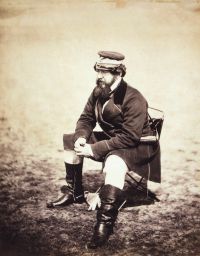 Sir William Howard Russell,
Canada; its Defences, Condition…
Sir William Howard Russell,
Canada; its Defences, Condition…
“ Dipping down the companion it is probable that the visitor will find in the captain’s cabin an assemblage of gentlemen, eating biscuit and drinking sherry to the health of the skipper, whilst others are peering into compartments and berths ’twixt bulkheads filled with odd merchandise, from gas-pipe-barrelled guns to needles, anchors, blankets, crinoline, and artificial flowers. They are people whom we might meet in any place in London from west to east, wearing the indescribable air of men “out for the day.” ”
R. Vashon Rogers, The Law of Hotel Life; or, the Wrongs and Rights of Host and Guest
“ Another judge says it is a public house of entertainment for all who choose to visit it as guests without any previous agreement as to the time of their stay or the terms of payment. [41] The judges have, also, got off definitions of the word ‘innkeeper.’ It has been said that every one who makes it his business to entertain travelers and passengers and provide lodging and necessaries for them and their horses and attendants, is a common innkeeper. ”
 William Dean Howells,
Certain delightful English towns…
William Dean Howells,
Certain delightful English towns…
“ Fortune had approved our resolution not to go, except in the greatest extremity, to any sort of boarding-house, or any sort of hotel, private, residential, temperant or inebriant, varying to the type of sea-side caravansary which is common to the whole world, but to cling to an ideal of lodgings such as we had cherished ever since our former sojourn in England, and such as you can realize nowhere else in the world. ”
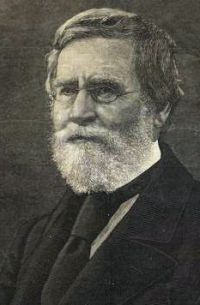 Jacob Abbott,
Rollo on the Rhine
Jacob Abbott,
Rollo on the Rhine
“ These men hover about the doors of the hotels, and gather in front of all the celebrated churches, and in all public places [Pg 29] where travellers are expected to go; and as soon as they see a gentleman, or a party of gentlemen and ladies, coming out of their hotel, or approaching any place of public interest, they immediately come up to them, and offer their services. Sometimes their services are valuable, and the traveller is very ready to avail himself of them, especially when in any particular town there is a great deal to see, and he has but little time to see it. ”
