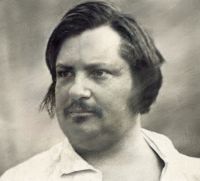
Honoré de Balzac

Honoré de Balzac

Summary

Portrait of Honoré de Balzac Honoré de Balzac The End of Evil Ways

How whimsical is the action of our faculties! Camusot conceived of every crime as possible, and overlooked the only one that the prisoner had now committed—the forgery of the will for Lucien's advantage. Let those whose envy vents itself on magistrates think for a moment of their life spent in perpetual suspicion, of the torments these men must inflict on their minds, for civil cases are not less tortuous than criminal examinations, and it will occur to them perhaps that the priest and the lawyer wear an equally heavy coat of mail, equally furnished with spikes in the lining.
Source: Wikisource

Portrait of Honoré de Balzac Honoré de Balzac The End of Evil Ways

It is impossible to conceive of the sudden isolation in which a suspected criminal is placed. The gendarmes who apprehend him, the commissioner who questions him, those who take him to prison, the warders who lead him to his cell—which is actually called a cachot, a dungeon or hiding-place, those again who take him by the arms to put him into a prison-van—every being that comes near him from the moment of his arrest is either speechless, or takes note of all he says, to be repeated to the police or to the judge.
Source: Wikisource

Portrait of Honoré de Balzac Honoré de Balzac The End of Evil Ways

This detail will show the least intelligent person how living, interesting, curious, and dramatically terrible is the conflict of an examination—a conflict without witnesses, but always recorded. God knows what remains on the paper of the scenes at white heat in which a look, a tone, a quiver of the features, the faintest touch of color lent by some emotion, has been fraught with danger, as though the adversaries were savages watching each other to plant a fatal stroke. A report is no more than the ashes of the fire.
"What is your real name?" Camusot asked Jacques Collin.
Source: Wikisource

Get perspective with Kwize: daily news enlightened by great literature