Summary

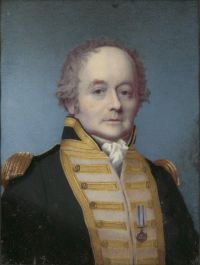
Portrait of William Bligh William Bligh A Voyage to the South Sea — Chapter 20 (1792)

The Sabandar is the officer with whom all strangers are obliged to transact their business: at least the whole must go through his hands. With him I went to pay my respects to the governor-general who received me with great civility. I acquainted his excellency with my situation and requested my people might be taken care of and that we should be allowed to take a passage to Europe in the first ship that sailed.
Source: Wikisource

Portrait of William Bligh William Bligh A Voyage to the South Sea — Chapter 20 (1792)

Those who have accounts to pay and can give unexceptionable bills on Europe will find a considerable saving by negotiating their bills with private people who are glad to give for them a premium of 20 per cent at the least. This discovery I made somewhat too late to profit by.
One of the greatest difficulties that strangers have to encounter is their being obliged to live at the hotel. This hotel was formerly two houses which by doors of communication have been made one. It is in the middle of a range of buildings more calculated for a cold country than for such a climate as Batavia.
Source: Wikisource

Portrait of William Bligh William Bligh A Voyage to the South Sea — Chapter 20 (1792)

I then took leave and returned with the Sabandar who wrote down the particulars of my wants in order to form from them a regular petition to be presented to the council the next day. I had brought from the governor of Coupang, directed for the governor-general at Batavia, the account of my voyage and misfortune, translated into Dutch from an account that I had given to Mr. van Este. So attentive had they been at Timor to everything that related to us.
There is a large hotel at Batavia fitted up purposely for the accommodation of strangers, who are not allowed to reside at any other place.
Source: Wikisource

Get perspective with Kwize: daily news enlightened by great literature