Summary

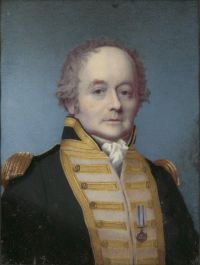
Portrait of William Bligh William Bligh A Voyage to the South Sea — Chapter 18 (1792)

The inland people, who live at a distance from the Europeans, are strong and active, but their want of cleanliness subjects them to filthy diseases.
The chief of the natives, or king of the island, is by the Dutch styled Keyfer (Emperor) . This prince lives at a place called Backennassy, about four miles distant from Coupang. His authority over the natives is not wholly undisputed; which is by the Dutch attributed to the intrigues of the Portuguese, who are on the north part of Timor.
Source: Wikisource

Portrait of William Bligh William Bligh A Voyage to the South Sea — Chapter 18 (1792)

The scriptures are translated into the Malay language and prayers are performed in the church at Coupang by a Malay clergyman, in that language.
I met at Timor with most of the fruits that are described in Captain Cook's first voyage as natives of Batavia, except the mangosteen. The breadfruit tree, called by the Malays soccoom, likewise grows here with great luxuriance and appears to be as much a native of this island as it is of Otaheite. The fruit is exactly of the same kind but not so good. A breadfruit of Timor weighs half as much more as one of equal size at Otaheite.
Source: Wikisource

Portrait of William Bligh William Bligh A Voyage to the South Sea — Chapter 18 (1792)

The natives, at least those who live in the neighbourhood of Coupang, are of a very indolent disposition, of which the Chinese have taken advantage, for, though the Malays are very fond of traffic, most of their trade is carried on in small Chinese vessels of from 10 to 30 tons burden. There is a market at Coupang for the country people in which however there is little business done. I have seen a man from the country come to market with two potatoes: and this is not unusual.
Source: Wikisource

Get perspective with Kwize: daily news enlightened by great literature