House of Valois

Definition and stakes

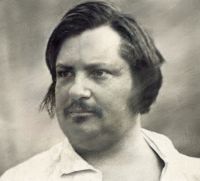
Portrait of Honoré de Balzac Honoré de Balzac The Works of Honoré de Balzac: About Catherine de' Medici…

The outer steps of the house and the courtyard were thronged with anxious groups. The scaffold erected for the Prince, opposite the Convent of the Récollets, astonished all the nobles. People spoke in whispers, and here, as at Blois, the conversation was a medley of serious and frivolous subjects, of grave and trivial talk. They were beginning to feel used to turmoils, to sudden rebellion, to a rush to arms, to revolts, to the great and sudden events which marked the long period during which the House of Valois was dying out, in spite of Queen Catherine's efforts.
Source: Gutenberg

Portrait of Honoré de Balzac Honoré de Balzac Catherine De Medici

She resolved to trick and so defeat, successively, the Guises who were seeking the ruin of the house of Valois, the Bourbons who sought the crown, and the Reformers (the Radicals of those days) who dreamed of an impossible republic—like those of our time; who have, however, nothing to reform. Consequently, so long as she lived, the Valois kept the throne of France. The great historian of that time, de Thou, knew well the value of this woman when, on hearing of her death, he exclaimed: “It is not a woman, it is monarchy itself that has died!”
Source: Gutenberg

A. H. Johnson Europe in the Sixteenth Century…

France, in short, nominally under the control of a closely centralised monarchy, was suffering from that worst form of anarchy which comes of a bureaucracy when it has become disorganised. To complete the misfortunes of France, the House of Valois was represented by four boys of no character, intellect, or physique, who were the victims of court intrigue and factions, which were to make the crown still more unpopular, and soon to hurry the country into civil war.
Source: Gutenberg

Get perspective with Kwize: daily news enlightened by great literature