The concept of "league," historically a unit of distance roughly equivalent to an hour's walk, appears in literature both as a measure of physical space and as a framework for organized collective action. Hippolyte Taine evokes its spatial dimension in A Tour Through the Pyrenees, describing a river’s journey over two leagues.
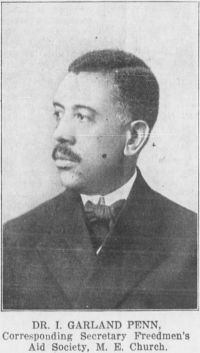
Meanwhile, authors like John Cameron and Albert Spalding examine its organizational implications in sports, discussing league structures and their geographical or competitive dynamics. Irvine Garland Penn highlights its hierarchical use in advocacy networks, while Lester Chadwick emphasizes its role in regulating professional hierarchies. These varied applications reveal the term’s adaptability across both physical and social contexts.
 Hippolyte Taine,
A Tour Through the Pyrenees
Hippolyte Taine,
A Tour Through the Pyrenees