
“ Is it consistent with the proper dignity and the manly character of a nation? Where is the propriety of calling such a lad the father of the people?—In all other cases, a person is a minor until the age of twenty-one years. ”
Minor
Definition and stakes
The concept of "minor" refers to an individual who has not yet reached the age of majority, a legal benchmark that determines rights, duties, and privileges. This status differs across jurisdictions, with age limits ranging from 18 to 21 depending on the context—such as voting, alcohol consumption, or criminal responsibility.
Writers like Thomas Paine and Kenneth Grahame have examined the social and legal differences between minors and adults, emphasizing shifts in identity and independence. E. M. Delafield and Henry James explored the conflicts between youth and maturity, while Maxim Gorky reflected on the irony of youthful confidence. These viewpoints illustrate how the legal and cultural understanding of "minor" remains dynamic, influenced by changing societal values and legal systems.
Quotes about “minor”
 Kenneth Grahame,
The Golden Age
Kenneth Grahame,
The Golden Age
“ As to age, I suppose now that the two swung in respective scales that pivoted on twenty. But children heed no minor distinctions. To them, the inhabited world is composed of the two main divisions: children and upgrown people ”
 E. M. Delafield,
The optimist
(1922)
E. M. Delafield,
The optimist
(1922)
“ No doubt you say to yourself: ‘I am young, I am of the period, it is for me to act as interpreter between the parent, who is of another generation, and the youth, who belongs to mine.’ But if I read your thought correctly, my child—and I have no doubt that I do—it is an arrogant one, and altogether unworthy of you. ”
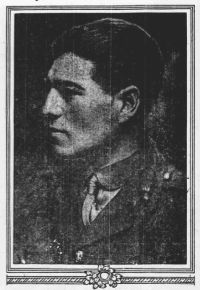 A. Hamilton Gibbs,
Rowlandson's Oxford
A. Hamilton Gibbs,
Rowlandson's Oxford
“ No sooner have we finished with our public school days, when we are known as boys, and have either scrambled over the “Smalls” hedge with some humility and relief, or else have secured the privilege of lording it in a scholar’s gown, than we instantly become men. We may be anything between eighteen and twenty, but if a sister, brother, or cousin be unwary enough to refer to us as a boy—woe unto him or her! ”
Henry James, The Two Magics (1898)
“ I had had brothers myself, and it was no revelation to me that little girls could be slavish idolaters of little boys. What surpassed everything was that there was a little boy in the world who could have for the inferior age, sex, and intelligence so fine a consideration. ”
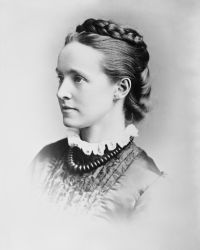 Millicent Garrett Fawcett,
Life of Her Majesty Queen Victoria
(1895)
Millicent Garrett Fawcett,
Life of Her Majesty Queen Victoria
(1895)
“ But boy as he was in years, he showed a firmness of character, a grasp of the principles which should rule his conduct, and a persistence in following them which could not have been excelled at any age. It was a time, perhaps, when age was less afraid of youth than it is at present. ”
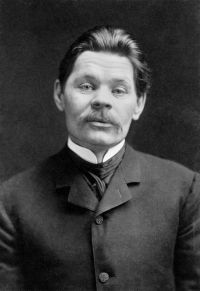 Maxim Gorky,
The Shield
(1917)
Maxim Gorky,
The Shield
(1917)
“ I would satisfy their desire, chattering as eagerly as the children themselves, and often, in spite of the self-assurance of youth and the ridiculous pride which it takes in the miserable crumbs of worldly wisdom it possesses, I would feel like a twenty-year-old child in a conclave of sages. ”
H. Laing Gordon, Sir James Young Simpson and Chloroform…
“ We stood to each other from boyhood upwards in every possible relation, whether of an educational, warlike, delicate, or social character, which the warm and fitful feelings peculiar to boyhood and youth can produce. ”
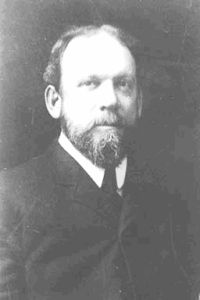 John Coleman Adams,
William Hamilton Gibson: artist…
John Coleman Adams,
William Hamilton Gibson: artist…
“ This little book, which still appeals to the juvenile mind,—a new edition was put out as lately as 1899,—has had a singular charm, not only for boys, but for those grown men who never quite lose the heart of boyhood. ”

“ But master and boys, when they look around them, begin to tremble, for their place is old, it is beautiful, it adorns the street, it is sacred to the memory of two hundred years of Boy—thirty generations of Boy. ”
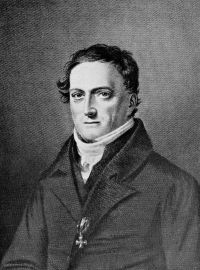 Johann Friedrich Herbart,
Outlines of Educational Doctrine
Johann Friedrich Herbart,
Outlines of Educational Doctrine
“ Accordingly, at this stage it becomes incumbent on the adult to attach himself to the boy, to restrain him, to divide the time for him, and to circumscribe the fancies born of his self-confidence,—a course of action rendered all the more necessary by the circumstance that the boy is a stranger as yet to the timidity with which the youth joins the ranks of men. ”
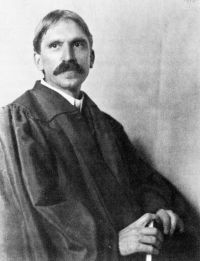 John Dewey,
Democracy and Education
(1916)
John Dewey,
Democracy and Education
(1916)
“ Children, if they could express themselves articulately and sincerely, would tell a different tale; and there is excellent adult authority for the conviction that for certain moral and intellectual purposes adults must become as little children. ”
Margaret Warner Morley, The Renewal of Life; How and When to Tell the Story to the Young
“ The pure but ignorant boy going for the first time into the new life of the school, looking up to the older boys with that peculiar veneration the younger boy almost always feels for the older, moved in his senses by what he hears and sees, may speedily forget such home warnings as seem vague and pointless, and he may yield himself to a course most disastrous to his future. ”
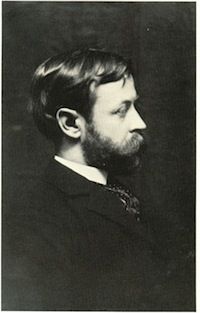 Henry Blake Fuller,
Bertram Cope's Year
(1919)
Henry Blake Fuller,
Bertram Cope's Year
(1919)
“ Wanted, in fact, a young male who shall seem fully adult to those who are younger still, and who may even appear the accomplished flower of virility to an idealizing maid or so, yet who shall elicit from the middle-aged the kindly indulgence due a boy. Perhaps you will say that even a man of twenty-eight may seem only a boy to a man of seventy. ”
 Ralph Werther,
The female-impersonators
(1922)
Ralph Werther,
The female-impersonators
(1922)
“ Parents, teachers, but preferably the school physician, should begin with children of six a clean initiation into these mysteries—absorbing even to youngsters of that tender age—to replace the hitherto regnant nasty one wrought by child lore handed down, from mouth to mouth, through the centuries, and characterized by unprintable words, in uttering, seeing, and hearing which numerous children seem to take delight. ”
 Nathaniel Hawthorne,
Little Masterpieces - Nathaniel Hawthorne
(1897)
Nathaniel Hawthorne,
Little Masterpieces - Nathaniel Hawthorne
(1897)
“ Youth, like the extremity of age, had effaced the strongly marked characteristics of middle life, and mutually assimilated them all. They were a group of merry youngsters, almost maddened with the exuberant frolic someness of their years. ”
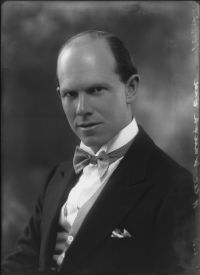 Alec Waugh,
Public School Life: Boys, Parents…
Alec Waugh,
Public School Life: Boys, Parents…
“ They have themselves spoken when juniors with bated breath of supposed 'cases.' They would like to be spoken of like that themselves, to feel themselves moving in an atmosphere of conjecture and intrigue, to gather an added sense of their own importance. ”
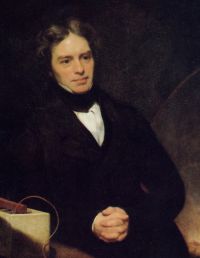 Michael Faraday,
The Chemical History of a Candle
(1908)
Michael Faraday,
The Chemical History of a Candle
(1908)
“ And before proceeding, let me say this also—that though our subject be so great, and our intention that of treating it honestly, seriously, and philosophically, yet I mean to pass away from all those who are seniors amongst us. I claim the privilege of speaking to juveniles as a juvenile myself. ”
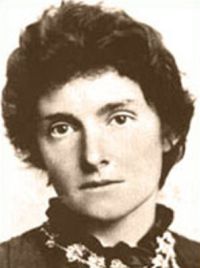 E. Nesbit,
Wings and the Child; Or, The Building of Magic Cities
E. Nesbit,
Wings and the Child; Or, The Building of Magic Cities
“ I might say elders, parents, teachers, spiritual pastors and masters, but the word which the child himself uses seems to me, for all reasons, to be the best word for my use, because it expresses fully and finally the nature of the gulf between. The grown-ups are the people who once were children and who have forgotten what it felt like to be a child. ”
Jesse Johnson, Testimony of the Sonnets as to the Authorship of the Shakespearean Plays and Poems
“ Hardly could any argument for extreme youth be made from any of these lines, except as based on the term "boy." The term [Pg 34] "youth" obviously has a broader significance, and by no strained construction, especially if coming from a man of advanced years, may be applied to persons on the morning side of life without any precise or clear reference to, or indication of, their age. We should therefore turn to the lines containing the appellation "boy" for whatever of force there is in the claim for the extreme youth of the poet's friend. ”
William James Sly, World Stories Retold for Modern Boys and Girls
“ A boy of twelve is a very different personality from what he was at three and seven, and will be at seventeen and twenty-one. Your boy or girl at twelve will reject, with scorn, a fairy tale that lights up the wondering eyes of the young child. It is necessary, therefore, for the parent or the child-lover to know at just what age a particular type of story is adaptable, or when the particular ethical truth intended to be impressed can best be assimilated. ”
 Jakub Arbes,
Poet Lore
(1910)
Jakub Arbes,
Poet Lore
(1910)
“ In a word, I shall tell the story of a little child who had passed only the second year of its age, of a child that was noted neither for any bodily beauty nor for any mental abilities, nor distinguished in any way from millions of other children of the same age. ”
 Francis William Lauderdale Adams,
A Child of the Age — Part II: Chapter IV.
(1894)
Francis William Lauderdale Adams,
A Child of the Age — Part II: Chapter IV.
(1894)
“ Then she laughed. 'But what shall I call you?' I asked. 'You called me "child" once. I'm not a child. I'm seventeen.' I smiled at her. She at once caught up the bag of grapes, undid the mouth, and offered it to me. ”
 Mary Scharlieb,
Youth and Sex: Dangers and Safeguards for Girls and Boys
Mary Scharlieb,
Youth and Sex: Dangers and Safeguards for Girls and Boys
“ Much depends on the circumstances and people surrounding the adolescent. Her unbounded capacity for hero-worship leads in many instances to a conscious or unconscious copying of parent, guardian, or teacher; and although the ideals of the young are apt to far outpace those of the adult whose days of illusion are over, yet they are probably formed on the same type. ”
Henry D. Inglis, Spain in 1830, vol. 1
“ I have seen boys who, in any other country, would have been in a school-room, or at play, present themselves regularly at the tertulia, and throwing off the character of boys, act the part of grown-up men. ”
 Timothy East,
The Sheepfold and the Common; Or…
Timothy East,
The Sheepfold and the Common; Or…
“ It is often remarked, that children are men and women in miniature; and as they grow up to their full stature, we often see them exhibiting, in broader and more palpable development, the excellencies and defects of their juvenile character ”
Papers and Proceedings of the Twenty-Third General Meeting of the American Library Association
“ Here the boys are in touch with a real, living character, acted upon and developed, through the moulding pressure of life itself—from first to last the aim of the story is the boy; and yet the moral outcome is simple, natural, inevitable and manly; it appeals to the common sense which is strong in boys. ”
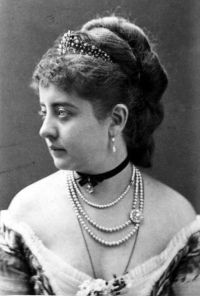 Marie Louise de la Ramée,
A Leaf in the Storm; A Dog of Flanders and Other Stories
(1872)
Marie Louise de la Ramée,
A Leaf in the Storm; A Dog of Flanders and Other Stories
(1872)
“ I, a little child, a little ugly fellow, whom the children of the towns and villages hooted as I passed up their streets, could hold all these mature men and women, all these fathers of families and grandsires and granddames, shaking and shouting with laughter at the pranks of my mirth and my talent. ”
Charles Gore, The Sermon on the Mount: A Practical Exposition
“ Every sentence arrests, and the sympathy with boy-life, as well as the compelling earnestness of the diction, must grip any boy-audience in quite an unusual manner. The style is manly, non-sentimental, and is suitable for boys aged eleven to sixteen. ”
John Levi Maile, "Prison Life in Andersonville"
“ The good lady taught in the Sunday school a class of boys who were from seven to ten years of age, and although they were possessed of irrepressible juvenile energy, and occasionally, to her distress, seemed to be irreverent ”
Albert Moll, The Sexual Life of the Child
“ While the child is to all appearance immersed in a book, while a girl is playing with her doll, or a boy with his tin soldiers, the parents or some other adults carry on a conversation in the child's presence under the influence of an utterly false belief that the latter's occupation engrosses his or her entire attention. ”
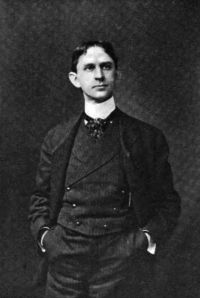 Albert Bigelow Paine,
The Lucky Piece: A Tale of the North Woods
Albert Bigelow Paine,
The Lucky Piece: A Tale of the North Woods
“ As you say, a half-year has been a long time—to a child. I had just come from abroad then with my parents, and I had been most of the time in a school where girls are just children, no matter what their ages. ”
J. B. Priestley, Papers from Lilliput
“ As for the young, they have not been given a hearing amongst us. If one of them, of more courage and energy than his fellows, pushed his way forward and told us something we did not know, we murmured ‘Oh, it’s only young So-and-So,’ and turned our backs upon him. ”
Alexander Walker, Beauty: Illustrated Chiefly by an Analysis and Classificatin of Beauty in Woman
“ The advantage, it has been observed, which the parent, relative, or instructer, derives, from himself in forming the adolescent in the new faculty which is developed in him, is to prevent his choosing, among corrupt servants or ignorant youths of his own age, the confidants of his passion. The parent or instructer, moreover, is then justly entitled to, and has gratefully given to him, the entire confidence of the adolescent; and he is thereby enabled exactly to appreciate the degree of power of the propensity which he desires to divert or to guide. ”
Edwin Seward Puller, Your boy and his training (1916)
“ The universality of its appeal to boyhood is shown by its membership which is recruited from all ranks of society—from the slum to the palace. It touches the boy on every side of his manifold interests. ”
Hans Gross, Criminal Psychology: A Manual for Judges…
“ What he fails in, what he is not spurred to by love or talent, he throws obstinately aside. While the girl loyally and trustfully absorbs her teachings, the boy remains unsatisfied without some insight into the why or how, without some proof. The boy enters daily more and more into the world of concepts, while the girl thinks of objects not as members of a class, but as definite particular things. ”
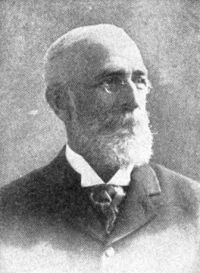 Elbridge Streeter Brooks,
Historic Girls
(1887)
Elbridge Streeter Brooks,
Historic Girls
(1887)
“ Her story, if it teaches any thing, assures us that it is always best to have in youth, whether as girl or boy, the guidance and direction of some will that is acknowledged and respected. Natures unformed or over-indulged, with none to counsel or command, generally go wrong. ”
 Agnes Repplier,
In the dozy hours, and other papers
(1894)
Agnes Repplier,
In the dozy hours, and other papers
(1894)
“ If this four-year-old prig "contending for a principle and not for possession" be a real boy, what has become of all the dear, naughty, fighting, obstinate, self-willed, precious children whom we used to know; the children who contended joyously, not for principle, but for precedence, and to whom we could say "don't" a dozen times a day with ample justification. ”
Joseph Adams Puffer, The Boy and His Gang
“ The boy has, indeed, learned his lesson, for he has gone out from the Reform School to lead an honest life. All boys are fundamentally alike, and this same appeal to the sympathetic imagination must always remain our chief reliance in combating the predatory and destructive impulses of normal boyhood. ”
 Herbert Brenon,
Peter Pan
(1924)
Herbert Brenon,
Peter Pan
(1924)
“ Pull the beard off the fairy king, and you would find the face of a child. This, then, is the spirit of the play. And it is necessary that all of you—no matter what age that you may have individually attained—should be children. ”
Amos R. Wells, Sunday-School Success
“ Boys of the undefinable age we are talking about highly appreciate the title "Mr." Their greatest horror is petting; their greatest aversion is nagging. A young man, set to teach a class of boys, will approach them with a sense of comradeship; will at once make himself, if he is a teacher at all, "hail fellow well met" among them; and yet, as the boys say, "there is no nonsense about him." ”
Albert Moll, The Sexual Life of the Child — Etiology and Diagnosis (1913)
“ We shall notice sometimes that a little boy, perhaps seven years of age or even younger, will withdraw from the society of other boys, and will seek the company of some particular individual, for example that of a girl friend of his sister, of about his own age. ”
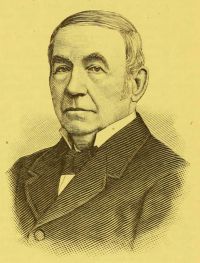 B. B. Comegys,
Advice to young men and boys
(1889)
B. B. Comegys,
Advice to young men and boys
(1889)
“ The younger boys look to the older boys and imitate them closely. They watch us, our words, our ways, our behavior in all things. If any young fellows have been misled by me, it shall be so no more. I will behave so that no one shall be the worse for doing as I do. ”
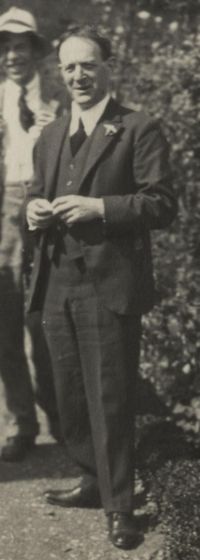 Walter De la Mare,
Rupert Brooke and the Intellectual Imagination
(1919)
Walter De la Mare,
Rupert Brooke and the Intellectual Imagination
(1919)
“ It is here that the boyish type of mind and imagination, the intellectual analytical type begins to show itself, and to flourish. The boy—I merely refer, if I may be forgiven, to Boy, and far more tentatively to Girl, in the abstract, though, of course, there is no such entity—the boy is happy in company. ”
R. Austin Freeman, The Mystery of 31 New Inn (1913)
“ I must have a junior, with my increasing practice, and you are the junior I want. We are old and tried friends; we have worked together; we like and trust one another, and you are the best man for the job that I know. ”
 Charlotte Perkins Gilman,
Concerning Children
Charlotte Perkins Gilman,
Concerning Children
“ A boy cast out upon the street to work soon manifests both the abilities and vices of an older person. A girl reared in a frivolous and artificial society becomes a practising coquette while yet a child. ”
L. F. Dostoevskaia, The Emigrant
“ But the child grows up, and reaches adolescence. He stands on the threshold of life, and the school-bench is left behind him. School has taught him but little—a few facts and some elementary information. ”
 Havelock Ellis,
Studies in the Psychology of Sex…
Havelock Ellis,
Studies in the Psychology of Sex…
“ It depends, to some extent, though fortunately not entirely, on the judgment of those in authority over the young soul whether the literature to which the youth or girl is admitted is or is not of the large and humanizing order. ”
Jr. John T. Morse, John Quincy Adams
“ If a lad of seven, nine, or eleven years of age should write such solemn little effusions amid the surroundings and influences of the present day, he would probably be set down justly enough as either an offensive young prig or a prematurely developed hypocrite. ”
