Summary

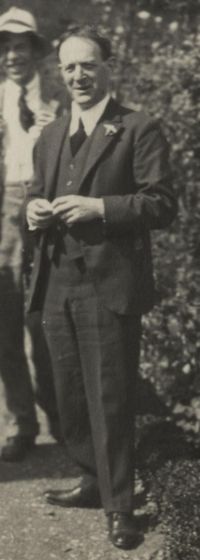
Portrait of Walter De la Mare Walter De la Mare Rupert Brooke and the Intellectual Imagination (1919)

The moment we begin to live—when we meet the friend of friends, or fall in love, or think of our children, or make up our minds, or set to the work we burn to do, or make something, or vow a vow, or pause suddenly face to face with beauty—at that moment the imagination in us kindles, begins to flame. Then we actually talk in rhythm. What is genius but the possession of this supreme inward energy in a rare and intense degree? Illumined by the imagination, our life—whatever its defeats and despairs—is a never-ending, unforeseen strangeness and adventure and mystery.
Source: Wikisource

Portrait of Walter De la Mare Walter De la Mare Rupert Brooke and the Intellectual Imagination (1919)

Between their dream and their reality looms no impassable abyss. There is no solitude more secluded than a child's, no absorption more complete, no insight more exquisite and, one might even add, more comprehensive. As we strive to look back and to live our past again, can we recall any joy, fear, hope or disappointment more extreme than those of our childhood, any love more impulsive and unquestioning, and, alas, any boredom so unmitigated and unutterable?
We call their faith, even in ourselves, credulity; and are grown perhaps so accustomed to life's mysteries that we pale at their candour.
Source: Wikisource

Portrait of Walter De la Mare Walter De la Mare Rupert Brooke and the Intellectual Imagination (1919)

Because of his very candour, because, so to speak, of what he looked like, this was to some extent true of Rupert Brooke. Age, in time, scrawls our very selves upon our faces. Fast-locked the door of our souls may be, but the key hangs in the porch. But youth and delightful manners may be a mask concealing gravity and deep feeling. And what is one's remembrance of that serenely eager, questing face, stilled, as it were, with the phantom of a smile that might have lingered in the countenance of the Sphinx in her younger days, but that of the very embodiment of youth?
Source: Wikisource

Get perspective with Kwize: daily news enlightened by great literature