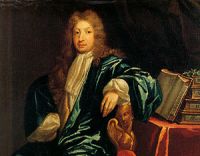
John Dryden

Definition and stakes

H. E. Marshall English Literature for Boys and Girls

With these words Sir Walter Scott, himself a great writer, began his life of John Dryden. Yet although Dryden stands for so much in the story of our literature, as a man we know little of him. As a writer his influence on the age in which he lived was tremendous. As a man he is more shadowy than almost any other greater writer. We seem to know Chaucer, and Spenser, and Milton, and even Shakespeare a little, but to know Dryden in himself seems impossible. We can only know him through his works, and through his age.
Source: Gutenberg

Henry C. Shelley Inns and Taverns of Old London

But, after all, the eye does not seek out earls, or clergy, or the rest; nor does the ear wish to fill itself with the sound of their voices. There is but one face, but one voice at Will's in which the interest of this time is as keen as the interest of the seventeenth century. That face and voice were the face and voice of John Dryden.
Exactly in what year Dryden first chose this coffee-house as his favourite resort is unknown. He graduated at Cambridge in 1654, and is next found in London lodging with a bookseller for whom he worked as a hack-writer.
Source: Gutenberg

Portrait of Andrew Lang Andrew Lang History of English Literature from "Beowulf" to Swinburne

John Dryden was born in 1631, at Aldwinkle, Northamptonshire. His name is common in Teviotdale: his family was landed, [Pg 374] and had a baronetcy: in Scotland it is not a landed name. From Westminster school Dryden went to Trinity, Cambridge, where he was known to Mr. Samuel Pepys. He entered in 1650, at 19, an age later than was usual. For some reason he did not like his University.
Thebes did his green unknowing youth engage,
He chooses Athens in his riper age,
that is Oxford, the home of lost causes, like his own.
Source: Gutenberg

Get perspective with Kwize: daily news enlightened by great literature