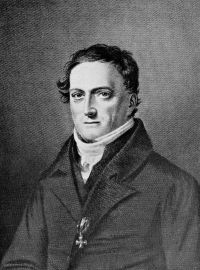
Johann Friedrich Herbart

Johann Friedrich Herbart

Summary

Portrait of Johann Friedrich Herbart Johann Friedrich Herbart Outlines of Educational Doctrine

Where training has not provided for occupation and for the distribution of time, we must always expect to encounter an activity which has no aim, and which forgets its own purposes. From such a state of affairs arise a craving for liberty averse to all control, and, where several pupils are grouped together, contention, either for the possession of something or for the sake of showing off. Each wants to be first; recognition of the just equality of all is deliberately refused. Mutual ill-will intrenches itself and stealthily waits for an opportunity to break forth.
Source: Gutenberg

Portrait of Johann Friedrich Herbart Johann Friedrich Herbart Outlines of Educational Doctrine

If there is one service greater than another that Herbart has rendered to education, it is in bringing clearly to our consciousness the supreme importance of the principle of apperception, or mental assimilation, as a working basis for educative processes. So long as a fact or a principle or system of knowledge stands as an end in itself, just so long is it a thing apart from the real mental life of the child. Even a formally correct method of presentation, should it even appeal at once to all ‘six’ classes of interest, will fail to create more than a factitious mental enthusiasm.
Source: Gutenberg

Portrait of Johann Friedrich Herbart Johann Friedrich Herbart Outlines of Educational Doctrine

Geography is something richer than all this. The old geography was political in the foregoing sense. The first break was in making it physiographical, the last in making it social. Names as such are nothing, and physical facts little more, but both become of value as soon as they are brought into relation to man,—his life, his work, his recreation. Geography is not essentially the location of places, nor is it physiography, but it is a study of the essential facts concerning the surface of the earth as they are related to man himself; it is, in short, human in the fullest sense.
Source: Gutenberg

Get perspective with Kwize: daily news enlightened by great literature