
“ Stronger Lessons Have you learn’d lessons only of those who admired you, and were tender with you, and stood aside for you? Have you not learn’d great lessons from those who reject you, and brace themselves against you? ”
Lessons
Definition and stakes
A lesson is a structured unit of learning, whether in a classroom or through life experiences, aiming to convey knowledge or skills. Authors like Walt Whitman examined teachings derived from rejection, while the Ontario Department of Education stressed that each life stage contains distinct lessons.
Others, such as Samuel Taylor Coleridge, emphasized history's unused wisdom, and Robert J. Evans viewed life as a schoolroom where challenges require resilience. These viewpoints show lessons as both formal instruction and deep insights, fostering growth through organized guidance or unforeseen trials.
Quotes about “lessons”
A Course in Miracles: Manual for Teachers…
“ Into this hopeless and closed learning situation, which teaches nothing but despair and death, God sends His teachers. And as they teach His lessons of joy and hope, their learning finally becomes complete. ”
Ontario. Department of Education, The Ontario Readers: Fourth Book
“ Oh! remember every period of human life has its own lesson, and you cannot learn that lesson in the next period. The boy has one set of lessons to learn, and the young man another, and the grown-up man another. ”
 George Willis Cooke,
George Eliot; a Critical Study of Her Life…
George Willis Cooke,
George Eliot; a Critical Study of Her Life…
“ For the lessons most imperatively needed by the mass of men, the lessons of deliberate kindness, of careful truth, of unwavering endeavor,—for these plain themes one could not ask a more convincing teacher than she. ”
Seven Xmas Eves (1894)
“ Under what circumstances you are born, how you are brought up, by what influences your earlier years have been surrounded—these form a succession of lessons, which you are bound to accept, because you know no better, and are taught no better. ”
MacGregor Jenkins, Bucolic Beatitudes (1925)
“ They are learning the hard lessons: constant care, constant thought, the hands, the knee, how often do I speak the word! How hard they try, and how fast they learn! I sometimes think it arrogant to teach ”
Robert J. Evans, Dorothy's Mystical Adventures in Oz
“ Must learn harmony and inner peace through communication with Great One. World is great big schoolroom; all peoples equal but have different lessons to learn. Do not rebel or run away from lesson — will not learn, only make harder. Must be like de corn and bend wit' de wind. Be brave; look for lesson in all experiences. ”
Albert F. Blaisdell, The Story of American History for Elementary Schools
“ Lessons of Wisdom and Inspiration to be learned.—But beyond and above all mere gratification and pleasure to be derived from the study of our country's history, there are in it lessons of wisdom to be learned, there is inspiration to noble living, there is an uplifting of the soul to a higher plane of thought and sentiment, [Pg 3] there is constant aid in the development and upbuilding of manly and womanly character. ”
 Samuel Taylor Coleridge,
Specimens of the Table Talk of Samuel Taylor Coleridge
Samuel Taylor Coleridge,
Specimens of the Table Talk of Samuel Taylor Coleridge
“ If men could learn from history, what lessons it might teach us! But passion and party blind our eyes, and the light which experience gives is a lantern on the stern, which shines only on the waves behind us! ”
 William Gilmore Simms,
Charlemont; Or, The Pride of the Village…
William Gilmore Simms,
Charlemont; Or, The Pride of the Village…
“ In this way alone may the details of life and society be properly welded together into consistent doctrine, so that instruction may keep pace with delight, and the heart and mind be informed without being conscious of any of those tasks which accompany the lessons of experience. ”
 Edith Nesbit,
The Railway Children
(1905)
Edith Nesbit,
The Railway Children
(1905)
“ And lessons the children had to do. However nice the person who is teaching you may be, lessons are lessons all the world over, and at their best are worse fun than peeling potatoes or lighting a fire. ”
 Lorenzo Snow,
Journal of Discourses — Volume 4…
Lorenzo Snow,
Journal of Discourses — Volume 4…
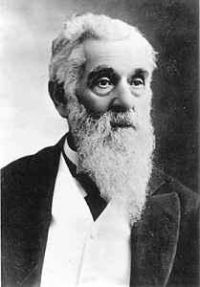
“ If, for instance, you are attending school, you have your lessons to learn, and just in proportion to your energy and faithfulness, and intelligence in regard to acquiring a knowledge of those lessons, you will be prepared to enjoy their benefit, that for which they are designed. ”
 Plutarch,
Parallel Lives
(c. 100 AD)
Plutarch,
Parallel Lives
(c. 100 AD)
“ Education and study, and the favors of the muses, confer no greater benefit on those that seek them, than these humanizing and civilizing lessons, which teach our natural qualities to submit to the limitations prescribed by reason, and to avoid the wildness of extremes. ”
 James Fenimore Cooper,
The Pathfinder — Chapter 2
(1840)
James Fenimore Cooper,
The Pathfinder — Chapter 2
(1840)
“ "Nothing is easier to us who pass our time in the great school of Providence than to larn its lessons. ”
Earl W. Stevick, Adapting and Writing Language Lessons… (1971)
“ You can give to teachers and students an example of how they can complete the course for themselves. As you begin to complete the course, follow your own convictions and the needs of some moment. Aim more at effectiveness than at permanence. It is more important that your lessons should work than that they should last (or sell!) ”
Earl W. Stevick, Adapting and Writing Language Lessons… (1971)
“ Whoever rejects what is at hand and writes his own lessons assumes a double responsibility: to produce something that really is better for his purposes than what existed before, and to reduce the likelihood that those who come after him will feel that they in turn have to write their own courses. ”
Earl W. Stevick, Adapting and Writing Language Lessons… (1971)
“ How readily will those in charge of later programs be able to change these materials without destroying them? Will the existence of these materials make it any easier to write tech-specific materials in other specialties, such as tuberculosis control or vocational agriculture? In general, the more specialized a set of lessons, the higher their cost per student-hour. The goal of the project was to deal with all three of these aspects of the problem: to write usable materials on a relatively low budget ”
William Ashmore, Primary Lessons in Swatow Grammar…
“ Now it is true that in certain words the Chinese themselves do make two sounds coalesce, as hiēn or hīn, chiang or chang, kièn or kìn, chiũ or chũ. If the foreigner could limit himself to the Chinese usage it would be all well enough, but he makes sounds to coalesce which Chinese do not, and the peculiarity is instantly noticed. The prevention of this defect is easy and simple. The learner should at the outset, among other things, take short lessons daily in the pronunciation of syllables. ”
Frederick P. Keppel, Some War-time Lessons
“ The lesson of clean living was taught by the spoken word, by the moving picture, by the printed page, by the doctor with a scientific thoroughness and by the layman with a frankness and sometimes a colloquialism which would for once have rendered Mrs. ”
 Carl Schurz,
Some Object Lessons
(1903)
Carl Schurz,
Some Object Lessons
(1903)
“ In spite of their incessant and wily manoeuvers we have steadily gained ground, now more slowly and then more rapidly. The progress of our cause has sometimes received a powerful impulse from events which startled the popular conscience. ”
 Richard Chenevix Trench,
On the Study of Words
Richard Chenevix Trench,
On the Study of Words
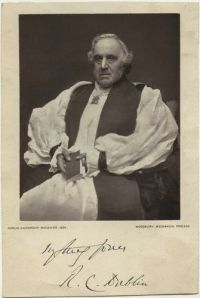
“ I will not urge more than one; but that one, because in it is a lesson more for ourselves than for others, and with such I would fain bring these lectures to a close. How solemn a truth we express when we name our work in this world our 'vocation,' or, which is the same in homelier Anglo-Saxon, our 'calling.' What a calming, elevating, ennobling view of the tasks appointed us in this world, this word gives us. ”
Wilfred S. Skeats, The Song of the Exile—A Canadian Epic
“ You have taught me a lesson; though little you thought Or intended to do it, the lesson is taught. By your actions, not words, have I learned to be wise, To embrace every joy, every sorrow despise. ”
 Andrew Kennedy Hutchison Boyd,
The Recreations of a Country Parson
Andrew Kennedy Hutchison Boyd,
The Recreations of a Country Parson
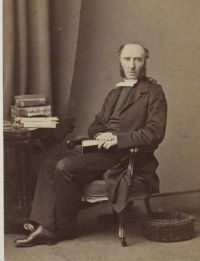
“ The simple, unambitious instruction into which you have thrown the teachings of your own little experience, and which you give forth from your own heart, will do a hundred times more good than any amount of ingenuity, brilliancy, or even piety, which you may preach at second-hand, with the feeling that somehow you stand to all this as an outsider. If you wish honestly to do good, preach what you have felt, and neither less nor more. ”
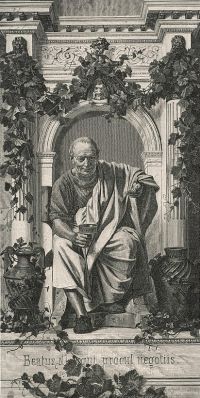
“ In every thing you must read and consult the learned, by what means you may be enabled to pass your life in an agreeable manner: that insatiable desire may not agitate and torment you, nor the fear and hope of things that are but of little account: whether learning acquires virtue, or nature bestows it? What lessens cares, what may endear you to yourself? What perfectly renders the temper calm; honor or enticing lucre, or a secret passage and the path of an unnoticed life? ”
 Fanny Burney,
The Wanderer; or, Female Difficulties…
Fanny Burney,
The Wanderer; or, Female Difficulties…
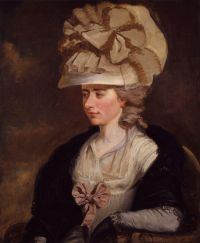
“ What lesson can all the eloquence of rhetoric, science, erudition, or philosophy produce, to restore tranquillity to the troubled, to preserve it in the wise, to make it cheerful to the innocent,—like the simple view of beautiful nature? ”
Francis Adams, Australian Essays
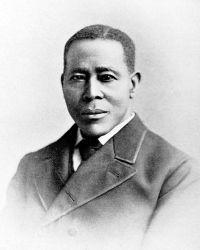
“ Let us not have ten thousand aristocrats, but ten hundred thousand, ever more and more, and never less and less! On the other hand, let us learn from the People the great lesson which they have to teach us—the lesson of the language of the heart. ”
 William Still,
The Underground Railroad
William Still,
The Underground Railroad
“ And here, by the way, let me say that one great reason why I refer as often as I do, to that great topic of the day, which, in one shape or another, is continually shaking the land and marking the age in which we live, is not merely the righting of the wronged, but the instruction, the moral enlightenment, the religious edification of our own hearts, which this momentous topic affords. To me this subject involves infinitely more than a mere question of humanity. ”
Edmondo De Amicis, Stories by Foreign Authors (1898)
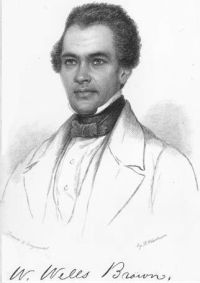
“ Some ruling motive—ambition, family cares, or the mere instinctive love of study—has gathered together and focused their vague thoughts and scattered powers; has brought about the habit of reflection, and turned their thoughts towards the great problem of life; has given to all a purpose, and a path to travel, and left them no time to mourn the vanished past. ”
 William Wells Brown,
The Black Man
(1863)
William Wells Brown,
The Black Man
(1863)
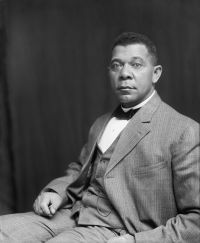
“ This training will give breadth of view, develop strength of character and a comprehensive spirit, by which the ever-living expressions of truth and principle in the past may be connected with those of a like character in the present. ”
 Booker T. Washington,
Character Building
Booker T. Washington,
Character Building
“ When I say work, I mean study of books, work of the hand, effort of the body, willingness of the heart. No matter what the thing is, put your conscience into it; do your best. Let it be possible for you to say: "I have put my whole soul into my study, into my work, into whatever I have attempted. Whatever I have done I have honestly endeavored to do to the best of my ability." ”
 Margaret Fuller,
Memoirs of Margaret Fuller Ossoli
(1852)
Margaret Fuller,
Memoirs of Margaret Fuller Ossoli
(1852)
“ In near eight years’ experience, I have learned as much as others would in eighty, from my great talent at explanation, tact in the use of means, and immediate and invariable power over the minds of my pupils. My wish has been, to purify my own conscience, when near them; give clear views of the aims of this life; show them where the magazines of knowledge lie; and leave the rest to themselves and the Spirit, who must teach and help them to self-impulse. ”
Richard Hurd, The works of Richard Hurd, volume 4…
“ The passions are then opening; curiosity awake; and the young mind ready to take its ply from the seducements of fashion, and creditable example. 181Nor is this the worst. An education, that deserves the name, has inculcated maxims of honour and probity; has inspired the noblest sentiments of moral duty; has impressed on the mind a veneration for all the virtues, and an equal horror for all the vices, of humanity. ”
Earl W. Stevick, Adapting and Writing Language Lessons… (1971)
“ Teachers who are of this persuasion believe that they may properly explain structure on any scale or any level of abstractness.that suits their purposes, and that they may do so before, during, or after the student's direct experience with examples, and that they may expect the student to make some deductive application of the rules. ”
 Hannah More,
Coelebs In Search of a Wife
Hannah More,
Coelebs In Search of a Wife
“ I call education not that which is made up of the shreds and patches of useless arts, but that which inculcates principles, polishes taste, regulates temper, cultivates reason, subdues the passions, directs the feelings, habituates to reflection, trains to self-denial, and, more especially, that which refers all actions, feelings, sentiments, tastes, and passions, to the love and fear of God. ”
 John Stuart Mill,
Autobiography (Mill) — Chapter V. 1826-1832
(1874)
John Stuart Mill,
Autobiography (Mill) — Chapter V. 1826-1832
(1874)
“ My course of study had led me to believe, that all mental and moral feelings and qualities, whether of a good or of a bad kind, were the results of association; that we love one thing, and hate another, take pleasure in one sort of action or contemplation, and pain in another sort, through the clinging of pleasurable or painful ideas to those things, from the effect of education or of experience. ”
Charlotte M. Mason, An Essay Towards a Philosophy of Education…
“ We all know the trick of it. If we want to tell the substance of a conversation, a sermon, a lecture, we ‘go over it in our minds’ first and the mind puts its question to itself, the same question over and over again, no more than,—What next?—and lo, we have it, the whole thing complete! ”
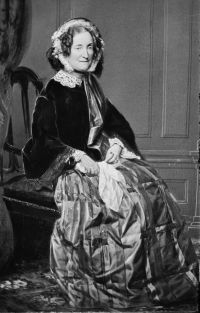 Lydia Sigourney,
Letters of Life
(1866)
Lydia Sigourney,
Letters of Life
(1866)
“ You know what Book classes 'emulation' with 'wrath, strifes, seditions,' and other still more wicked works." "Yet does not the same Sacred Volume appeal to our hope as well as our fear?—as those who run in a race for the 'prize of their high calling.' "I am sure you ought to agree with me, that a right education should teach to do right from the love of goodness, and not the lucre of gain." ”
 Tudor Jenks,
Our American Holidays - Christmas
(1949)
Tudor Jenks,
Our American Holidays - Christmas
(1949)
“ When manhood's brows are bent in thought, To learn what men of old have taught, When eager hands seek wisdom's key, Wise Temple Child, We learn of Thee! When doubts assail, and perils fright, When, groping blindly in the night. ”
John A. Clark, Gleanings by the Way
“ The fall of every leaf—the opening of every grave, the subversion of kingdoms—the [Pg 14] overthrow of empires—every event transpiring around us, reads us a lesson full of deep and solemn instruction.In the various and diversified developements of human character—whether contemplated in its rougher, or more polished state, there is a vast deal presented to view, from which an intelligent mind may gather very important elements of instruction. ”
Percy Holmes Boynton, A History of American Literature
“ What hinders that now, everywhere, in pulpits, in lecture-rooms, in houses, in fields, wherever the invitation of men or your own occasions lead you, you speak the very truth, as your life and conscience teach it, and cheer the waiting, fainting hearts of men with new hope and revelation? ”
John Stuart Mill,
Autobiography
“ In my education, as in that of everyone, the moral influences, which are so much more important than all others, are also the most complicated, and the most difficult to specify with any approach to completeness. Without attempting the hopeless task of detailing the circumstances by which, in this respect, my early character may have been shaped, I shall confine myself to a few leading points, which form an indispensable part of any true account of my education. ”
R. G. Pardee, The Sabbath-School Index
“ Reading, or even reciting, a lesson, may possibly teach nothing. "'Tis in vain that you make them read the life and doctrines of the Saviour, if you do not explain to them that he lived for their example, that he died to redeem them, and that those doctrines are to govern them in thought, word and deed." Care should be taken, to select the best plan of arranging the lesson. "The beginning should arrest attention, the middle inform the mind, and the end affect the heart." ”
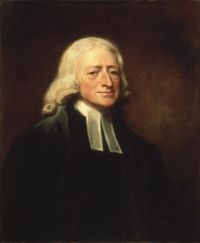 John Wesley,
The works of the Rev. John Wesley…
(1771)
John Wesley,
The works of the Rev. John Wesley…
(1771)
“ Let learning therefore speak for itself. Let its own works praise it. What has it done? What has brought forth a multiplicity of churches, but that very same acuteness of learning, which asserts and proves there is but one? Whence comes transubstantiation, election, reprobation, insignificancy of works, socinianism, arianism, but from that knowledge of history, and critical skill in words, which is the glory of the learned world. ”
Richard Baxter, A Christian Directory, Part 1: Christian Ethics
“ III. Let the book which he himself hath indited by his Spirit, be the rule and principal matter of your learning.—The holy Scriptures are of divine inspiration: it is them that we must be judged by, and them that we must be ruled by, and therefore them that we must principally learn. Men's books and teachings are but the means for our learning this infallible word. ”
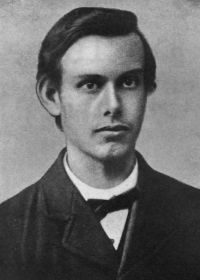 Francis Thompson,
Shelley: An Essay
Francis Thompson,
Shelley: An Essay
“ A lesson, this, deserving to be conned by a generation so opposite in tendency as our own: a lesson that in poetry, as in the Kingdom of God, we should not take thought too greatly wherewith we shall be clothed, but seek first {9} the spirit, and all these things will be added unto us. ”
Henry James, The American scene (1907)
“ What are the signs of intellectual promise, poetic, prosaic, philosophic, in the current generations, those actually learning their principal lesson, as one assumes, from the great University hard by? ”
Nathaniel Sands, The Philosophy of Teaching
“ So with each of the other faculties of man; each draws its nourishment from its special Fountain. Wisdom, love, justice, and truth should preside; and if judgment, sympathy and conscientiousness be judiciously trained and developed, they will help to develop harmoniously all the other faculties. ”
