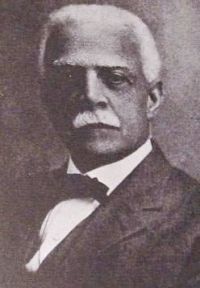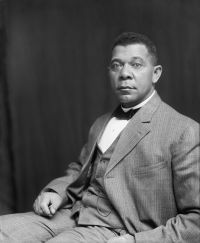
Booker T. Washington

Biographical details

Portrait of Booker T. Washington Booker T. Washington,  Frederick Douglass (1906)

“ There was never a time in the history of the American Negro when he did not show an eagerness to learn. Whether on the plantation in the far South, where ignorance in the slave was slavery’s only security, or in the northern states, where schools were closed against him by popular prejudice, he was always struggling, by night and by day, to obtain an education. The most important and creditable thing in his career as slave or freeman, and the most striking thing in his achievements, is his passion and struggle to lift from himself and his race the dark mantle of ignorance. ”
Source: Gutenberg

Portrait of Booker T. Washington Booker T. Washington,  Up from Slavery: An Autobiography

“ My whole former life—my life as a slave on the plantation, my work in the coal-mine, the times when I was without food and clothing, when I made my bed under a sidewalk, my struggles for an education, the trying days I had had at Tuskegee, days when I did not know where to turn for a dollar to continue the work there, the ostracism and sometimes oppression of my race,—all this passed before me and nearly overcame me.
I had never sought or cared for what the world calls fame. I have always looked upon fame as something to be used in accomplishing good.
”
Source: Gutenberg

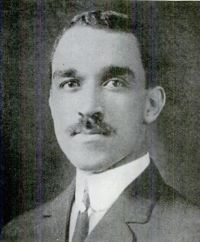
Portrait of Booker T. Washington Booker T. Washington,  The Future of the American Negro

“ I repeat that industrial education teaches the Negro how not to drudge in his work. Let him who doubts this contrast the Negro in the South toiling through a field of oats with an old-fashioned reaper with the white man on a modern farm in the West, sitting upon a modern "harvester," behind two spirited horses, with an umbrella over him, using a machine that cuts and binds the oats at the same time,—doing four times as much work as the black man with one half the labour. Let us give the black man so much skill and brains that he can cut oats like the white man, then he can compete with him. ”
Source: Gutenberg

Get perspective with Kwize: daily news enlightened by great literature