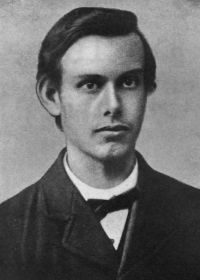
Francis Thompson

Francis Thompson

Summary

Portrait of Francis Thompson Francis Thompson Shelley: An Essay

This child-like quality assimilated him to the child-like peoples among whom mythologies have their rise. Those Nature myths which, according to many, are the basis of all mythology, are likewise the very basis of Shelley’s poetry. The lark that is the gossip of heaven, the winds that pluck the grey from the beards of the billows, the clouds that are snorted from the sea’s broad nostril, all the elemental spirits of Nature, take from his verse perpetual incarnation and reincarnation, pass in a thousand glorious transmigrations through the radiant forms of his imagery.
Source: Gutenberg

Portrait of Francis Thompson Francis Thompson Shelley: An Essay

Children’s griefs are little, certainly; but so is the child, so is its endurance, so is its field of vision, while its nervous impressionability is keener than ours. Grief is a matter of relativity; the sorrow should be estimated by its proportion to the sorrower; a gash is as painful to one as an amputation to another. Pour a puddle into a thimble, or an Atlantic into Etna; both thimble and mountain overflow. Adult fools, would not the angels smile at our griefs, were not angels too wise to smile at them?
Source: Gutenberg

Portrait of Francis Thompson Francis Thompson Shelley: An Essay

It is to have a spirit yet streaming from the waters of baptism; it is to believe in love, to believe in loveliness, to believe in belief; it is to be so little that the elves can reach to whisper in your ear; it is to turn pumpkins into coaches, and mice into horses, lowness into loftiness, and nothing into everything, for each child has its fairy godmother in its own soul; it is to live in a nutshell and to count yourself the king of infinite space
Source: Gutenberg

Get perspective with Kwize: daily news enlightened by great literature