“ At Rome, you long for the country; when you are in the country, fickle, you extol the absent city to the skies. If haply you are invited out nowhere to supper, you praise your quiet dish of vegetables; and as if you ever go abroad upon compulsion, you think yourself so happy, and do so hug yourself, that you are obliged to drink out nowhere. Should Mæcenas lay his commands on you to come late, at the first lighting up of the lamps, as his guest; ‘Will nobody bring the oil with more expedition? Does any body hear?’ You stutter with a mighty bellowing, and storm with rage. ”
Horace
Biographical details

Horace (65 BC–8 BC), the celebrated Roman lyric poet Quintus Horatius Flaccus, holds a pivotal place in Latin literature, renowned for his Odes, Satires, and Epistles. His writing blends social commentary, ethical contemplation, and the appreciation of nature and companionship, frequently merging humor with philosophical insight.
Linked to Augustus through his patron Maecenas, Horace maneuvered the shift from Republic to Empire with subtle autonomy. His poetry, ranging from the elegiac "Nunc est bibendum" to the instructive Epistles, embodies a pursuit of balance and the fleeting beauty of life, leaving a lasting imprint on Western literary heritage.
Quotes by Horace
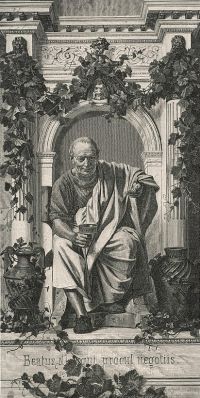 Horace,
The Satires, Epistles, and Art of Poetry of Horace
Horace,
The Satires, Epistles, and Art of Poetry of Horace
“ Ne'er quit your gain for fiercest heat or cold: Fire, ocean, sword, defying all, you strive To make yourself the richest man alive. Yet where's the profit, if you hide by stealth In pit or cavern your enormous wealth? "Why, once break in upon it, friend, you know, And, dwindling piece by piece, the whole will go." But, if 'tis still unbroken, what delight Can all that treasure give to mortal wight? Say, you've a million quarters on your floor: Your stomach is like mine: it holds no more: Just as the slave who 'neath the bread-bag sweats No larger ration than his fellows gets. ”
“ The envious, the choleric, the indolent, the slave to wine, to women—none is so savage that he can not be tamed, if he will only lend a patient ear to discipline.It is virtue, to fly vice; and the highest wisdom, to have lived free from folly. You see with what toil of mind and body you avoid those things which you believe to be the greatest evils, a small fortune and a shameful repulse. An active merchant, you run to the remotest Indies, fleeing poverty through sea, through rocks, through flames. ”