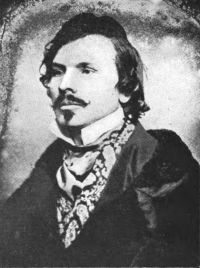
Dread, a profound and often existential emotion, intertwines fear, horror, and apprehension, reflecting humanity’s confrontation with the unknown or the sublime. From William Blake’s interrogative awe in The Tiger—“What dread hand formed thy dread feet?”—to Wilfred Campbell’s visceral depictions of isolation and terror in The Dread Voyage, the theme manifests through varied lenses.
Guy de Maupassant evokes supernatural terror as a paralyzing force, while Alexander Maclaren frames it as a psychological burden cloaked in metaphor. These explorations, spanning poetry, prose, and theological reflection, reveal dread as both a primal reaction and a catalyst for existential inquiry, bridging the tangible and the transcendent.
 William Blake,
The Tiger
(1863, 1880)
William Blake,
The Tiger
(1863, 1880)