Screw

Definition and stakes

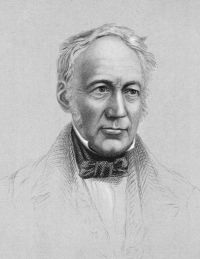
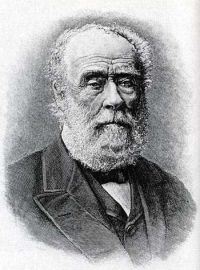
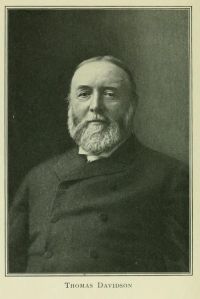
Portrait of Thomas Davidson Thomas Davidson,  Chambers's Twentieth Century Dictionary 1908… (1908)

“ Screw, skrōō, n. a cylinder with a spiral groove or ridge on either its outer or inner surface, used as a fastening and as a mechanical power: a screw-propeller: a turn or twist to one side: a penny packet of tobacco put up in a paper twisted at both ends: a stingy fellow, an extortioner, a skinflint: a broken-winded horse: pressure: (U.S. slang) a professor who requires students to work hard: salary, wages.—v.t. to apply a screw to: to press with a screw: to twist: to oppress by extortion: to force: to squeeze.—ns. Screw′-bolt, a bolt threaded at one end for a nut ”
Source: Wikisource

Anonymous,  The turner's companion (1868)

“ We now come to the most difficult operation in turning, that of cutting a screw; to perform it well and easily is a proof of the workman’s skill and proficiency in the art. There are many ways of doing it; we shall therefore give the best and least expensive. The screw tools, figures 14 and 15, plate 1, must fit exactly one into the other. Fig. 15 is an outside, Fig. 14 an inside tool. As the threads may be required to be cut coarse or fine, according to the work you are engaged upon, the small grooves in the tools are made to suit. ”
Source: Gutenberg

William Duane,  A military dictionary

“ In the common screw the friction is so great, that it will sustain the weight in any position given, when the power is taken off; and therefore the friction is at least equal to the power. From whence it will follow, that in the screw, the power must be to the weight or resistance, at least as twice the perpendicular height of a thread to the circumference described by one revolution of the power; if it be able to raise the weight, or only sustain it. This friction of the screw is of great use, as it serves to keep the weight in any given position. ”
Source: Gutenberg

Get perspective with Kwize: daily news enlightened by great literature