Shank

Definition and stakes

John Henry Hessels, John Southward, and Hugh Munro Ross,  1911 Encyclopædia Britannica (1911)

“ Those that are both ascending and descending, and extend over the whole of the shank, as Q and j, are long letters. Small letters and figures cast upon the upper part of the shank, as 1a, are called superiors; those very low down on the shank are inferiors, as H3. Types that are very heavy and massive in appearance are called fat-faced; those that are fine and delicate, lean-faced. A type whose face is not in proportion to the depth of the shank (e.g. a small pica cast on a pica body) is a bastard type. ”
Source: Wikisource

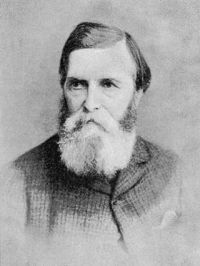
Portrait of R. M. Ballantyne R. M. Ballantyne,  Charlie to the Rescue

“ This place is not known to the savages who are on the warpath, and there is nothing to tempt them this way even if it were. Besides, Shank is well enough to get up and gather firewood, kindle his fire, and boil the kettle for himself. He is used to being left alone. See, here is our stable under the cliff, and yonder stands your horse. ”
Source: Gutenberg

Robert Kerr,  A General History and Collection of Voyages and Travels…

“ The shank is made of mother-of-pearl, the most glossy that can be got; the inside, which is naturally the brightest, is put behind. To these hooks a tuft of white dog's or hog's hair is fixed, so as somewhat to resemble the tail of a fish; these implements, therefore, are both hook and bait, and are used with a rod of bamboo, and line of erowa. The fisher, to secure his success, watches the flight of the birds which constantly attend the bonetas when they swim in shoals, by which he directs his canoe, and when he has the advantage of these guides, he seldom returns without a prize. ”
Source: Gutenberg

Get perspective with Kwize: daily news enlightened by great literature