An anchor, a metal device that secures vessels to the seabed, has fulfilled both practical and symbolic functions throughout history. From its Latin origins ancora to its contemporary forms, it represents the balance between stability and motion. Authors such as Joseph Conrad emphasized its technical accuracy, while Henry Wadsworth Longfellow used it as a metaphor for emotional grounding.
Sabine Baring-Gould compared human determination to an anchored ship, highlighting its dual role as a physical restraint and a literary emblem of control or firmness. The anchor’s mechanical properties—its interplay of weight, grip, and strain—reflect its thematic significance in literature, where it frequently symbolizes the relationship between power and immobility.
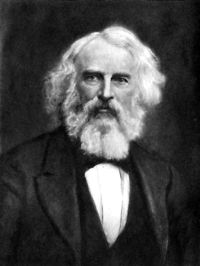 Henry Wadsworth Longfellow,
Ultima Thule — Elegiac
(1880)
Henry Wadsworth Longfellow,
Ultima Thule — Elegiac
(1880)