Anchoring

Definition and stakes

Mountain Craft (1920)

“ It must be remembered that such anchoring on a descent is designed to assure the balance of the stationary man, in case of a sudden jerk; and only indirectly to support the man descending below. The actual pull of a slip, if it comes, should be taken up on the arm, but never directly on the rock anchorage. It is useful for every one to practise this cursive anchoring on any descent which is too steep to allow of the party moving really rapidly together. There will be time then to swing the rope over and off the points as we pass them, without check. ”
Source: Gutenberg

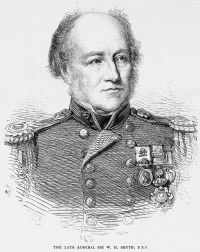
Portrait of W. H. Smyth W. H. Smyth,  The Sailor's Word-Book

“ ANCHORING. The act of casting anchor.—Anchoring ground is that where anchors will find bottom, fix themselves, and hold ships securely: free from rocks, wrecks, or other matters which would break or foul the anchor or injure the cable. In legal points it is not admitted as either port, creek, road, or roadstead, unless it be statio tutissima nautis. A vessel dropping anchor in known foul ground, or where any danger is incurred by inability to recover the anchor, or by being there detained until driven off by stress of weather, is not legally anchored. ”
Source: Gutenberg

Robert Kerr,  A General History and Collection of Voyages and Travels…

“ The wind came off the land in very hard flaws, and in a short time our anchor coming home, the ship tailed on shore against a steep gravelly beach. The anchoring ground, indeed, as far as we had yet sounded, was bad, being very hard; so that, in this situation, if the wind blows fresh, there is always the greatest reason to fear that the anchor should come home before the ship can be brought up. ”
Source: Gutenberg

Get perspective with Kwize: daily news enlightened by great literature