“ An antelope stays its rapid course for an instant, upon the opposite bank, to gaze upon her with its pensive eyes, ere its hoofs, swift almost as light, ring a merry chorus as it speeds away, buoyant with innocent life. Truly it is a bower of beauty—a very paradise in the far distant wilderness. The spirit of evil should indeed forbear to set his foot or leave his serpent trail in a place like that. ”
Antelope
Definition and stakes
The term "antelope" refers to a diverse group of even-toed ungulates within the Bovidae family, primarily found in Africa, Asia, and parts of Russia. Though not a single evolutionary lineage, antelopes are characterized by their slender builds, nimble movements, and varied habitats, ranging from savannahs to deserts.
Authors such as Philip Lutley Sclater praised their "lively gambolling manners," while Alfred Edmund Brehm described their frantic escapes from predators. Washington Irving and others emphasized their speed and evasive abilities, portraying them as symbols of wild elegance. These literary depictions highlight antelopes’ dual role as both ecological keystones and metaphors for agility in human storytelling.
Quotes about “antelope”
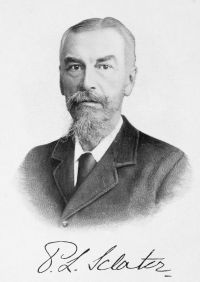 Philip Lutley Sclater,
The book of antelopes, vol. 2…
(1897)
Philip Lutley Sclater,
The book of antelopes, vol. 2…
(1897)
“ No antelope possesses more completely the lively gambolling manners of the young kid—none bound with greater force or precision from rock to rock, or clear the yawning abyss with more fearless activity. ”
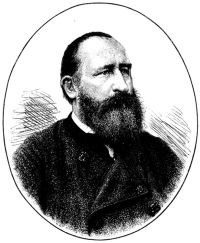 Alfred Edmund Brehm,
From North Pole to Equator: Studies of Wild Life and Scenes in Many Lands
(1896)
Alfred Edmund Brehm,
From North Pole to Equator: Studies of Wild Life and Scenes in Many Lands
(1896)
“ Behind the strongest and most formidable antelope a pack rushes in full cry, barking, howling, whining, and now and then uttering a clear note of triumph. The antelope exerts all its strength, but the murderous dogs lose no ground, they cut off corners and prevent it doubling back, they come nearer and nearer and force it to stand at bay. ”
William Clark, History of the Expedition under the Command of Captains Lewis and Clark…
“ Of all the animals we had seen the antelope seems to possess the most wonderful fleetness: shy and timorous they generally repose only on the ridges, which command a view of all the approaches of an enemy: the acuteness of their sight distinguishes the most distant danger, the delicate sensibility of their smell defeats the precautions of concealment, and when alarmed their rapid career seems more like the flight of birds than the movements of an earthly being. ”
Various, Popular Science Monthly (1911)
“ An hour earlier the antelope's imitation twig-haze passed all right, but now that the sun is low and streams through the whole gauzy growth, behold, the opaque antelope becomes a black silhouette on a light gray ground. He is not really a gauzy growth! ”
 C. J. Cornish,
Life at the Zoo: Notes and Traditions of the Regent's Park Gardens
C. J. Cornish,
Life at the Zoo: Notes and Traditions of the Regent's Park Gardens
“ The eland, couched placidly on a bed of golden straw, with its satin-like biscuit-coloured skin gathered into soft little wrinkles at the folded joints, and its dark full eye turned to gaze mildly at the visitors, seems a type of what the domesticated antelope should be, shielded from the weather, eating artificially prepared food, lying on the straw of civilization, and dependent for its food on the stockman’s punctuality. ”
Philip Lutley Sclater,
The book of antelopes, vol. 3…
(1897)
“ As the traveller advances over the trackless expanse, hundreds of this delicately formed antelope bound away on either side of his path with meteor-like and sportive velocity, winging their bird-like flight by a quick succession of those singularly elastic leaps which have given rise to its colonial appellation, and which enable it to surpass, as well in swiftness as in grace, almost every other mammiferous quadruped. ”
 G. A. Henty,
Captain Bayley's Heir: A Tale of the Gold Fields of California
G. A. Henty,
Captain Bayley's Heir: A Tale of the Gold Fields of California
“ They will creep up through the grass till they can get to a spot where the antelope can see them, and then they will just act as if they were mad, rolling over on their backs, waving their legs about, twisting and rolling like balls, and playing the fool, till the antelope comes up to see what is the matter. ”
Bertram Mitford, The Triumph of Hilary Blachland
“ Wonderfully quick are they in their movements as, just avoiding each deadly thrust, they leap, snapping and snarling, round their quarry—until one, seeing his chance, seizes the latter just below the haunch in such fashion as promptly to hamstring him. The game antelope is done for now. ”
Enos A. Mills, Watched by Wild Animals
“ Old antelope have perhaps more numerous scent glands than other big wild animals, but evidently a young antelope gives off little or no scent. Its youthful colour blends so well with its surroundings when it lies down that it is difficult to see it. Once the young flatten out and freeze upon the grassy earth they offer but little that is revealing even to the keenest eyes and noses. ”
 Carl Ethan Akeley,
In Brightest Africa
Carl Ethan Akeley,
In Brightest Africa
“ There are antelope smaller than hares and antelope larger than oxen. There are creatures which are the embodiments of grace, and others whose huge ungainliness is like that of a shape in a nightmare. The plains are alive with droves of strange and beautiful animals whose like is not known elsewhere; and with others even stranger that show both in form and temper something of the fantastic and the grotesque. ”
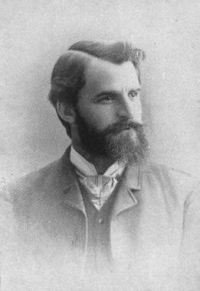 Hamlin Garland,
The pioneer West
(1923)
Hamlin Garland,
The pioneer West
(1923)
“ Always in the vicinity of the buffalo herd the hunter encounters that beautiful little animal, the antelope. Shy and timid, with an acute scent and far-reaching vision, it is difficult of approach. An old animal is killed now and then by a long-range rifle. Like other timid animals, the antelope has a remarkable development of that too-often fatal instinct, curiosity. ”
Enos A. Mills, Watched by Wild Animals
“ The antelope makes long leaps but not high jumps. I watched an antelope that had been separated from the flock hurrying to rejoin it. In its way was a line of willows along the dry, shallow water channel. This willow stretch was not wide nor high. A deer would have leaped it without the slightest hesitation. The antelope went far round and jumped wide gullies, but made no attempt to leap this one low line of willows. Being a plains animal, knowing but little of cliffs and timber, it has not learned high jumping. ”
Unknown, The Book of the Thousand Nights and a Night (1885)
“ The antelope sorrowed with great sorrow, but dissuaded the peahen from her resolve to remove from the island. So they abode there together with him, eating and drinking, in peace and safety, except that they ceased not to mourn for the loss of the duck; and the antelope said to the peahen, "O my sister, thou seest how the folk who came forth of the ship were the cause of our severance from the duck and of her destruction; so do thou beware of them and guard thyself from them and from the wile of the son of Adam and his guile." ”
George W. Romspert, The Western Echo
“ The antelope, as has been said, is a very vigilant and spirited animal; and as they bound away in the chase they almost baffle the eye. They always try to run down hill; and as they seldom run straight very far, the riders can cut across and keep near all the time, and often run into the flock without going half as far as the hounds. A flock of antelopes flying over the plain, with a pack of hounds close in the rear, and followed by excited horsemen hallooing and flying their hats, is truly a grand sight as well as an agreeable sport. ”
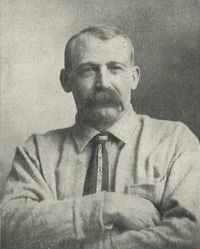 Andy Adams,
Cattle Brands: A Collection of Western Camp-Fire Stories
Andy Adams,
Cattle Brands: A Collection of Western Camp-Fire Stories
“ While the deer were making their escape, a band of antelope were sighted sunning themselves amongst the sand dunes a mile below; attracted by the shooting, they were standing at attention. Now when an antelope scents danger, he has an unreasonable and unexplainable desire to reach high ground, where he can observe and be observed—at a distance. Once this conclusion has been reached, he allows nothing to stop him, not even recently built wire fences or man himself, and like the cat despises water except for drinking purposes. ”
Philip Lutley Sclater,
The book of antelopes, vol. 4…
(1899)
“ Our coloured illustration of this Antelope (Plate XCIII.) was prepared by Wolf, under Sir Victor Brooke’s instructions, from Speke’s original specimens. It will be noticed that the artist has joined the horns of the adult animal to a body which must have been copied from the young male, and has coloured the female from conjecture, representing it as greyish brown instead of yellowish red. ”
American Big Game in Its Haunts…
“ Many and many a time while riding over the prairie, I have seen among the antelope that loped carelessly out of the way of the wagon before which I was riding, a few sheep, which would finally separate themselves from the antelope and run up to rising ground, there to stand and call until we had come too near them, when they would lope off and finally be seen climbing some steep butte or bluff, and there pausing for a last look, would disappear. ”
Philip Lutley Sclater,
The book of antelopes, vol. 1…
(1894)
“ The series of specimens of this Antelope in the British Museum is not by any means a full one. There are an adult male (stuffed) and an adult female (in skin) from the Zoological Society’s old collection, and a young one obtained by Fraser in the Djereed of Tunis in 1846, besides some pairs of horns and frontlets. Fresh examples of this species from definite localities would therefore be highly valued by the Trustees. ”
 Washington Irving,
The Adventures of Captain Bonneville…
(1837)
Washington Irving,
The Adventures of Captain Bonneville…
(1837)
“ The antelopes, nearly exhausted with fatigue and fright, and bewildered by perpetual whooping, made no effort to break through the ring of the hunters, but ran round in small circles, until man, woman, and child beat them down with bludgeons. Such is the nature of that species of antelope hunting, technically called "a surround." ”
Jane Andrews, The Seven Little Sisters Who Live on the Round Ball That Floats in the Air
“ They will find the beautiful young antelope, so timid and gentle as to be far more afraid of you than you would be of them. They are somewhat like small deer, striped and spotted, and they have large, dark eyes, so soft and earnest you cannot help loving them. ”
Various, Birds and Nature, Vol. 08, No. 4…
“ The antelope family comprises many of the most beautiful and graceful species among horned animals. When we behold the curiously twisted horns of the sasin, the long, sharp horns of the pasan, the large, spiral horns of the koodoo and the shorter horns of the eland, not to mention the graceful bodies and limbs of these animals, we are led to wonder at the extravagance of nature in furnishing such a variety of appendages to these creatures. ”
comte de Georges Louis Leclerc Buffon, Buffon's Natural History. Volume 04…
“ Than the antelope nothing can be more beautiful; and it particularly discovers a certain innocent fear, which bears a strong resemblance to the natural modesty and timidity of a young woman. The ladies, and women newly married, blacken the eye-brows, and make them unite on the middle of their forehead; they also prick their arms and hands, and form upon them figures of animals, flowers, &c. They also paint their nails of a reddish colour. The men paint the tails of their horses with this colour. [250] The women wear rings in their ears, and bracelets upon their arms and legs. ”
Philip Lutley Sclater,
The book of antelopes, vol. 3…
(1897)
“ It is not necessarily found near water,—in fact, it is generally met with on stony ground, where there is a sprinkling of thorn-jungle.“The gait of this Antelope is peculiar, and when first seen a buck will generally be standing motionless, head well up, looking at the intruder, and trusting to its invisibility. Then the head dives under the bushes, and the animal goes off at a long crouching trot, stopping now and again behind some bush to gaze. It seldom gallops, and its pace is never very fast. ”
Alfred Edmund Brehm,
From North Pole to Equator: Studies of Wild Life and Scenes in Many Lands
(1896)
“ Conscious of its strength and of its powers of defence, the antelope uses its pointed horns with skill and good effect; one dog after another may be hurled to the ground fatally transfixed; but the others fix on its throat and body, and the noble creature’s death-rattle soon puts an end to their howling. ”
Popular Science Monthly (1876)
“ Natural History of the American Antelope.—From an interesting paper in the American Naturalist, by Judge Caton, we select the following notes upon the natural history of the American antelope: The animal is not a native of the Old World, and is confined to a very limited portion of the New. In size the prong-buck, or American antelope, is considerably smaller than the Virginia deer, the adult male rarely exceeding four feet in length from tip to tip, and three feet in height to the top of the shoulder. ”
comte de Georges Louis Leclerc Buffon, Buffon's Natural History. Volume 08…
“ They are surrounded with rings and semi-rings like the gazelle and kevel, but not so distinguishable; but what particularly discriminates the antelope, is its horns having a double flexion, which gives them the appearance of an antique lyre. The antelope, like other gazelles, is yellow on the back, and white under the belly ”
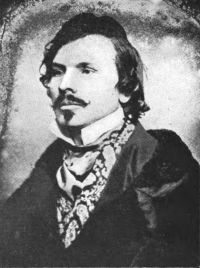 Mayne Reid,
Quadrupeds, What They Are and Where Found…
Mayne Reid,
Quadrupeds, What They Are and Where Found…
“ The numerous species of ruminant animals—the antelope in particular—are the especial objects of their pursuit, and upon these they subsist. Like the Indian wild dogs, they live in communities—using the burrows of the wild hog and ant-eater, as also the hollow ant-hills, for their lairs and breeding places. Travellers passing across the plains of South Africa have often witnessed the splendid spectacle of a pack of these beautiful wild hounds in pursuit of a large antelope, and almost fancied themselves looking at a stag hunt, with a kennel of real hounds going at full view! ”
Philip Lutley Sclater,
The book of antelopes, vol. 2…
(1897)
“ Constantly the dainty little Sand-antelopes would spring away through the bushes at my approach. These charming little creatures, called in Somali-land ‘Dĭk-dĭks,’ in size scarcely as big as an English hare, are the most dainty miniatures of the Antelope race. They are ever in pairs of male and female, are much alike, except that the male has two tiny horns about an inch or two long, with a brown tuft of hair between them. Their skins vary in colour from a silvery grey to a russet-brown. ”
 Richard Francis Burton,
The City of the Saints
(1862)
Richard Francis Burton,
The City of the Saints
(1862)
“ Like other wild meats, bear, deer, elk, and even buffalo, antelope will disagree with a stranger; it is, however, juicy, fat, and well-flavored, especially when compared with the hard, dry, stringy stuff which the East affords; and the hunter and trapper, like the Indian, are loud in its praise. ”
William Clark, History of the Expedition under the Command of Captains Lewis and Clark…
“ The antelopes have again collected in small herds, composed of several females with their young, attended by one or two males, though some of the males are still solitary or wander in parties of two over the plains, which the antelope invariably prefers to the woodlands, and to which it always retreats if by accident it is found straggling in the hills, confiding no doubt in its wonderful fleetness. ”
Alfred Edmund Brehm,
From North Pole to Equator: Studies of Wild Life and Scenes in Many Lands
(1896)
“ Not everywhere, but here and there throughout the forest, and then always abundantly, there lives a little antelope, the bush or Salt’s antelope. It is one of the most charming of all ruminants, most gracefully built, not bigger than a fawn a few days old, and of a foxy, gray-blue colour. It lives with a mate in the thickest undergrowth of the forest, choosing for its lair or habitual resting-place a bush which is branched and leafy to the ground, and thence treading out narrow paths in all directions through the thicket. I have often shot the animal ”
J. G. Wood, The uncivilized races of men in all countries of the world… (1875)
“ The antelope is sometimes used in a similar manner. The largest and most powerful male antelopes are trained for the purpose, and are sent toward the herd with nooses fastened on their horns. The wild antelopes soon come out to fight the intruders, and are caught by the nooses. ”
C. J. Wills, In the land of the lion and sun… (1891)
“ The antelope, the prince told us, always make straight for their lairs, avoiding the mountains, and the only way to get a shot is to attempt to cross their track, and to fire at the point where the animal is actually nearest. ”
Mayne Reid,
Quadrupeds, What They Are and Where Found…
“ The Antelope tribe is so closely related to that of the Deer, that it is often difficult to distinguish one from the other. Indeed, certain species of antelopes are more like to certain species of deer, than either to their own kind. This is more especially true of the females, where the horns—the chief point of distinction—are absent. In such cases, even the accomplished naturalist is perplexed by the close resemblance—which extends beyond mere outward appearance, and is found throughout all their habits. ”
G. O. Shields, Cruisings in the Cascades
“ The antelope, one of the brightest and most graceful and beautiful of all our Western game animals, is fast disappearing from our broad plains, owing to the ceaseless slaughter of it that is carried on by "skin hunters," Indians, "foreign noblemen," and others who come to this country year after year and spend the entire summer in hunting. Hundreds of them are killed every summer by this latter class, and left to rot where they fall, not a pound of meat, a skin, or even a head being taken from them. ”
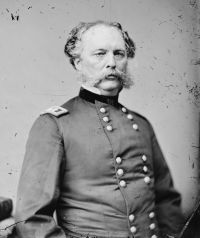 Randolph B. Marcy,
The Prairie Traveller, a Hand-book for Overland Expeditions…
(1859)
Randolph B. Marcy,
The Prairie Traveller, a Hand-book for Overland Expeditions…
(1859)
“ Their sense of hearing, as well as vision, is very acute, which renders it difficult to stalk them. By taking advantage of the cover afforded in broken ground, the hunter may, by moving slowly and cautiously over the crests of the irregularities in the surface, sometimes approach within rifle range. The antelope possesses a greater degree of curiosity than any other animal I know of, and will often approach very near a strange object. ”
Related terms
Authors who wrote about “antelope”
Philip Lutley Sclater George Bird GrinnellG. O. ShieldsGeorge W. RomspertMayne ReidAlfred Edmund BrehmWashington IrvingEnos A. MillsWilliam ClarkVariouscomte de Georges Louis Leclerc BuffonJ. G. WoodRichard Francis BurtonG. A. HentyBertram Mitford
 Ann S. StephensCarl Ethan AkeleyC. J. CornishAndy AdamsJane Andrews