“ One, perhaps, has held up his arm above his head for so many years that it is now immovable, and stands straight up from his shoulder, thin and shrunken, and as stiff as a piece of wood. Another has held his fingers close shut in his palm until the nails have grown through the flesh and stand out at the back of the hand. ”
Arm
Definition and stakes
The arm, anatomically defined as the upper limb segment between the shoulder and elbow, functions as a pivotal structure in human physiology, comprising bones, muscles, and nerves essential to movement and function. Literature, however, has long surpassed its biological role, using the arm as a symbol of strength, vulnerability, and artistry. Jack London admires the forearm’s delicate curves, George Eliot conveys tenderness through the "dimpled elbow," while Leonardo da Vinci analyzed its mechanics with scientific precision.
Alexander Walker emphasized its muscular complexity, contrasting the layperson’s perception with anatomical truth. From mythic portrayals of divine power to clinical accounts of fractures, the arm appears both as a physical form and a medium for human expression, its dual nature illustrating the connection between structure and significance across various fields.
Quotes about “arm”
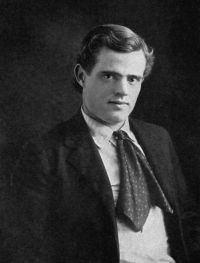 Jack London,
The Night-born
(1913)
Jack London,
The Night-born
(1913)
“ You know the wonder of a woman's arm--the fore arm, I mean; the sweet fading away from rounded biceps and hint of muscle, down through small elbow and firm soft swell to the wrist, small, unthinkably small and round and strong. ”
 Benito Pérez Galdós,
Trafalgar: A Tale
Benito Pérez Galdós,
Trafalgar: A Tale
“ Picture to yourself an old man, tall rather than short, with a wooden leg, his left arm shortened to within a few inches of the elbow, minus an eye, and his face seamed with wounds in every direction—slashed by the various arms of the enemy ”
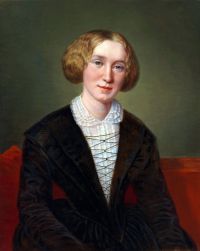 George Eliot,
The Mill on the Floss
(1860)
George Eliot,
The Mill on the Floss
(1860)
“ Who has not felt the beauty of a woman’s arm? The unspeakable suggestions of tenderness that lie in the dimpled elbow, and all the varied gently lessening curves, down to the delicate wrist, with its tiniest, almost imperceptible nicks in the firm softness. ”
Alexander Walker, Beauty: Illustrated Chiefly by an Analysis and Classificatin of Beauty in Woman
“ None but an anatomist can duly appreciate the variety of separate actions, on which depend the motions of a single limb, and the consequently numerous opportunities of rest which the muscles enjoy. To the superficial and unscientific observer, an arm is an arm; it is a single member which may be fatigued by a day’s work and recruited by a night’s rest. But to the anatomist the arm is a complex object, and its muscular energy is that of its component muscles, each of which may be fatigued by a minute’s action and recruited by a minute’s repose. ”
B. G. Jefferis, Searchlights on Health: The Science of Eugenics
“ Beautiful Arms.—As the arm is always in proportion with the other portions of the body, consequently a well-shaped arm, small hands and small wrists, with full muscular development, is a charm and beauty not inferior to the face itself, and those who have well-shaped arms may be proud of them, because they generally keep company with a fine bust and a fine figure. ”
 Leonardo da Vinci,
The Notebooks of Leonardo Da Vinci
(1478 – 1519)
Leonardo da Vinci,
The Notebooks of Leonardo Da Vinci
(1478 – 1519)
“ The arm from the shoulder to the elbow in bending increases in length, that is in the length from the shoulder to the elbow, and this increase is equal to the thickness of the arm at the wrist when seen in profile. ”
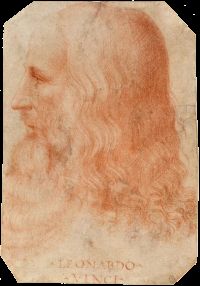 da Vinci Leonardo,
A Treatise on Painting
da Vinci Leonardo,
A Treatise on Painting
“ The wrist or joint between the hand and arm lessens on closing the hand, and grows larger when it opens. The contrary happens in the arm, in the space between the elbow and the hand, on all sides; because in opening the hand the muscles are extended and thinned in the arm, from the elbow to the wrist; but when the hand is shut, the same muscles swell and shorten. The tendons alone start, being stretched by the clenching of the hand. ”
Anonymous, The Lustful Turk (1828)
“ Finding that I made no attempt to withdraw my lips from his thrilling pressure, his arm which was around my neck he removed to my waist, thus drawing me more strongly to his bosom; his right arm became closely confined between his body and mine, my hand being placed and held firmly between his thighs. ”
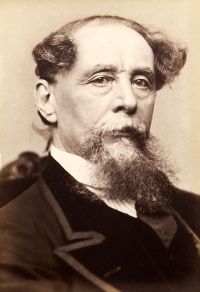 Charles Dickens,
Great Expectations
(1890)
Charles Dickens,
Great Expectations
(1890)
“ My hands had been dressed twice or thrice in the night, and again in the morning. My left arm was a good deal burned to the elbow, and, less severely, as high as the shoulder; it was very painful, but the flames had set in that direction, and I felt thankful it was no worse. ”
 Annie Payson Call,
Power Through Repose
Annie Payson Call,
Power Through Repose
“ Your arm must be raised until high overhead, the hand hanging from the wrist and dropped into your lap or down at the side, letting the elbow "give," so that the upper arm drops first, and then the fore arm and hand,—like three heavy sand-bags sewed together. The arm can be brought up to the level of the shoulder, and then round in front and dropped. ”
George Henry Dole, The Philosophy of Creation (1906)
“ But within the arm are numerous muscles, and back of these are myriads of nerves, fibers, and fibrillæ, and back of these are thoughts and affections with their countless forms; yet all these successively higher degrees act as one with every movement of the arm. Numerous as they are, superior as they are to the unit that the eye sees, they subsist simultaneously in it, and act as one by it. The arm can not move until the central point, the desire, acts. ”
A. N. Palmer, The Palmer Method of Business Writing (1901)
“ If the wrist or side of the hand rests on the paper, all motion coming from the muscles of the arm will stop at the wrist and it will be an impossibility to use muscular movement. Watch the wrist and the side of the hand closely. ”
H. W. Gibson, Camping For Boys
“ If the upper arm is broken, make three splints, one long enough to reach from the shoulder to the elbow to go on the outside of the arm, one to go on the inner side of the arm, and one on the back of the arm. ”
Various, Popular Science Monthly (1902)
“ The bones of the arm were strong, with strong projections for the attachment of muscles; those of the wrist were few in number and closely united. The rudimentary first finger, or thumb, consisting of a single slender bone, was turned backward toward the shoulder for the support of the membrane in front of the elbow. ”
 S. Weir Mitchell,
The Autobiography of a Quack, and The Case of George Dedlow
S. Weir Mitchell,
The Autobiography of a Quack, and The Case of George Dedlow
“ I should also add that nearly every person who has lost an arm above the elbow feels as though the lost member were bent at the elbow, and at times is vividly impressed with the notion that his fingers are strongly flexed. ”
“ The muscle, directly that “something” comes to it along its nerves, contracts, shortens, and grows thick; it rises up in the arm; its lower tendon pulls at the radius; the radius with the ulna moves on the fulcrum of the humerus at the elbow-joint, and the arm is bent. ”
Charles Chipiez, A History of Art in Ancient Egypt…
“ The knees are brought together and the hands supported upon them. We never find an arm raised, a hand opened as if to give force to speech, or a leg stretched out to relieve the stiffness of the lines. ”
 Hippocrates,
On the Articulations
Hippocrates,
On the Articulations
“ But when the patient is suspended, a person properly instructed and not weak, having introduced his arm between his thighs, is to place his fore-arm between the perineum and the dislocated head of the os femoris ”
 Henry de Varigny,
Popular Science Monthly
(1881)
Henry de Varigny,
Popular Science Monthly
(1881)
“ Again, it is the arm, forearm, or hand that moves in various ways, and to different ends; sometimes there is a combination of movements, like those required for swimming or prehension; the fingers may lock together with force, as if to retain an object, or extend themselves with a lively movement, as if to scatter something. It is probable that, if our instruments were more perfect, we should find in each center a number of subordinate centers for the execution of single movements, or the moving of a single muscle. ”
 John Hamilton Moore,
The Young Gentleman and Lady's Monitor…
John Hamilton Moore,
The Young Gentleman and Lady's Monitor…
“ This motion of the arm will naturally bring the hand with the palm downwards, into an horizontal position, and when it approaches to the head, the arm should with a jerk be suddenly straitened into its first position, at the very moment the emphatical word is pronounced. ”
 Catharine Esther Beecher,
A Treatise on Domestic Economy…
(1845)
Catharine Esther Beecher,
A Treatise on Domestic Economy…
(1845)
“ When the arm is bent, and we wish to straighten it, it is done by contracting this muscle. The muscles d, d, are fastened at one end near the elbow joint, and at the other near the ends of the fingers ”
 William Henry Giles Kingston,
On the Banks of the Amazon
William Henry Giles Kingston,
On the Banks of the Amazon
“ On examining the fins, or fore-limbs, as they should properly be called, we found bones exactly corresponding to those of the human arm, with five fingers at the extremity, every joint distinct, although completely encased in a stiff inflexible skin. ”
A system of practical medicine… (1886)
“ The arm is either allowed to rest upon the table, upon the flexor mass of muscles of the forearm near the elbow as a kind of movable fulcrum, or is held with the forearm parallel to the table and a short distance above it. ”
W. H. Davenport Adams, Celebrated Women Travellers of the Nineteenth Century
“ My wrist, exposed between the glove and the edge of the sleeve, is ornamented with a regular swelling like a bracelet all round the arm; in a word, wherever the enemy has been able to penetrate, he has wrought indescribable ravage.... ”
 Benjamin Fiske Barrett,
Beauty for Ashes
(1855)
Benjamin Fiske Barrett,
Beauty for Ashes
(1855)
“ Let your arm, or any other bodily member, remain inactive for a great length of time, and see how weak and puny it becomes. It will cost you an effort, and even give you pain, to move it at last. But let the arm be vigorously exercised every day for a few months, and see what muscular power will be developed in that limb. ”
Mrs. Beeton, The Book of Household Management
“ If the burn is at the bend of the elbow, place the arm in the straight position; for if it is bent, the skin, when healed, will be contracted, and the arm, in all probability, always remain in the same un natural position. ”
 William Harrison Ainsworth,
Jack Sheppard: A Romance, Vol. 3…
William Harrison Ainsworth,
Jack Sheppard: A Romance, Vol. 3…
“ One of your arms shall be drawn to one side of the room, and the other arm to the other side, and your legs shall be served in the like manner. Then, there shall be laid upon your body as much iron, or stone as you can bear, and more. ”
Donald Walker, Walker's manly exercises (1855)
“ In both cases, the lower arm stretches itself out quickly, at the same time that the feet are striking; and the upper arm strikes at the same time that the feet are impelling, the hand of the latter arm beginning its stroke on a level with the head. ”
 Alvin Davison,
Health Lessons, Book 1
Alvin Davison,
Health Lessons, Book 1
“ Several of the muscles in the forearm run into tendons in the wrist because if the muscle part were to extend along the wrist, this part of the arm would be large and clumsy instead of graceful and slender. ”
Charles H. Caffin, A Child's Guide to Pictures
“ We can feel that the arm is moving, and, at this instant it is moving backward, for our own experience when we walk and swing our arms naturally is that each arm goes back as the leg on that side goes forward. The man’s arm will reach its furthest point backward when he brings his full weight on the right foot. In a word, the poise of the arm and the poise of the leg correspond.{103} They present an example of repetition of balance. It is enforced, you will observe, in the composition by the arm being made parallel to the direction of the backward leg. ”
da Vinci Leonardo,
A Treatise on Painting
“ Where the arm joins with the hand, there is a ligament, the largest in the human body, which is without muscles, and is called the strong ligament of the Carpus; it has a square shape, and serves to bind and keep close together the bones of the arm, and the tendons of the fingers, and prevent their dilating, or starting out. ”
Harriet Osgood Taylor, Japanese Gardens (1912)
“ The effect, to us, is not particularly pretty, more especially after the remark of an observer when you are admiring it that it suggests an anatomist’s model of a human leg or arm, made to indicate the positions of the sinews and muscles, the veins and the arteries. ”
 Joseph McCabe,
The Story of Evolution
Joseph McCabe,
The Story of Evolution
“ In most cases—not all, because the wearing of clothes for ages has modified this feature—it will be found that the hairs on the arm tend upward from the wrist to the elbow, and downward from the shoulder to the elbow. ”
The Circle of Knowledge: A Classified…
“ The Hand is emphatically the organ of touch, not merely because the tips of the fingers, besides being richly endowed with those nerves which confer sensitiveness upon the skin of the whole body, possess in addition an unusual supply of certain minute auxiliary bodies, called “tactile corpuscles,” but because the arrangement of the thumb and fingers, and the motions of the wrist, elbow, and arm, give the hand a power of accommodating itself spontaneously to surfaces, which no other part of the body possesses. ”
Albert Stoessel, The Technic of the Baton (1920)
“ The sf on a letter indicates a sharp forceful movement as opposed to a more relaxed motion. In the exercises for the wrist, the forearm and upper arm must remain motionless. Likewise, the forearm movement must be executed without moving the upper arm. ”
 William Shakespeare,
The Complete Works of William Shakespeare
William Shakespeare,
The Complete Works of William Shakespeare
“ But five and twenty.—O God, thy arm was here; And not to us, but to thy arm alone, Ascribe we all! ”
Aegineta Paulus, The seven books of Paulus Ægineta… (1844)
“ Wherefore we must tie a narrow band around some muscular part of the arm, and having by friction of the hands upon one another produced the necessary fulness of the vein, we divide it transversely, but only along its breadth ”
 G. Stanley Hall,
Youth: Its Education, Regimen, and Hygiene
G. Stanley Hall,
Youth: Its Education, Regimen, and Hygiene
“ This gives the arm freedom of movement laterally, so that it can be rotated one hundred and eighty degrees in man as contrasted to one hundred degrees in apes, thus giving man the command of almost any point within a sphere of which the two arms are radii. ”
Walter K. Fobes, Elocution Simplified
“ After some practice you may do it twice upon one breath, being sure to keep the arms as close to the body as you can; for, if you spread your arms, you will strain the muscles.3. Fore-arm Vertical.—Assume standing position, and bend the arms, placing them vertically, and parallel with each other, at the side, with clinched hands as high as the shoulder; turn the fist out from the shoulder, raise the chest as much as you can, and, taking a full breath, hold it; bring the arms forward so as to touch the elbows together, if you can ”
Dorothy Furniss, Drawing For Beginners (1920)
“ The bones of the hand are small but fairly easy to understand. They have no cup and ball or rotary movements like those of shoulder and forearm; neither are they shrouded in huge muscles like those of the ribs and back. ”
 John Addington Symonds,
Renaissance in Italy, Volume 3…
John Addington Symonds,
Renaissance in Italy, Volume 3…
“ Therefore to him a well-shaped hand, or throat, or head, a neck superbly poised on an athletic chest, the sway of the trunk above the hips, the starting of the muscles on the flank, the tendons of the ankle, the outline of the shoulder when the arm is raised, the backward bending of the loins, the curves of a woman's breast, the contours of a body careless in repose or strained for action, were all words pregnant with profoundest meaning, whereby fit utterance might be given to the thoughts that raise man near to God. ”
Friedrich Kluge, An Etymological Dictionary of the German Language (1891)
“ MidHG. arm, OHG. aram, arm, m.; a word common to the Teut. group; comp. OSax. arm, Du. arm, AS. earm, E. arm, OIc. armr, Goth. arms, m., ‘arm.’ Like many terms for parts of the body (see Arsch, Fuß, Herz, Knie, Nagel, &c.) , Arm extends beyond the Teut. dialects. It is. primit. related to Lat. armus, ‘the topmost part of the upper arm, fore-quarter’ (Gr. ἁρμός, ‘suture, joint, shoulder,’ belongs to another division) , OBulg. ramę, ‘shoulder, arm,’ Sans. ”
 Lew Wallace,
The Prince of India; Or, Why Constantinople Fell…
Lew Wallace,
The Prince of India; Or, Why Constantinople Fell…
“ There are the arms bare from the shoulder, long and round as a woman's should be, and terminating in flexile wrists, and hands so gracefully modelled we shrink from thought of their doing more than making wreaths of flowers and playing with harp strings. ”
 C. J. S. Thompson,
The Mystery and Romance of Alchemy and Pharmacy
C. J. S. Thompson,
The Mystery and Romance of Alchemy and Pharmacy
“ When any physician, doctor, or amulet-maker puts his fingers upon the top of the head, upon the occiput, upon the hands, upon the chest, upon the arms, upon the legs, he communicates (?) with the heart, for its vessels extend to every limb, wherefore it is called the starting-point of every limb. ”
Reginald Harvey Arnold, Simplex Munditiis, Gentlemen
“ The legs to be close together or one slightly advanced, in a position of rest. The arms can be carried either by locking hands behind the back, or in front, or they can be folded upon the chest; either way can be made to appear graceful. ”
